


BY SIFISO NHLABATSI
EZULWINI– The Eswatini Revenue Service (ERS) will embark on an ambitious 12-month transformation programme aimed at making tax compliance automatic, simpler and more technology-driven, with the introduction of electronic invoicing, artificial intelligence-powered audits, integrated tax payments and faster border clearance for compliant traders.
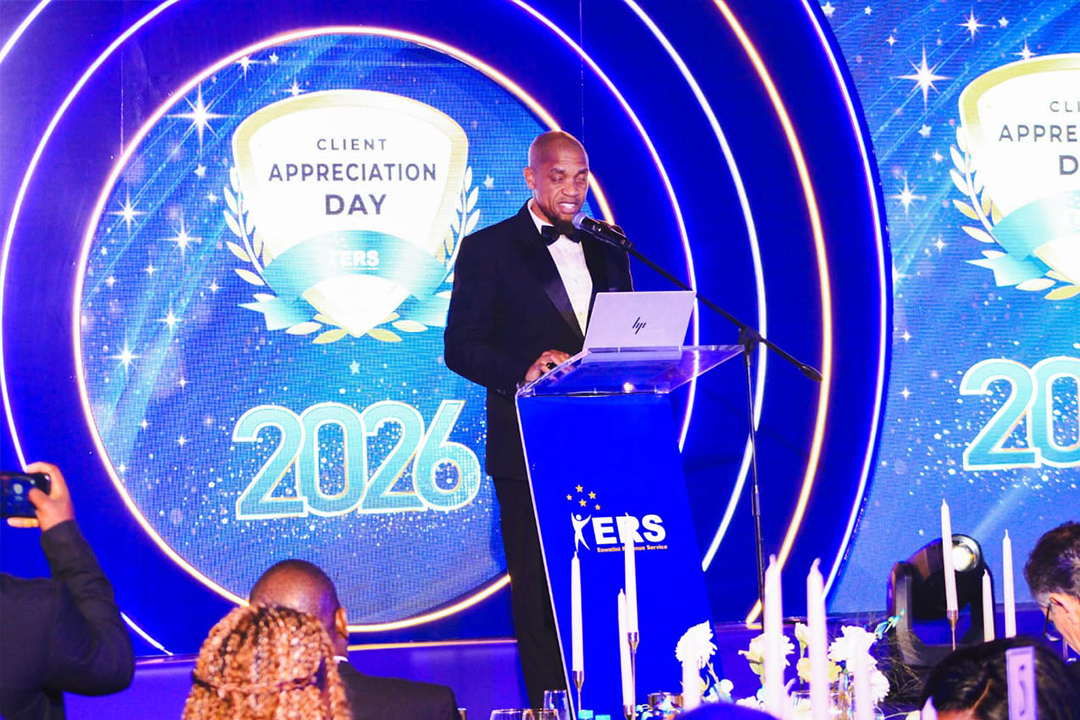
The transformation plans were disclosed during the 4th Annual ERS Client Appreciation Day at Happy Valley Hotel in Ezulwini on Friday evening by the ERS Commissioner General Brightwell Nkambule.
He said the revenue authority is entering a new phase focused on shifting from “compliance by effort” to “compliance by default.”
The reforms, he said, are designed to improve voluntary compliance, strengthen revenue mobilisation and enhance the taxpayer experience while making it increasingly difficult for tax evasion and non-compliance to occur.

“The next phase of ERS transformation is focused on moving from compliance by effort to compliance by default,” Nkambule said, adding that technology would play a central role in achieving that objective.
The Commissioner General announced that the first major reform will be the rollout of an electronic invoicing system that will allow invoices to be transmitted to ERS in real time. The initiative is expected to improve the integrity of Value Added Tax (VAT) information while reducing the administrative burden businesses face when submitting transaction schedules.
He said implementation will begin with the wholesale and retail sector before gradually expanding to all VAT-registered businesses across the country.
Nkambule also revealed plans to strengthen payment integration by introducing systems that make the payment of domestic taxes and customs duties simpler, faster and fully linked to taxpayers’ accounts.
He said the reforms are intended to make compliance easier while improving operational efficiency for both taxpayers and the revenue authority.
The ERS will also embrace advanced data analytics, machine learning and artificial intelligence to strengthen tax audits and improve risk detection.
Nkambule said the authority will pilot AI models capable of identifying high-risk tax returns and explore the responsible use of AI agents to analyse large volumes of submitted returns.
He stressed that technology would complement rather than replace tax professionals, with human oversight remaining central to audit and compliance decisions.
Another priority over the coming year will be the expansion of the no-stop border initiative in partnership with the South African Revenue Service (SARS) and other border agencies.
Nkambule said the programme seeks to reduce delays for trusted traders while facilitating legitimate trade between Eswatini and South Africa.
The initiative builds on the growing success of the Authorised Economic Operator (AEO) programme, under which compliant businesses benefit from streamlined customs processes.
During the event, another 15 companies received AEO accreditation, bringing the number of participating and accredited operators to more than 30.
The Commissioner General said trusted-trader programmes demonstrate that compliance delivers tangible business benefits through faster, more predictable and less intrusive border procedures.
Beyond technology, Nkambule said ERS would continue investing in staff development while supporting taxpayers as they adapt to new digital systems.
He noted that although technology will enable transformation, people remain at the centre of successful implementation.
Reflecting on the institution’s journey, Nkambule said ERS has completed 15 years of operations since its establishment in 2011 and has recorded significant improvements in revenue administration.
He said domestic tax revenue has become increasingly important in financing government expenditure as Southern African Customs Union (SACU) receipts continue to fluctuate.
The Commissioner General revealed that the authority’s cost-to-revenue ratio has fallen from above five per cent to about four per cent over the past decade, while the domestic tax-to-GDP ratio has increased from approximately 13.4 per cent to 16.5 per cent.
He added that voluntary compliance has also improved significantly, rising from about 62 per cent in the 2019/20 financial year to more than 72 per cent in 2025/26.
Despite the gains, Nkambule said ERS remains committed to achieving its long-term vision of 100 per cent voluntary compliance for a better Kingdom of Eswatini.
He said the revenue authority has deliberately repositioned taxpayers as partners rather than simply revenue sources, investing heavily in taxpayer education, digital services and customer experience.
According to Nkambule, the ERS Net Promoter Score has improved dramatically over the past six years—from below 10 per cent to approximately 83 per cent—reflecting growing public confidence in the organisation.
He also encouraged businesses experiencing financial challenges to engage the revenue authority through the Sondzela Sikhulume initiative before their tax obligations become unmanageable.
The programme, he explained, offers struggling taxpayers an opportunity to regularise their affairs through lawful arrangements while maintaining accountability.
Nkambule urged taxpayers, businesses, government institutions, professional bodies and development partners to work together in building a stronger culture of voluntary compliance.
“Compliance builds Eswatini,” he said, describing compliant taxpayers as the country’s true nation-builders.
#ComplianceByDefault #ERS #Eswatini #TaxCompliance #DigitalTransformation #RevenueMobilisation #ElectronicInvoicing #ArtificialIntelligence #VAT #AEO #TradeFacilitation #BorderModernisation #SARS #VoluntaryCompliance #BuildingEswatini #ClientAppreciationDay #ServiceExcellence #Innovation #PublicFinance #EswatiniPositiveNews