BY MFANUFIKILE KHATHWANE
MATSAPHA – Good governance remains the bedrock of economic recovery, social inclusion, and sustainable livelihoods — a principle that continues to guide Eswatini’s national development agenda.
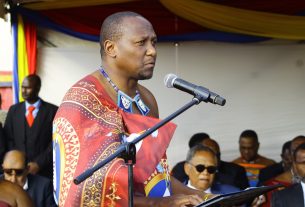
This was the central message delivered by Deputy Prime Minister (DPM), Senator Thulisile Dladla, represented by Under Secretary Makhosini Simelane, during Eswatini’s Pre-Summit Consultation Meeting for the Second World Summit for Social Development (WSSD2), held at Esibayeni Lodge in Matsapha.
The consultative meeting brought together government officials, development partners, and key stakeholders to reflect on Eswatini’s progress in social development, consolidate national priorities, and prepare for the upcoming WSSD2, scheduled to take place from 4–6 November 2025 in Doha, Qatar.
“This gathering is a moment to reflect, to recalibrate, and to recommit,” said Simelane on behalf of the DPM, emphasising the importance of assessing achievements while confronting the challenges that persist.

Highlighting progress made over recent years, Dladla noted that Eswatini had enacted several transformative policies promoting inclusive education, gender equality, and access to health care. “Our National Development Plan (NDP) and social protection initiatives embody our vision to build a society where no one is left behind,” she said.
The DPM’s address also underscored key milestones in disability inclusion, climate resilience, and sustainable livelihoods, describing these efforts as “stories of transformation — of communities empowered, and of lives changed.”
Under Secretary Simelane outlined the government’s major development priorities for the 2024–2028 period, which include strengthening social protection and social security systems for vulnerable populations, improving human capital through better access to health and education, and enhancing food sovereignty through sustainable agricultural practices.
He added that the government aims to stimulate inclusive economic growth with a projected target of 12% by FY2029, guided by principles of good governance, green growth, climate adaptation, and poverty reduction.
“As we move toward WSSD2, Eswatini reaffirms its commitment to the summit’s central themes,” Simelane said. “We are advancing disability inclusion through rights-based approaches aligned with the Convention on the Rights of Persons with Disabilities (CRPD), while also accelerating our climate resilience strategies and integrating the Sustainable Development Goals (SDGs) into our national frameworks.”
The consultation also focused on identifying success stories and lessons learned from grassroots innovations to national policy reforms, to showcase Eswatini’s unique experiences at the global stage.
Acknowledging ongoing challenges such as youth unemployment, inequality, and social protection gaps, Simelane urged participants to use the platform to develop actionable solutions. “This is our opportunity to identify policy gaps and propose practical interventions that can shape post-summit national plans,” he said.
He concluded by stressing the importance of inclusivity and dialogue: “This consultation must bring together voices from all sectors, especially those who are often marginalised. Only through collective engagement can we build a shared vision for Eswatini’s social development future.”
“The road to Doha begins here,” he said, “and the legacy we shape will echo far beyond the summit — guided by clarity, courage, and conviction.”