BY LINDELWA MYENI
EZULWINI – Communities across Eswatini are set to take a more active role in protecting their livelihoods, food security and natural resources against the growing effects of climate change following the launch of an approximately E16.74 million community-led climate resilience project.
Minister of Tourism and Environmental Affairs Jane Mkhonta yesterday afternoon officially launched the Participatory Adaptation for Climate Equity (PACE) Project, an initiative designed to move climate adaptation planning closer to the people who experience the effects of droughts, unpredictable rainfall and extreme weather first-hand.
The project is backed by €890000, equivalent to approximately E16.74 million, from the European Union.
It is being implemented by COSPE in partnership with PELUM Eswatini, the Ministry of Tourism and Environmental Affairs and the Ministry of Tinkhundla Administration and Development.

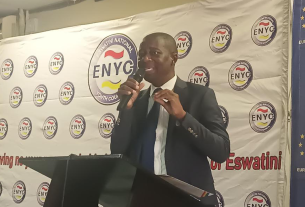
Speaking during the official launch held at Sibane Sami Hotel in Ezulwini, Mkhonta said climate change could no longer be treated as a distant environmental problem because its effects were already being felt in households and communities across the Kingdom.
Prolonged droughts, erratic rainfall, water shortages, severe storms and environmental degradation were increasingly threatening agriculture, infrastructure, food security, water security and the livelihoods of ordinary emaSwati.
“We no longer view climate change as a distant issue. It is already impacting our communities, natural resources, livelihoods and development prospects,” Mkhonta said.
The PACE Project seeks to change the way climate adaptation is planned by ensuring that communities themselves help identify the climate threats they face and participate in developing solutions suited to their local circumstances.
Instead of climate interventions being designed entirely at national level, communities will participate in identifying risks, setting adaptation priorities and developing Local Adaptation Plans.
These plans are expected to provide communities with a structured way of determining what interventions are most urgently required to strengthen their ability to withstand climate-related shocks.
The Minister said this community-driven approach would help bridge the gap between national climate policies and what actually happens on the ground.
Government has already developed national mechanisms aimed at addressing climate change, including the Nationally Determined Contributions 3.0 (NDC 3.0) and the National Adaptation Plan (NAP).
Mkhonta, however, stressed that the success of such national strategies ultimately depended on whether they translated into tangible improvements within communities.
For rural communities whose livelihoods largely depend on agriculture and natural resources, the growing impact of climate change can mean reduced harvests, declining water availability and increased pressure on household incomes.
The PACE Project therefore places local participation at the centre of finding practical ways to respond to those challenges.
A significant element of the initiative will be the integration of Local Adaptation Plans into Chiefdom Development Plans.
According to Mkhonta, this approach will ensure that responding to climate change becomes part of mainstream long-term community development rather than being treated as a separate programme.
This could help ensure that when chiefdoms plan their future development priorities, climate risks and resilience measures are considered alongside other community needs.
Mkhonta commended COSPE for pioneering the Local Adaptation Plan approach in Eswatini and also recognised PELUM Eswatini for its contribution towards advancing community-led climate action.
She further expressed Government’s appreciation to the European Union for financing the project, saying the partnership demonstrated a shared commitment towards strengthening Eswatini’s climate resilience and promoting sustainable development.
The launch also comes at a time when climate-related challenges are increasingly demonstrating the importance of preparing communities to withstand changing weather patterns.
The Minister emphasised that building climate resilience would require collaboration extending beyond Government.
She called for continued cooperation involving civil society organisations, traditional leaders, development partners, businesses and communities themselves to ensure that climate plans eventually resulted in projects and interventions capable of improving people’s lives.
She stressed that producing climate adaptation plans alone would not be enough, saying their success would ultimately be determined by what was implemented on the ground.
“The true value of these plans will be measured by the actions they support, the partnerships they strengthen and the improvements they bring to the lives and livelihoods of communities,” Mkhonta said.
Through the PACE Project, Eswatini is therefore seeking to ensure that communities are not merely recipients of climate programmes but become active participants in identifying problems, determining priorities and shaping solutions.
The initiative is expected to strengthen the connection between national climate ambitions and community development while giving local structures a stronger voice in determining how they prepare for and respond to climate-related challenges.
For Government and its development partners, the broader objective is clear: building a climate-resilient Eswatini must begin with resilient communities.