


BY GCWALISILE MHLABANE
MANZINI – The East, Central and Southern Africa Health Community (ECSA-HC) has launched the Health Innovations Marketplace for the first time, creating a new pathway for scaling healthcare solutions, strengthening collaboration and ensuring that promising innovations translate into improved health outcomes across the region.
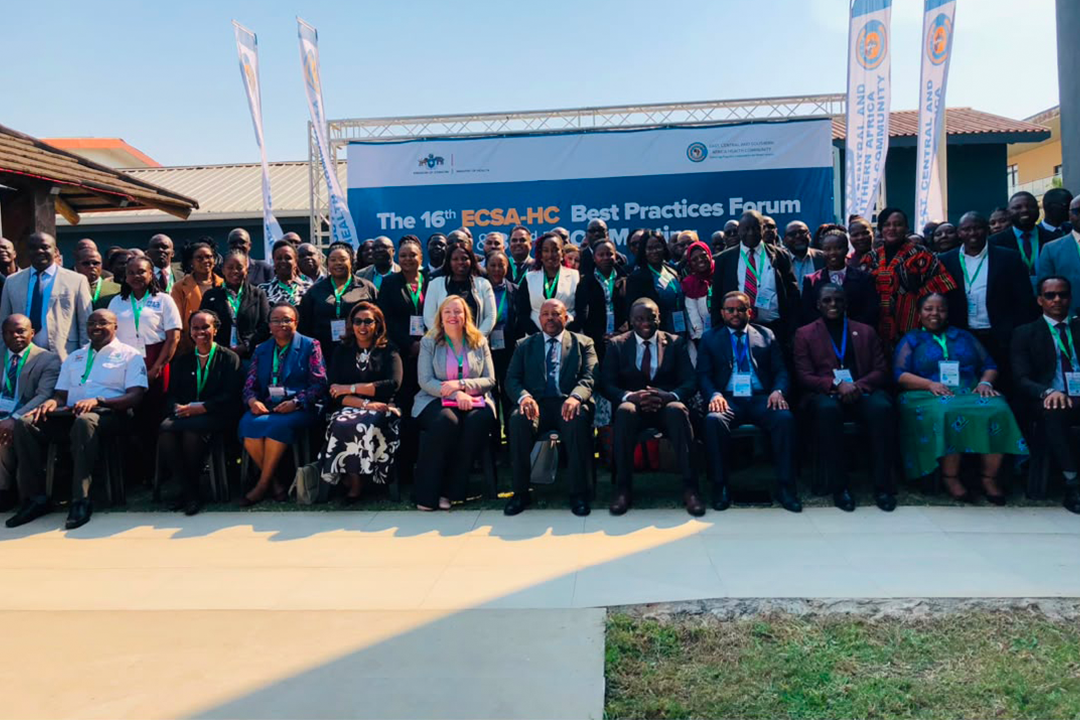
The landmark initiative was unveiled by ECSA-HC Director General Dr Ntuli Angyelile Kapologwe during the 16th ECSA-HC Best Practices Forum and 32nd Directors Joint Consultative Committee (DJCC) Meeting, held from August 5–7, 2026 at The George Hotel in Manzini, Eswatini.
The platform is designed to connect researchers, start-ups, youth innovators, policymakers, investors and healthcare implementers, creating opportunities for successful innovations to move beyond pilot stages and reach communities across East, Central and Southern Africa.
Dr Kapologwe said the marketplace represents a significant step towards strengthening regional capacity to develop and scale solutions that respond to the unique healthcare needs of member states.

“The Marketplace connects researchers, start-ups and youth innovators with policymakers, investors and implementers who can help move promising solutions beyond the pilot stage and into wider use,” he said.
He emphasised that innovation must move beyond ideas and deliver real benefits to communities.
“An innovation has not achieved its purpose while it remains only a good idea. Its value is realised when it reaches people and improves health and wellbeing,” he said.
Dr Kapologwe said the initiative supports ECSA-HC’s ambition of positioning the region as a centre for health research, innovation and learning, where solutions are developed based on local realities and scaled to address shared challenges.
The launch comes at a time when countries across the region are strengthening health security measures in response to emerging threats, including disease outbreaks and other public health challenges.
Dr Kapologwe said translating the International Health Regulations into practical national and cross-border action remains essential in building resilient health systems.
He noted that preparedness depends on stronger disease surveillance, faster reporting systems, trusted collaboration among countries and a skilled health workforce capable of detecting and responding to threats before they become regional crises.
“This Forum gives us the opportunity to examine what is working, learn honestly from one another and identify practices that can be adapted and scaled. Our shared goal must be a regional health security architecture that is robust, resilient and ready,” he said.
While emphasising the importance of health security, Dr Kapologwe said innovation remains a key driver of the future of healthcare.
“Security protects our present; innovation helps us build the future,” he said.
He highlighted the growing impact of digital health platforms, artificial intelligence, advanced diagnostic technologies, community-led models of care and locally designed service-delivery solutions in addressing persistent healthcare challenges.
Dr Kapologwe also shared progress towards establishing a Regional Innovations, Research and Learning Hub, which will strengthen the generation, organisation and use of real-time evidence to support better decision-making.
“Evidence should not arrive after decisions have been made. It should help leaders make the right decisions at the right time,” he said.
He pointed to successful regional knowledge-sharing initiatives, including a South-South learning exchange where Malawi and Lesotho learnt from Tanzania’s Special Babies Bundle of Care (SBBC) and m-mama programmes.
Following the exchange, Lesotho integrated m-mama as its primary emergency medical referral system for maternal, neonatal and child health, demonstrating how effective practices can be adapted and expanded across borders.
Dr Kapologwe said the true value of the Best Practices Forum lies in ensuring that successful approaches do not remain confined to one country, but are shared, strengthened and used to improve lives throughout the region.
He further called for sustainable investment in healthcare systems, urging countries to strengthen domestic resource mobilisation, embrace innovative financing models and build partnerships based on shared responsibility.
“As we deliberate, let us keep three questions before us: What proven practice can we adapt and scale across Member States? What must we finance differently to make our health systems sustainable? What can we deliver better, faster and more equitably by acting together?” he said.
The recommendations from the forum will be presented to the Directors Joint Consultative Committee and subsequently to the Health Ministers Conference to help shape the region’s future health agenda.
Dr Kapologwe said the impact of the gathering will be measured through action — by scaling innovations, strengthening partnerships and implementing solutions that improve healthcare delivery.
“Let us turn evidence into policy, move innovation from pilots to scale and build health systems that are regionally owned and sustainably financed,” he said.
#ECSAHC2026 #HealthInnovation #PublicHealth #RegionalCollaboration #EswatiniHealthcare