


BY MBONO MDLULI
MBABANE– The Eswatini Energy Regulatory Authority (ESERA) has announced the commencement of a formal review process, following an application by the Eswatini Electricity Company (EEC) for an electricity tariff adjustment of an average of 20.67% for the 2026/27 financial year.
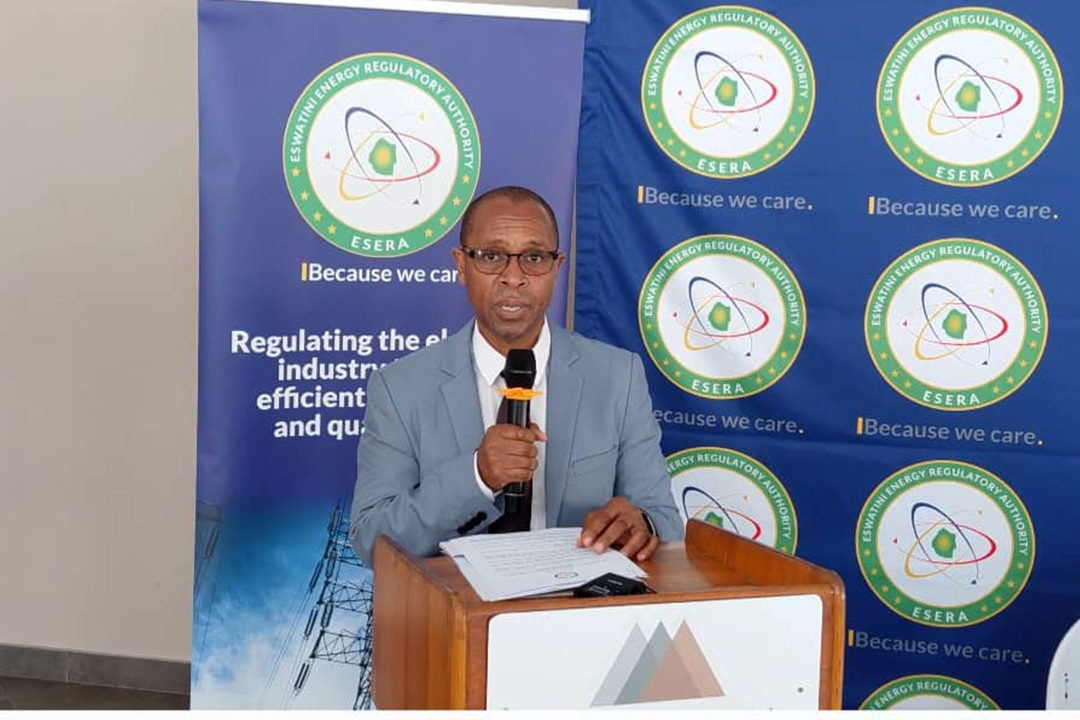
EEC has applied for an increase in its revenue requirement for the 2026/27 financial year amounting to E437 883 115. The announcement was made by ESERA Chief Executive Officer Sikhumbuzo Tsabedze at Mountain View in Mbabane on Thursday, January 8, 2026.
Tsabedze explained that the application was necessitated by significant cost pressures faced by EEC during the current 2025/26 financial year. Several Power Purchase Agreements (PPAs) expired during the period and required renegotiation. These renegotiated agreements resulted in material changes to electricity import tariffs, leading to a substantial increase in EEC’s cost of supply.
In addition, Tsabedze stated that an audited reconciliation for the 2024/25 financial year revealed an under-recovery, which further affected the utility’s financial position. As a result, EEC has applied for an increase in its revenue requirement for the 2026/27 financial year amounting to E437 883 115. This figure comprises E175 065 326 linked to import tariff escalations—mainly from NTCSA/Eskom, Electricidade de Moçambique (EDM) and Ubombo Sugar Limited (USL)—and E262 817 788 related to the under-recovery recorded in 2024/25.

The proposed adjustment translates into an additional 13.67 per cent on top of the previously projected 7 per cent average tariff increase for 2026/27. If approved, this would result in a total average tariff increase of 20.67 per cent, effective from 1 April 2026.
Tsabedze emphasised that ESERA is mandated, in terms of Section 5(1)(f) of the Energy Regulatory Act read together with Section 32 of the Electricity Act and Sections 5 and 6 of the Tariff Methodology, to conduct a comprehensive review before making any determination. He stressed that no final decision has been made and that public participation is a central pillar of the regulatory process.
To ensure transparency and inclusivity, ESERA has invited electricity consumers, businesses, trade unions, consumer groups, schools, churches, farmers and other stakeholders to submit written comments on the application by 24 January 2026. The Authority will also host public hearings across the country to gather oral submissions.
What the proposed review means
The proposed electricity tariff review means a lot for a domestic consumer who wants to buy electricity with E100. This means E100, which currently gives you 40 units as a domestic consumer will give you 32 units. The lifeline customers will now get 58 units from the same amount, as they currently get 68 units. However, this is still an application by EEC, which can be changed by the submissions and consultations to be members of the public.
Public Hearing Schedule
| Date | Audience | Time | Venue |
| Tuesday, 20 January 2026 | General public, Trade unions, Consumer Groups, schools, churches, farmers and businesses | 10am | Bethesda Church, Nhlangano |
| Wednesday, 21 January 2026 | Businesses, Government ministries | 10am | Sibane Hotel, Ezulwini |
| Thursday, 22 January 2026 | General public, Trade unions, Consumer Groups, schools, churches, farmers and businesses | 10am | Siteki Hotel, Siteki |
| Friday, 23 January 2026 | General public, Trade unions, Consumer Groups, schools, churches, farmers and businesses | 10am | Thokoza Centre, Mbabane |
| Saturday, 24 January 2026 | General public, Trade unions, Consumer Groups, schools, churches, farmers and businesses | 10am | The George Hotel, Manzini |
The full tariff application is available on the ESERA website and official social media platforms. Written submissions may be sent to info@esera.org.sz, while further enquiries can be directed to the Manager for Consumer and Stakeholder Management on 78089945 or 2404 2103.
In closing, Tsabedze reaffirmed ESERA’s commitment to balancing the sustainability of the electricity sector with the protection of consumers, underscoring the Authority’s dedication to accountable regulation and long-term energy security for Eswatini.