



BY SIFISO NHLABATSI
EZULWINI– Eswatini is among the first countries globally to conduct the Nationally Determined Contribution (NDC) Partnership’s Building Blocks Self-Assessment, positioning the Kingdom among the early movers in evaluating the systems required to implement climate commitments.
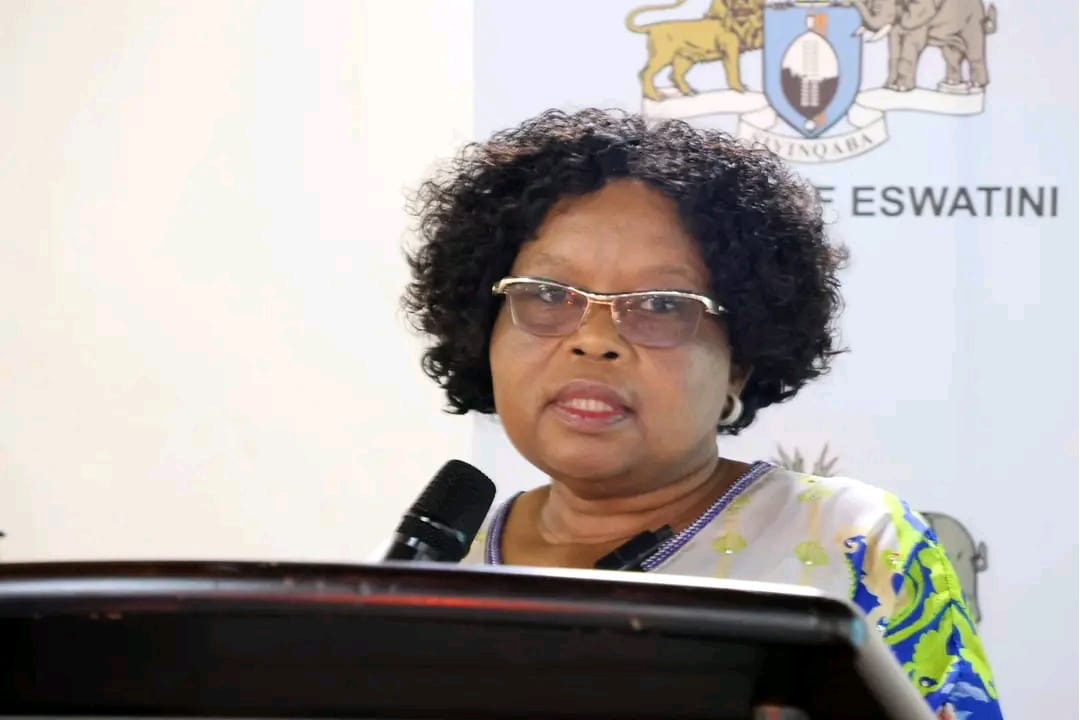
Minister for Tourism and Environmental Affairs Jane Mkhonta-Simelane announced this during the National Building Blocks Self-Assessment Workshop held at Sibane Sami Hotel on Wednesday morning.
She said the exercise demonstrated Eswatini’s commitment to examining its climate readiness and identifying the institutional improvements required to translate national commitments into action.
“It is in this spirit of proactive leadership that I am immensely proud to announce that the Kingdom of Eswatini is among the very first countries globally to conduct this NDC Partnership Building Blocks Self-Assessment,” she said.

The minister said the initiative signalled the country’s determination to assess its preparedness rather than wait for external partners to identify the challenges affecting implementation.
“By stepping forward as a pioneer of this framework, Eswatini is signalling to the international community that we are serious about operational readiness,” Mkhonta-Simelane said.
“We are not waiting for solutions to be handed to us; we are actively diagnosing our own systems to ensure we can absorb climate finance, execute complex projects, and track our progress with unmatched integrity.”
The self-assessment is intended to establish a baseline of the country’s institutional readiness to implement its climate commitments and identify areas requiring additional support.
It is based on the Building Blocks for Effective Climate Action framework developed to help countries assess the enabling conditions needed to move from climate ambition to implementation.
The assessment covers three areas: high-level political ownership; ambitious climate action; and coordination, capacity and transparency.
Mkhonta-Simelane said the process would enable government institutions to examine their existing arrangements, identify bottlenecks and develop practical responses to shortcomings.
She urged participants to approach the exercise with honesty and objectivity, stressing that the objective was not to present every government system as fully developed but to establish a realistic picture of the country’s readiness.
The assessment also comes as Eswatini prepares its Second Biennial Transparency Report (BTR II), which Mwaura said was due for submission to the UNFCCC by the end of December 2026.
The findings are expected to contribute to the report by documenting institutional arrangements, progress in strengthening implementation systems, capacity gaps and the support required.
The assessment will also help government identify priority actions for the next 12 to 18 months and communicate its technical assistance and capacity-building needs to development partners.
Mkhonta-Simelane stressed that reliable data, effective monitoring and transparent reporting would be essential in demonstrating progress on climate commitments.
She urged participants to identify weaknesses in institutional coordination, policies and implementation arrangements rather than conceal them.
The minister said the country needed to establish a strong foundation for climate action by examining what was working and what required improvement.
“Today is not an audit, nor is it a ranking exercise. It is a collaborative self-reflection,” she said.
The NDC Partnership’s Country Engagement Specialist, Irene Mwaura, said the exercise was voluntary and country-led, providing government institutions with an opportunity to assess their progress and agree on priorities without comparing their performance with that of other countries.
Mwaura said Eswatini had been a member of the NDC Partnership since December 2018, adding that the partnership was celebrating its 10th anniversary in 2026.
The global coalition brings together more than 270 members, including 145 countries, 67 institutional members and 59 associate members, working to advance the Paris Agreement and sustainable development.
Under its 2026–2030 Work Programme, the partnership is placing greater emphasis on strengthening the building blocks needed to support countries in implementing their climate commitments.
Mwaura encouraged participants to contribute their institutional experiences and engage practically in identifying the country’s strengths and weaknesses.
She said the assessment’s success would ultimately depend on whether its findings translated into meaningful improvements in implementation capacity.
Meanwhile, Mkhonta-Simelane said the exercise offered Eswatini an opportunity to demonstrate leadership in climate readiness while strengthening the systems needed to protect its people and attract green investment.
“Let us use this first-mover advantage to position Eswatini as a global standard-bearer for climate readiness,” she said.
#Eswatini #ClimateReadiness #NDCPartnership #ClimateAction #NDC3 #ClimateResilience #SustainableDevelopment
(Courtesy Pic)