


BY REPORTER
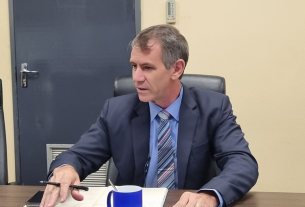
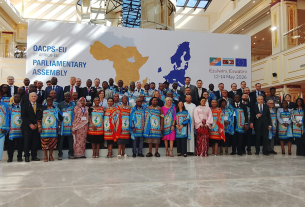
ADDIS ABABA – His Excellency Sibusiswe Mngomezulu, Eswatini’s Ambassador to Brussels, is part of a delegation that is representing the Organisation of African, Caribbean and Pacific States (OACPS) in Addis Ababa ahead of the African Union (AU) Summit.
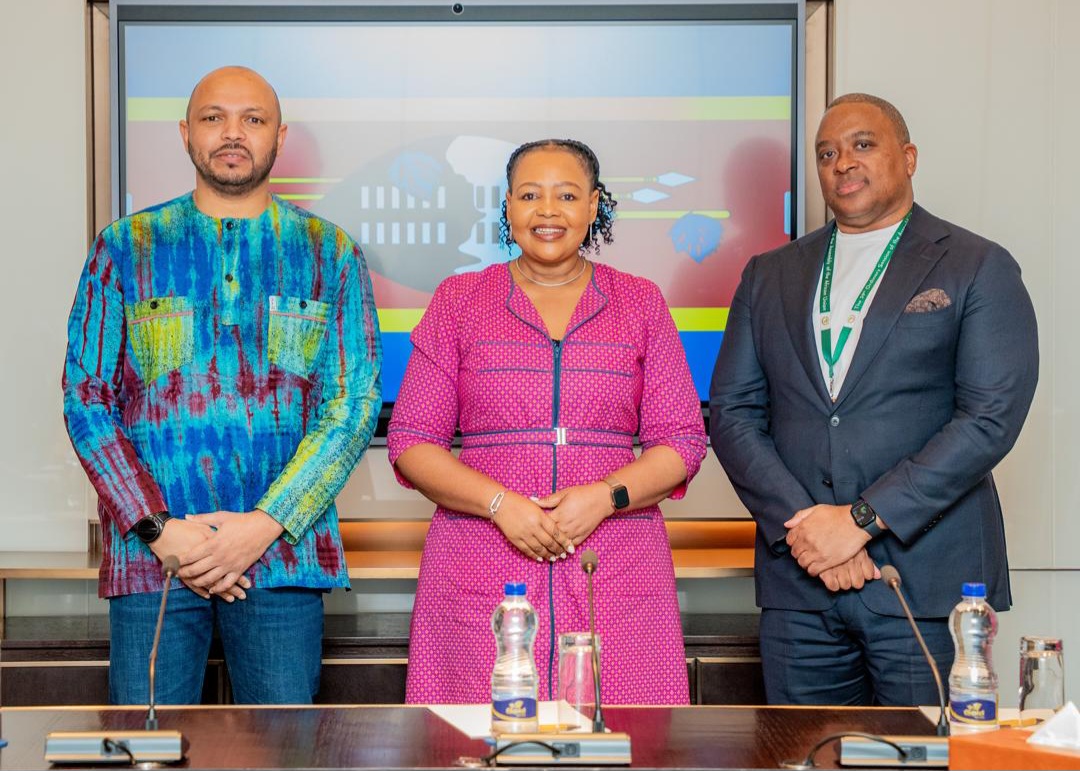
The delegation, which includes the OACPS Secretary-General, His Excellency Moussa Saleh Batraki, held a meeting with the Minister for Foreign Affairs and International Cooperation, Pholile Shakantu.
In an interview, Mngomezulu explained that the Kingdom of Eswatini has consistently played a significant role within the OACPS, serving as a standard-bearer in advancing the organisation’s objectives.
“We have been involved in negotiations where we led the Africa Regional Protocol. Eswatini also played a key role last year when we presided over the chairmanship of both the Council of Ministers and the Committee of Ambassadors of the OACPS at a time when the organisation was undergoing transformation,” he said.

Mngomezulu noted that the transformation process has ushered in a comprehensive reform agenda aimed at strengthening the organisation’s effectiveness and credibility.
Regarding the OACPS presence at the upcoming AU Summit, Mngomezulu explained that the delegation is in Addis Ababa to explore ways and means of ensuring that the OACPS maintains a strategic presence and is adequately capacitated to deliver on the objectives of the organisation and its member states.
He further stated that member states have signed the Georgetown Agreement, which serves as the constitutive act of the OACPS.
“For the constitutive act to realise its objectives, member states must demonstrate commitment. His Majesty King Mswati III has therefore been invited to assume the role of Champion for Resource Mobilisation. It is through this assignment that His Majesty has commissioned us to galvanise member states and unite them in solidarity to pursue a common purpose — namely the reconfiguration and repurposing of the OACPS. That is why we are here today,” he said.
In September last year, the OACPS marked the handover of the Presidency of its Committee of Ambassadors and Council of Ministers from the Kingdom of Eswatini to the Solomon Islands, in accordance with Article 20 of the Revised Georgetown Agreement, which provides for the equitable rotation of leadership among the six regions of the organisation.
Under the stewardship of Mngomezulu, the Committee of Ambassadors was guided with vision and resolve, focusing on key priorities including the restoration of financial stability and institutional credibility, the promotion of inclusivity, dialogue and consensus-building, support for the installation of new leadership, and the advancement of the implementation of the Samoa Partnership Agreement.
During its tenure, the Eswatini Presidency oversaw several landmark achievements. These included the election of Moussa Saleh Batraki as Secretary-General, the adoption of the Secretary-General’s PACTE reform initiative, the nomination of a Champion for Resource Mobilisation, the approval of the purchase of a new OACPS headquarters, and the official launch of activities marking the 50th anniversary of the organisation. Preparations were also advanced for the 11th OACPS Summit of Heads of State and Government, scheduled to be held in Malabo, Equatorial Guinea, in March 2026.
The Presidency further strengthened the OACPS–EU Partnership by providing political guidance on the implementation of the Samoa Agreement, encouraging its ratification, and reinforcing joint institutional frameworks.
On the global stage, the Bureau amplified the voice of OACPS member states in critical international processes, including proceedings relating to the International Court of Justice advisory opinion on clima…
…King Letsie III speaks strongly about child survival, nutrition
ADDIS ABABA-His Excellency King Letsie III delivered a compelling address, speaking with urgency and conviction about the state of child survival and nutrition across the continent.
Addressing deputy prime ministers, ministers, partners and distinguished guests at a high level side event on the margins of the 39th Ordinary Session of the African Union (AU) Summit e expressed gratitude for the opportunity to speak at such an important gathering.
Eswatini Minister for Foreign Affairs and International Cooperation Pholile Shakantu was in attendance together with Eswatini Ambassador to Ethiopia His Excellency Mahlaba Mamba and Senator Tony Sibandze.
He did so not only in his capacity as the African Union Champion for Nutrition, but above all as an African deeply concerned by a reality that should no longer define the continent: that millions of children continue to die from causes that are entirely preventable.
No nation, he stressed, can credibly claim progress while its children are denied the most basic chance to survive.
Child survival, he argued, is not merely a technical issue reserved for health experts.
“It is a political choice. It is a measure of leadership. It is the clearest signal of whether development is working for the most vulnerable members of society. When a child dies from preventable malnutrition, it reflects not a lack of knowledge, but a failure of priorities,” he said.
He mentioned that each year, nearly five million children under the age of five die from preventable causes globally and that malnutrition contributes to almost half of these deaths.
In Africa, he said, this tragedy persists not because solutions are unavailable, but because they have not yet been implemented at scale with sufficient urgency and sustained investment.
“For mothers and children, survival hinges on access to basic nutrition from pregnancy through the first five years of life. These interventions are among the most proven and cost-effective in public health. They save lives quickly and strengthen health systems. Yet child mortality on the continent is once again rising”.
Elaborating, King Letsie said the summit convened at a time of significant global uncertainty.
He said conflict, climate shocks, economic strain and reduced international assistance are placing immense pressure on already fragile systems and that if current trends continue, millions of additional children are projected to die unnecessarily by the end of this decade.
These challenges are real, the King acknowledged, but they do not excuse inaction.
“They demand clarity and resolve. When resources shrink and systems weaken, children and mothers are always the first to suffer. Nutrition is the earliest protection a society provides, beginning at conception, and it is too often the first area to be compromised under fiscal pressure”.
He said when nutrition fails, the damage is immediate and irreversible, affecting survival, learning and productivity for a lifetime.
King Letsie said the evidence is clear: a defined package of maternal, newborn and child nutrition interventions dramatically reduces mortality and disability.
This, he said, includes adequate maternal nutrition, prevention and treatment of anaemia, early and exclusive breastfeeding, appropriate complementary feeding, vitamin A supplementation and effective management of acute malnutrition.
The science, he emphasised, is settled. The costs are known. Scaling these interventions across sub-Saharan Africa would require approximately US$3.5 billion per year — about US$13 per pregnant woman and US$17 per child under five annually.
This, he argued, is not an unaffordable ambition but a test of political will.
“While international partnership remains vital, sustainable progress must be rooted in domestic leadership and domestic financing. Without decisive action, child survival outcomes may worsen — not because solutions are lacking, but because attention is diverted elsewhere. All nutrition matters, but maternal and child nutrition carries a unique and direct link to survival,” King Letsie said.
He highlighted that across Africa, millions of children are born with low birth weight, beginning life already at risk.
Anaemia, he said, affects an unacceptably high proportion of women and children, undermining health, development and resilience.
These realities demand that governments treat nutrition not as a peripheral concern, but as a central pillar of national development strategies.
In closing, the King’s message was unequivocal: child survival is both a moral imperative and a leadership responsibility.
…Heads of State land in Addis Ababa, all set for AU Summit
ADDIS ABABA-The capital city of Ethiopia, Addis Ababa, was a beehive of activity yesterday as Heads of State from African countries arrived for the African Union (AU) Summit scheduled for today.
Some of the esteemed Heads of State met Eswatini Minister for Foreign Affairs and International Cooperation, Pholile Shakantu.
Among them was President of Botswana Duma Boko, Lesotho Minister for International Relations Lejone Mpotjoana and Botswana Minister of Foreign Affairs and International Cooperation Dr. Lemogang Kwape.
Also meeting the Eswatini minister was her Rwanda Minister for Foreign Affairs and International Cooperation Olivier Nduhungirehe.
According to the AU website, it is expected that African Heads of State and Government will launch the African Union theme of the year “Assuring Sustainable Water Availability and Safe Sanitation Systems to Achieve the Goals of Agenda 2063”, when they begin their 39th Ordinary Session at the Africa Union headquarters in Addis Ababa on 14th February.
The 2026 theme is linked to Agenda 2063, the African Union’s 50-year development framework aimed at, among others, transformation, inclusive growth, poverty eradication, improved food security, and climate resilience.
The theme underscores the critical role of water and sanitation, and acts as a springboard for broader socio-economic development and growth on the continent, in addressing urgent and strategic challenges.
According to its website, the AU recognizes that water is more than a sectoral thematic- it is a foundational input into economic development, and life itself.
“Water security is a strategic, development, peace, and climate issue. It is central to food security, health, climate adaptation and conflict prevention, and is a shared continental priority requiring regional cooperation and investment. Sustainable water management is essential for realizing all the seven aspirations of Agenda 2063,” the website states.
When delivering his keynote address on the keynote address during a side event on the margins of the AU Executive Council, African Union Commission the Commissioner for Agriculture, Rural Development, Blue Economy and Sustainable Environment (ARBE) and former Eswatini Minister for Agriculture Moses Vilakati said the theme reflects a collective recognition of the strategic importance of water and sanitation as essential elements of human security, social stability and economic transformation on the continent.
“It represents as a strong indication of commitment at the highest level, which helps raise the water agenda and profile,” Vilakati said.