
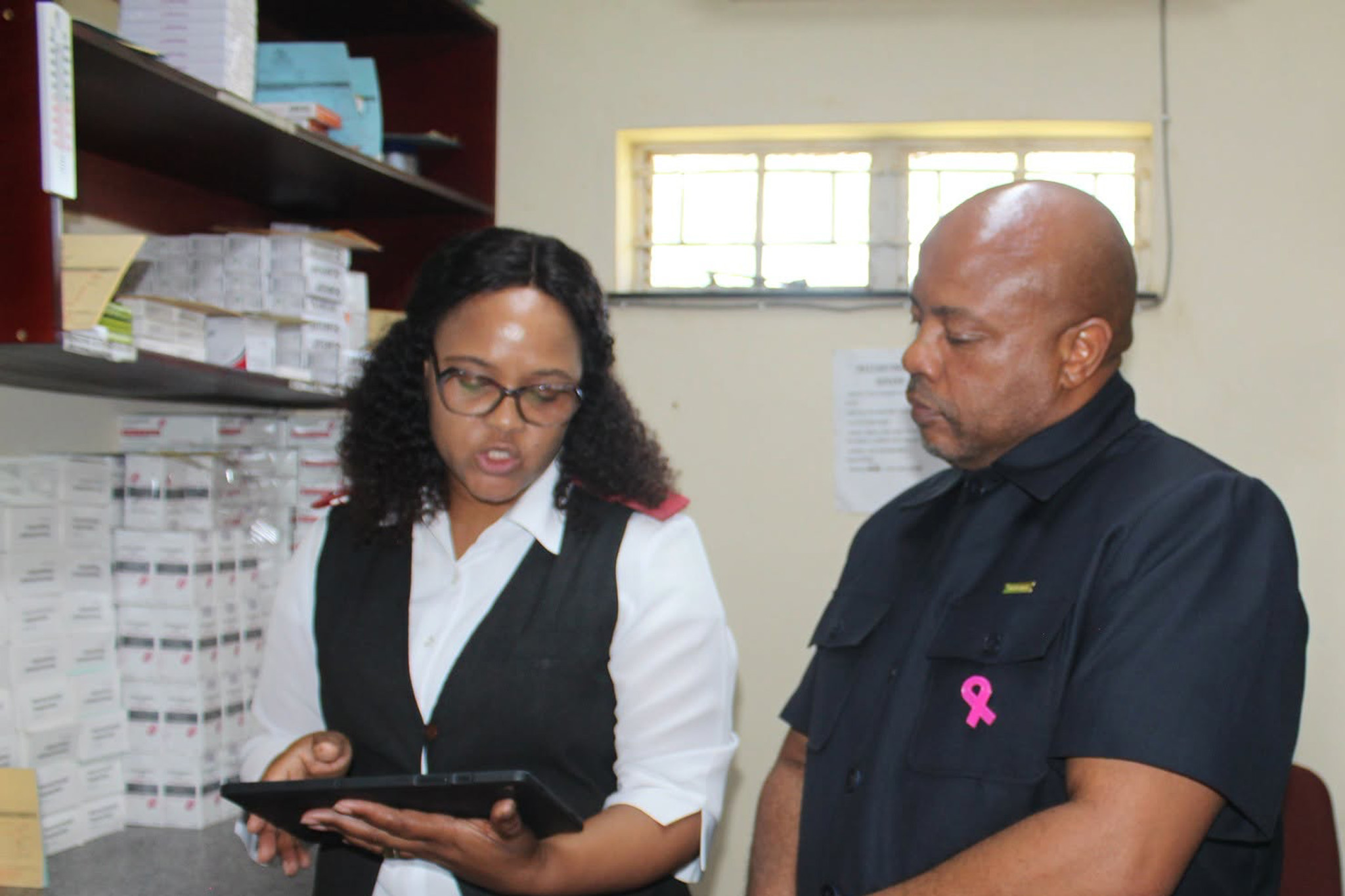




….New technology allows health workers to monitor medicine stocks, access patient records and improve treatment
BY MBONGENI NDLELA
MBABANE – The Ministry of Health is introducing a more accountable way of managing medicines in public health facilities, with new digital technology allowing healthcare workers to establish which medicines are available, record those issued to patients and automatically update stock records.
The development forms part of government’s efforts to improve healthcare services, reduce medicine wastage and address weaknesses in the management of medical supplies.
According to a Ministry of Health report released in October 2026, the country has already introduced an electronic patient records system covering more than 250 health facilities.

Known as the Client Management Information System (CMIS), the platform allows healthcare workers to access patients’ medical histories, record consultations, diagnoses and prescriptions, and monitor treatment.
The ministry has now taken a further step by connecting CMIS to the Electronic Logistics Management Information System (eLMIS), which manages medicine stocks and other medical supplies.
This means that when a patient visits a participating health facility, healthcare workers can check the availability of prescribed medicines electronically before issuing them.
Once the patient receives the medication, the transaction is recorded in CMIS and automatically communicated to eLMIS, allowing the facility’s stock records to be updated.
Previously, patient treatment records and medicine inventories were managed through separate processes, making it difficult to reconcile medicines issued to patients with quantities remaining in storage.
The new arrangement reduces the need for manual reconciliation and links medicine consumption directly to individual patient records.
For the ministry, this provides a clearer picture of how medicines are being used at health facilities and helps officials plan future supplies.
The October report explains that the integration is intended to improve medicine availability, strengthen stock accountability and reduce wastage.
However, the ministry is still working towards extending the integration to additional facilities and establishing a fully connected national medicine supply chain.
MEDICINES TO BE TRACKED FROM WAREHOUSES TO PATIENTS
One of the ministry’s longer-term objectives is to establish a system through which medicines can be followed from Central Medical Stores, through regional depots and health facilities, until they reach the patients for whom they were prescribed.
Under the proposed arrangement, medicines received at Central Medical Stores would be recorded before being distributed to regional depots or directly to healthcare facilities.
Regional depots would maintain records of medicines received and distributed, while individual health facilities would use eLMIS to monitor quantities in storage.
At the dispensing stage, CMIS would connect the medicine issued to the electronic record of the patient receiving treatment.
The ministry says the connection already established between CMIS and eLMIS provides an important foundation for achieving this wider objective.
The system is also expected to assist officials in identifying facilities experiencing shortages and determining where additional supplies may be required.
With more reliable information about medicine consumption, the ministry aims to improve procurement planning and the distribution of essential medicines.
NEW SYSTEM COULD HELP IDENTIFY UNSAFE MEDICINES
Another important feature of the digital health programme concerns patient safety.
The ministry intends to strengthen its ability to trace medicines that may be found defective or unsafe after distribution.
For example, if a particular batch of medication is recalled, a fully connected tracking system could help health authorities identify which depots and facilities received the affected medicines.
By linking batch information to patient dispensing records, healthcare workers could eventually establish which patients received the affected medication and arrange appropriate follow-up.
The ministry explains that this would make it possible to conduct more targeted medicine recalls instead of unnecessarily withdrawing unaffected stock.
Such information could also assist healthcare professionals in monitoring suspected adverse reactions to medicines.
The report makes clear, however, that comprehensive batch-level traceability remains a developing capability. Further integration across the medicine supply chain will be required before the full benefits can be realised.
SEVEN DIGITAL SYSTEMS SUPPORT HEALTHCARE SERVICES
Beyond medicine management, the Ministry of Health has introduced several other digital platforms covering different areas of healthcare delivery.
The Community-Based Health Information System allows community health workers to record services provided outside health facilities and refer individuals requiring medical attention.
The Laboratory Information System supports the electronic management of laboratory requests, sample testing and results.
Through its connection with CMIS, laboratory requests can be transmitted electronically, with results returned to support decisions about patient treatment.
The Equipment Maintenance Management System records information about medical equipment, including servicing requirements, maintenance requests and equipment condition.
This is intended to help health authorities monitor equipment functionality and plan repairs or replacements.
Another platform, the Human Resource Information System, manages information about healthcare personnel, including staffing levels, professional qualifications and deployment.
The ministry uses this information to support workforce planning and identify staffing gaps.
Connecting these platforms is the Health Information Exchange, which enables participating systems to share relevant healthcare information securely.
The ministry says the objective is to reduce duplication and ensure that healthcare workers can access appropriate information when providing services.
INTERNATIONAL PARTNERS SUPPORT ESWATINI’S HEALTH PROGRAMME
The digital health programme is being implemented with assistance from several international development and technical partners.
According to the ministry, Palladium, through support from the United States Government’s Department of State, supports CMIS and the Health Information Exchange.
The World Bank and UNICEF support the Community-Based Health Information System, while the World Bank also supports the Human Resource Information System.
ICAP, through the United States Government’s Department of State, supports the Laboratory Information System.
The Clinton Health Access Initiative supports the Equipment Maintenance Management System, while the Global Fund supports eLMIS.
These partnerships form part of the ministry’s work to improve the management of patient information, medical supplies, healthcare personnel and equipment.
MINISTRY PLANS FURTHER EXPANSION
The Ministry of Health has identified the expansion of digital integration as one of its next priorities.
This includes connecting CMIS and eLMIS at additional health facilities, improving the exchange of medicine information between Central Medical Stores and regional depots, and developing national dashboards showing medicine availability and consumption.
The proposed dashboards would help officials monitor stock levels, identify possible shortages and make decisions about distributing medicines.
The ministry has also acknowledged that continued progress will depend on reliable internet connectivity, investment in digital infrastructure, training healthcare workers and maintaining accurate information.
Long-term funding and technical support will also be necessary to keep the systems operating and expand their coverage.
Although the electronic patient records system already operates across more than 250 facilities, the ministry’s report does not specify how many facilities have completed the newer CMIS–eLMIS integration.
It also does not provide figures showing how much medicine wastage or stock shortages have been reduced since the systems were connected.
The ministry’s stated objective is to establish a healthcare system in which medicine availability can be monitored more accurately, patient records can be accessed when needed and medical supplies can be accounted for throughout their distribution.
As the report concludes, the goal is to ensure that the right medicine reaches the right facility and the right patient at the right time, with accountability throughout the process.
(Courtesy Pic)


