

…Turning creative talent into sustainable income…
…Empowering youth through skills development and employment…
…Protecting creative work through copyright awareness…

BY NELIWE NGUBANE
MBABANE— A talent can make people laugh, move audiences through music, tell powerful stories through poetry or bring imagination to life through art. But for many talented young people in Eswatini, the difficult question remains: how can a gift become a reliable source of income?

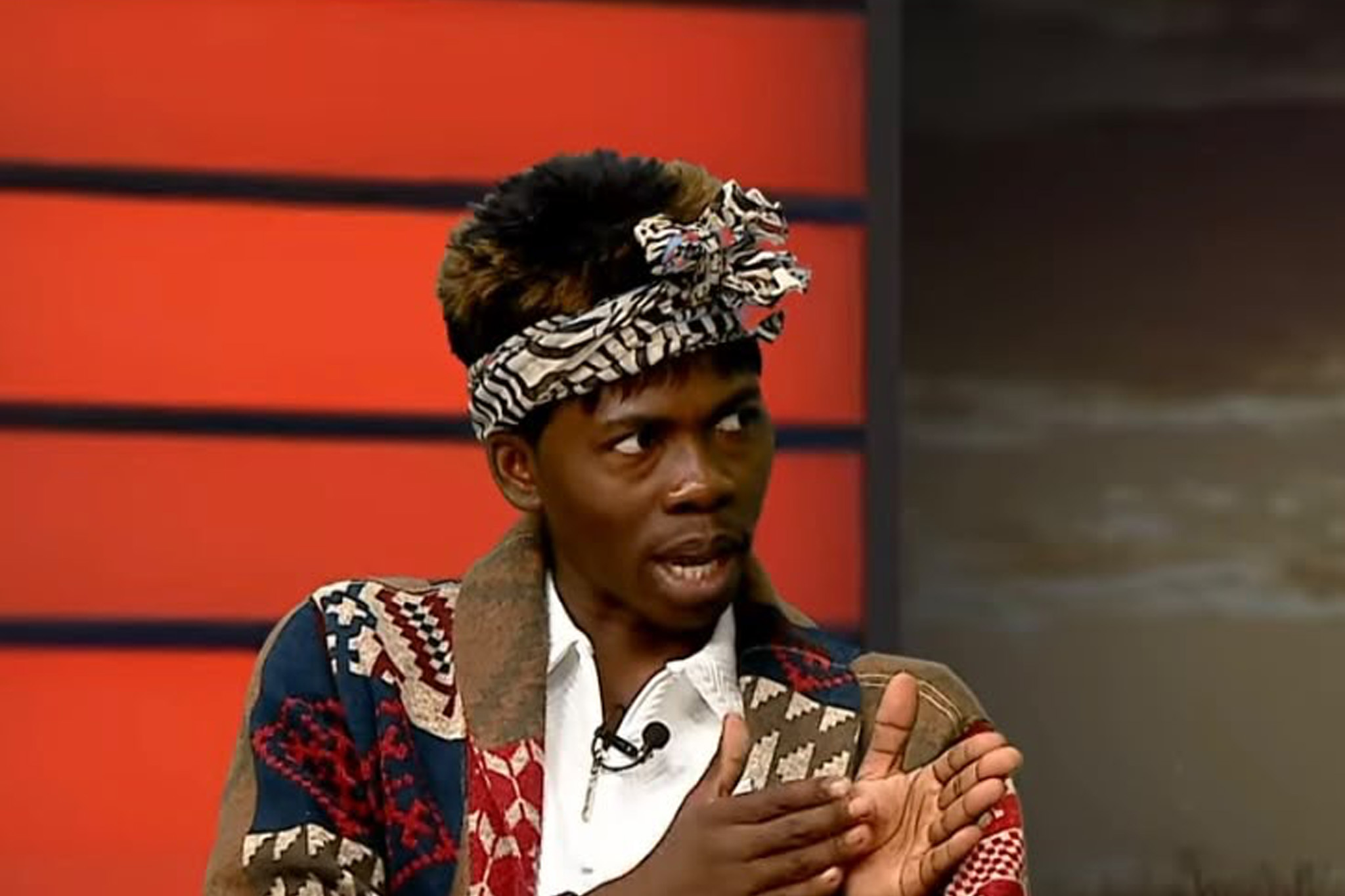
This was the message shared by comedian Mduduzi Nkambule, popularly known as Gogo Eswatini, during his appearance on the Kusile Breakfast Show on Eswatini TV on Friday, 16 October 2026, where he discussed the Eswatini Youth Empowerment Programme and its vision of turning creative skills into sustainable livelihoods.
The programme seeks to address one of the challenges facing young people in the country: limited employment opportunities, even among those with considerable creative talent. Through skills development, mentorship, practical industry exposure and opportunities to earn from their abilities, the initiative aims to help young people transform their passions into economic opportunities.
For Gogo, the issue is not necessarily a shortage of talent among emaSwati, but the difficulty of converting that talent into something that can put food on the table.
“Swazis are talented, but the problem holding emaSwati backwards is how to turn my skill into bread,” he explained, highlighting the gap between possessing a skill and knowing how to make a living from it.
His message placed the creative economy at the centre of conversations about youth unemployment, economic inclusion and national development. Rather than viewing creativity merely as entertainment or a hobby, the initiative recognises that artistic abilities can become valuable economic assets when supported by the right training, resources and professional networks.
Gogo explained that many talented people need more than recognition to succeed. They need a helping hand, financial support where necessary, professional guidance and access to platforms that can expose their work to wider audiences.
He noted that having a talent does not automatically mean that a person understands how to develop it into a sustainable career. A comedian may know how to entertain an audience, a singer may have a powerful voice and a poet may be able to move people through words, but each still needs the tools to build a professional career.
“Many, including Gogo, need a person who can stretch his or her hand in the form of a helping hand, since I do have the talent, but I need help to cross to the level where the world can see me,” he said.
He also appealed to people and organisations with financial resources to consider supporting emerging creatives through sponsorship and other forms of assistance.
The Eswatini Youth Empowerment Programme is intended to help bridge this gap by connecting young people with opportunities to improve their skills, understand their respective industries and develop the ability to earn from their work.
Gogo and fellow comedian S’lwane have been identified as ambassadors of the initiative. However, he emphasised that the programme extends beyond the ambassadors, with other people and organisations expected to contribute their expertise and support the development of participating young people.
The broader objective is to create an environment in which creative talent is nurtured, professionalised and given the opportunity to compete beyond Eswatini’s borders.
According to Gogo, the initiative is intended to accommodate different creative disciplines, including comedy, music, poetry, writing and drawing.
Young people who are Eswatini citizens and aged between 18 and 35 are invited to register for the programme, provided they have a talent they want to develop.
The emphasis is on helping participants improve their abilities while learning how to navigate the industries in which they wish to work.
For example, Gogo explained that his participation in the comedy sector would involve learning how to perform more effectively and develop his craft in ways that could generate income.
The same principle applies to singers, writers, poets and visual artists, who would benefit from relevant training and practical opportunities to apply what they have learnt.
Importantly, the vision is not limited to classroom instruction. Gogo described an approach in which successful applicants could learn while also working in real environments where their skills are required.
Using himself as an example, he explained that if he were learning to become a master of ceremonies, he could be taken to an actual event where that skill was needed and have an opportunity to earn money while gaining experience.
This approach could help young creatives bridge the gap between training and employment, allowing them to develop professional confidence, build portfolios, establish industry relationships and understand the standards expected by clients and employers.
It also presents a practical route towards economic inclusion, particularly for young people whose abilities may have gone unrecognised because they lack access to professional opportunities.
The programme’s message is that creative work deserves to be taken seriously as a potential source of employment and income, rather than being dismissed because it falls outside conventional career paths.
Gogo acknowledged that efforts are being made to expand employment opportunities in Eswatini, but argued that the country’s creative talent should also be part of the solution.
The creative economy encompasses activities in which individual talent, ideas, artistic expression and intellectual property can generate economic value. It includes music, comedy, visual arts, writing, performance, content creation and other creative services.
When properly developed, these fields can create opportunities not only for performers and artists, but also for people working behind the scenes, including producers, photographers, designers, event organisers, technicians and other service providers.
A thriving creative industry can therefore support several livelihoods while contributing to cultural preservation and the country’s visibility beyond its borders.
For young people, this means that a talent could become more than a source of personal fulfilment. It could develop into a profession, a small business or an enterprise capable of employing others.
Gogo said the initiative reflects the interest of the Ministry of Economic Planning and Development and the United Nations in improving the lives of emaSwati through opportunities that can help them become economically independent.
He expressed optimism that the concerns of aspiring creatives were reaching people and institutions capable of helping them move forward.
He also indicated that the ambassadors had been approaching different stakeholders in search of support for the initiative, making collaboration an important part of its development.
The programme’s success will ultimately depend on whether the support offered translates into meaningful skills development, access to work and sustainable income for participants.
Another important issue highlighted by Gogo was copyright, a subject that can determine whether creatives receive recognition and financial benefits from the work they produce.
Copyright is a form of legal protection that generally arises automatically when an original work is created and recorded in a tangible form, subject to the applicable law. It can protect original literary, musical and artistic works, including written pieces, songs, drawings, photographs and other eligible creative expressions.
For a young musician, copyright can help protect an original song. For a writer, it can protect an original article, story or other literary work. For an artist, it can protect an original drawing or painting, while a comedian may have copyright interests in original scripts, recorded performances and videos, depending on the circumstances.
This protection is important because creative work has value. When another person copies, reproduces, distributes or uses protected material without the necessary permission, the original creator may lose control over how the work is used and may miss out on income or recognition.
Copyright also helps creatives understand that producing work is only one part of building a career. They must learn how to manage their creations, document ownership, negotiate agreements and understand the permissions required when their work is used commercially.
For instance, a musician whose song is used in an advertisement, a video creator whose content is reproduced by a business or an artist whose work is reproduced on merchandise may need to understand the relevant rights, licences and contractual arrangements to ensure that the use of the work is properly authorised.
However, copyright does not automatically protect every idea, talent, style or general concept. It generally protects the original expression of an idea, rather than the idea itself. Nor does copyright mean that every use of a protected work is automatically unlawful; exceptions and limitations may apply under the relevant law.
Young creatives therefore need to understand their rights and responsibilities, including when permission is required, how to enter licensing agreements and how to seek advice when their work is used without authorisation.
Copyright is particularly relevant to the creative economy because it can help turn creative output into a source of economic value. Where rights are properly managed, creators may be able to earn through authorised use of their work, licensing arrangements and other legitimate commercial opportunities.
The Eswatini Copyright and Neighbouring Rights Society is among the institutions associated with copyright and neighbouring rights in the country’s creative sector. Understanding the role of relevant institutions and the protection available under Eswatini law can help emerging artists make more informed decisions about their work.
For a programme seeking to nurture talent and develop professional creatives, copyright education can therefore be an important part of preparing participants to work confidently in the industry.
While access to opportunities and financial support is important, Gogo also stressed the need for creatives to remain humble and willing to learn.
Talent may open the door, but discipline, professional conduct, continued learning and the ability to adapt can help a creative person build a lasting career.
For young people entering the industry, this means being open to criticism, learning from experienced professionals, respecting agreements and understanding that success requires consistent effort.
It also means recognising that creativity must be accompanied by business knowledge. Artists need to understand how to present their work, engage clients, negotiate payments, manage their reputations and protect their intellectual property.
The programme’s wider ambition is to nurture talent that can be exported, allowing emaSwati to participate in regional and international creative markets while contributing to the country’s economy.
For Gogo, the opportunity to learn while working and earning could help creatives move from being talented individuals who struggle to access opportunities to professionals who can support themselves and their families.
As Eswatini continues to explore ways of addressing youth unemployment, the creative economy offers another avenue through which young people can participate in economic development.
The central message from Gogo’s appearance on the Kusile Breakfast Show was clear: recognising talent is only the beginning. The next step is to provide the skills, support, protection and opportunities that allow it to grow into meaningful work.
For aspiring comedians, singers, poets, writers and artists, the challenge is to develop their gifts with purpose and a willingness to learn. For institutions, businesses and potential sponsors, the challenge is to help create pathways through which that talent can be seen, valued and rewarded.
Ultimately, the goal is to ensure that creativity does not remain a dream that young people pursue only in their spare time, but becomes a viable means of earning a living and contributing to national development.
#EswatiniYouthEmpowerment #CreativeEconomy #YouthEmployment #EconomicInclusion #GogoEswatini #Slwane #CopyrightAwareness #CreativeIndustries #Eswatini #EPN
(Courtesy Pic)


