



…Over 250 health facilities benefit from electronic patient records and medicine management systems
BY MBONGENI NDLELA
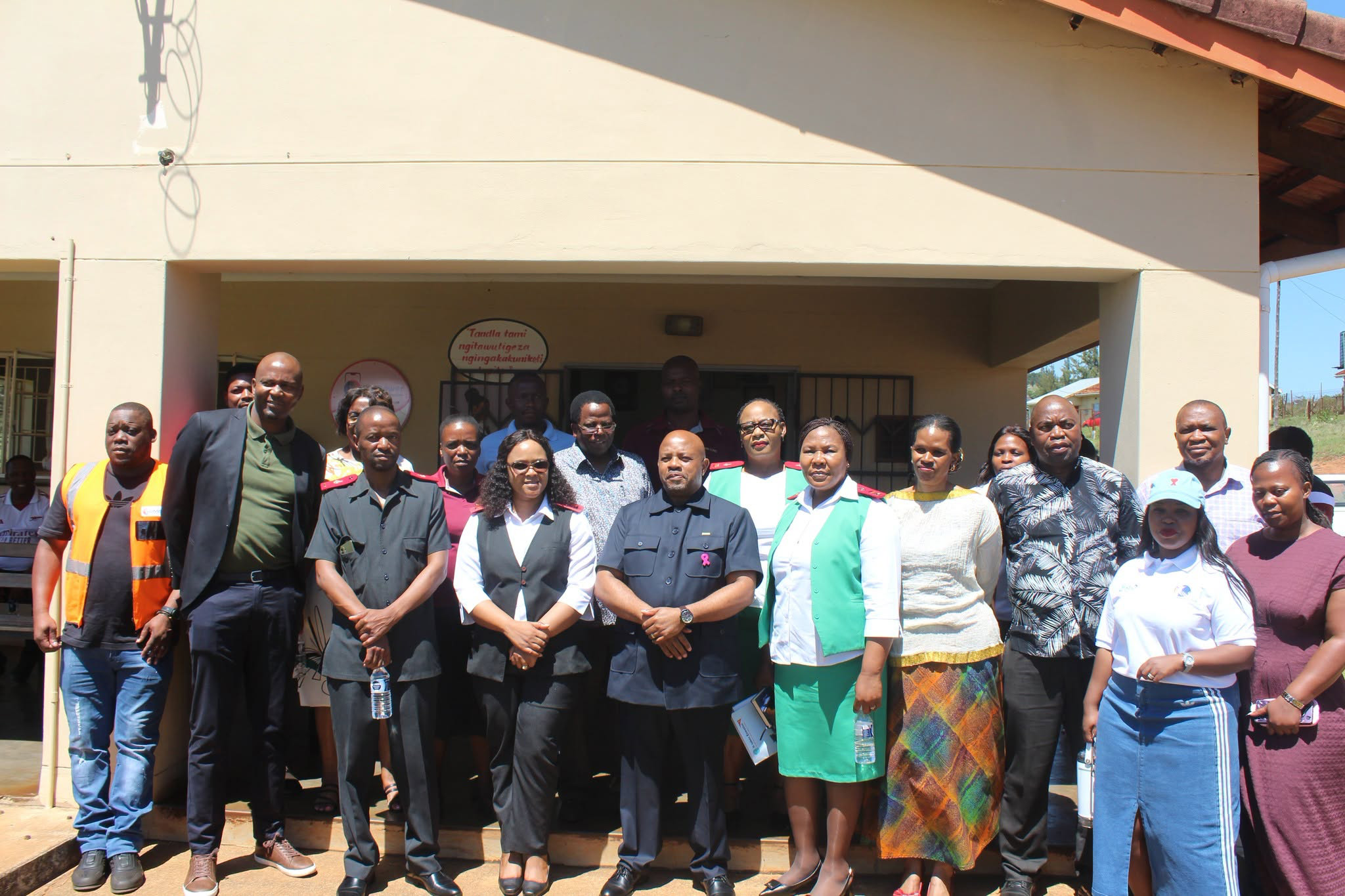
HHUKWINI – Minister of Health Mduduzi Matsebula has visited Hhukwini Clinic to assess progress in the introduction of digital healthcare systems aimed at improving patient care, monitoring medicine stocks and strengthening the management of medical supplies across the country.
The Minister, accompanied by senior officials from the Ministry of Health, Palladium Country Director and other development partners supporting the project, was taken through the electronic systems currently being used at the clinic.
The visit comes as government continues to modernise healthcare services, with digital health systems now operating in more than 250 health facilities across Eswatini.

The programme is technically led by Health Information Management Systems (HMIS Eswatini), operating under the Ministry of Health.
During the visit, Matsebula was shown how healthcare workers use electronic platforms to manage patient information, check medicine availability and maintain records of medical supplies.
Among the systems demonstrated was the Client Management Information System (CMIS), which allows healthcare workers to electronically record and retrieve patient information.
The system helps medical personnel access patient histories, record consultations and monitor treatment without relying entirely on paper-based records.
The Minister was also shown the Electronic Logistics Management Information System (eLMIS), which is used to monitor medicine stocks and manage the movement of medical commodities.
Through the integration of these two systems, healthcare workers can check the availability of prescribed medicines before dispensing them to patients.
Once medication has been issued, the transaction can be electronically recorded and reflected in the facility’s stock records.
This provides health authorities with information on medicine consumption and helps them plan procurement and distribution.
The Ministry of Health expects the system to assist in reducing medicine shortages, limiting wastage caused by expired stock and improving accountability in the management of public medical supplies.
Another development highlighted during the visit was the ability of different health information systems to exchange information electronically.
The integration is supported by cooperation between the Ministry of Health, Ministry of Home Affairs and Ministry of Information, Communications and Technology.
Under this arrangement, national identity numbers are used to uniquely identify patients, helping healthcare workers maintain accurate records and reduce duplication.
The Ministry of Information, Communications and Technology provides underlying digital infrastructure supporting the programme.
The cooperation between the ministries is intended to improve the accuracy of patient information and make healthcare services more coordinated.
For patients, the electronic systems are designed to improve continuity of care by making relevant medical information available to healthcare professionals through connected platforms.
For healthcare administrators, the technology provides information needed to monitor medicine consumption, identify supply requirements and plan the distribution of medical commodities.
The Hhukwini visit also gave the Minister an opportunity to observe how the systems are being used during daily clinic operations.
The programme is supported by Palladium and other development partners working with the Ministry of Health to strengthen the country’s healthcare information systems.
The ministry is also working towards improving the tracking of medicines from Central Medical Stores through regional depots and healthcare facilities to individual patients.
Such arrangements are expected to strengthen medicine accountability and support the identification of affected patients in cases where particular batches of medication need to be recalled.
However, full national medicine traceability remains part of the ministry’s continuing digital health development programme.
The Hhukwini Clinic visit highlighted the practical application of electronic patient records and medicine management systems at facility level.
It also provided an opportunity for senior health officials and implementing partners to assess the progress made and identify areas requiring further improvement.
The Ministry of Health’s broader objective is to establish a connected national healthcare system in which patient information, medicine availability and healthcare resources can be managed more efficiently.
Through the continued expansion and integration of these systems, government aims to improve the quality of healthcare services while strengthening accountability for medicines and other resources used in public health facilities.
(Courtesy Pic)