



BY GCWALISILE MHLABANE
MBABANE – Eswatini is stepping up its drive to protect children against vaccine-preventable diseases, with the Ministry of Health pushing to raise childhood immunisation coverage to 95 per cent and urging parents and communities to ensure that no child is left behind.
The renewed push comes as the country reviews its immunisation performance and strengthens outreach programmes aimed at reaching children who have missed routine vaccinations.
The campaign also comes against a global backdrop in which the World Health Organization (WHO) reported that approximately 110 million children, representing 85 per cent of children worldwide, were vaccinated last year.
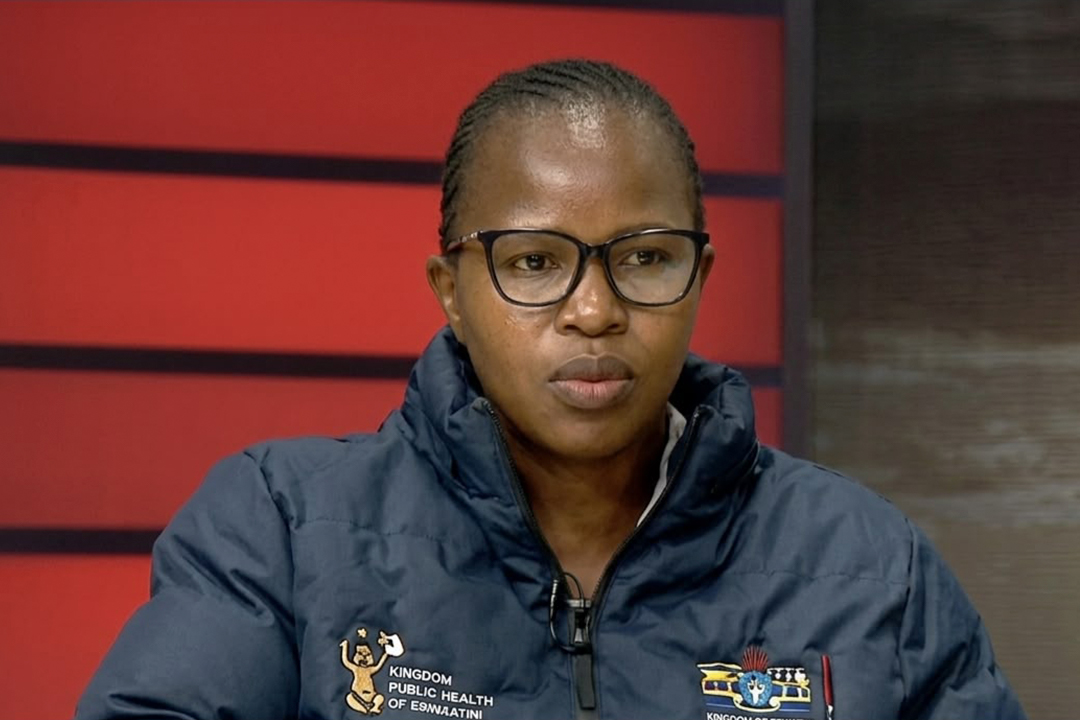
Speaking on the Eswatini TV Kusile Breakfast Show on July 21, 2026, Thuli Magagula, an Immunization Nurse and Expanded Programme on Immunization (EPI) officer, said Eswatini had made progress but still had work to do to reach its national target.

According to Magagula, BCG vaccination coverage, which is administered to newborns at birth, stood at 73 per cent, while DPT1 coverage was recorded at 84 per cent. DPT3 coverage reached 85 per cent, while measles-rubella (MR1) vaccination coverage at nine months stood at 89 per cent.
While the country has surpassed the 80 per cent minimum coverage benchmark for some vaccines, Magagula said these figures were still below Eswatini’s national target of 95 per cent.
“We are pleased, yet not fully satisfied with the numbers we achieved,” she said.
She explained that the ministry’s focus was now on closing the remaining immunisation gaps through stronger community engagement, mobile outreach services and improved systems for tracking children who may have missed scheduled vaccinations.
To achieve this, the ministry is working with a wide range of community stakeholders, including traditional leaders, chiefs, traditional healers, pastors, prophets and community health motivators.
Magagula said community health motivators were particularly important in the vaccination drive because they live within the communities they serve and can conduct door-to-door visits, check children’s health cards and remind parents when their children are due for vaccinations.
The importance of strengthening these community-based efforts was recently demonstrated during a field assessment conducted around Siteki, where health officials visited households to verify the vaccination status of children in urban and surrounding communities.
Although many children were found to have received their vaccinations, Magagula said the assessment also identified children who had missed important doses.
Some children, she said, had received the measles vaccine at nine months but had not returned for the 18-month booster, while others had missed earlier vaccinations.
“It is very risky for a child not to receive all required doses, as it leaves them incompletely protected,” Magagula said.
She explained that the measles vaccine given at nine months does not provide complete protection, making the 18-month booster critical in strengthening a child’s immunity. The concern is that children who miss scheduled doses can remain vulnerable to infection and may also contribute to the spread of disease should an outbreak occur.
“Prevention is always better than cure. Once an outbreak starts, it spreads rapidly like wildfire and becomes extremely difficult to contain,” she cautioned.
She acknowledged that vaccine distribution remains a challenge in some remote areas, where shortages of vehicles and fuel can affect the transportation of vaccines to rural health facilities.
She urged parents not to abandon vaccination schedules when they encounter temporary challenges at health facilities, but to continue following up so that children receive any outstanding doses.
The EPI team will therefore continue conducting mobile outreach services to reach children in remote homesteads, while parents are encouraged to make use of their nearest health facilities when outreach teams are not available.
The ministry will also use the 2026 Eswatini International Trade Fair as an opportunity to educate the public about childhood immunisation and provide vaccination services.
With the country aiming to move from its current coverage levels towards the 95 per cent national target, Magagula said success would depend on collective action.
She urged parents and guardians to regularly check their children’s health cards, follow vaccination schedules and consult health workers whenever they are uncertain about their children’s immunisation status.
As the government strengthens vaccine supply, improves immunisation records and expands outreach programmes, the message from the EPI team is clear: reaching the 95 per cent target will require parents, health workers, community leaders and communities to work together to ensure that every child receives every vaccine at the right time.
(Courtesy Pic)
#EswatiniPositiveNews #ChildImmunisation #Vaccination #EPI #MinistryOfHealth #ChildHealth #PublicHealth #ImmunisationMatters #ProtectOurChildren #HealthyEswatini