


BY SIFISO NHLABATSI
LOBAMBA – Eswatini is seeking a combined E4.6 billion in loans from the African Development Bank (AfDB), World Bank and OPEC Fund as Government moves to address persistent cash flow constraints.
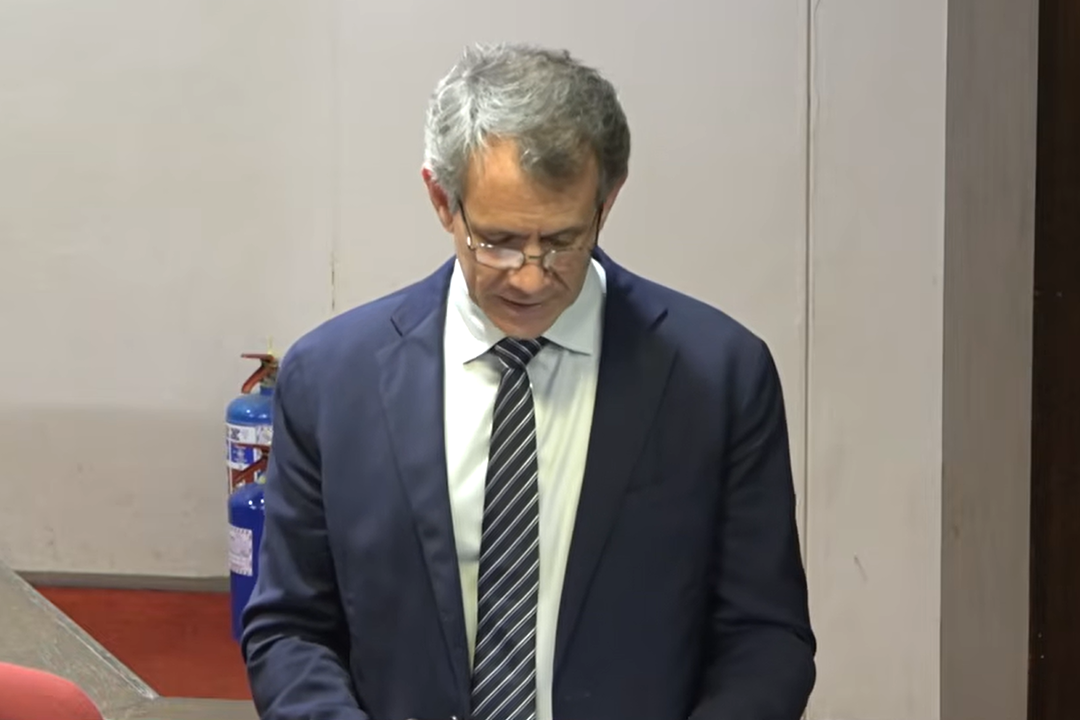
Minister of Finance Neal Rijkenberg disclosed the funding plans during the Senate debate on the Ministry of Finance Portfolio Committee’s First Quarter Performance Report, saying the three loans were at an advanced stage but remained subject to the completion of strict prior actions.
Rijkenberg said Government was seeking approximately E1.95 billion from the African Development Bank, E1.77 billion from the World Bank and E885 million from the OPEC Fund.
“These are the three in concrete. They’re coming. It is these prior actions that are taking a long time to get done,” the minister said.

He explained that the loans formed part of Government’s efforts to restore stability to its cash flow, which had come under pressure despite continued revenue collection.
The minister said Government had spent E5.8 billion during the quarter, while the Eswatini Revenue Service (ERS) had collected E6.69 billion, illustrating the constant movement of money into and out of Government accounts.
“There’s constantly money coming in and money going out,” Rijkenberg said.
However, he explained that the inflows and outflows were not always synchronised, resulting in periods when Government experienced shortages despite revenue continuing to flow into the Treasury.
Rijkenberg said Government had managed to bring its cash flow position under control by January 2026, when outstanding payments to suppliers had fallen to just E98 million.
“For the first time ever in my term, Honourable Chair, we were actually on top of our cash flow. January 2026, we were actually there. There was only E98 million outstanding to suppliers at that point,” he said.
He attributed the subsequent deterioration in Government’s cash flow position to several factors, including the cost of the salary review, completion of the International Convention Centre (ICC) and lower-than-expected tax collections.
According to Rijkenberg, Government had initially budgeted E500 million for the salary review, but the exercise ultimately cost almost E2 billion.
He further said Government had taken a decision to complete the ICC despite the additional expenditure not having been provided for in the original budget.
“We decided to finish the ICC, which was a good decision. But it wasn’t in the budget,” he said.
The minister also disclosed that Government under-collected tax revenue by E700 million during the previous financial year, creating another funding gap that contributed to the cash flow challenges.
He said these factors had resulted in Government repeatedly having to address cash flow pressures, even after making significant progress in reducing outstanding financial obligations.
Rijkenberg said Government was currently pursuing funding from several sources, with discussions involving seven different entities.
“We are busy, again, raising funding now to cover the cash flow problems. We have a whole lot of lines in the water,” he said.
Apart from the three multilateral loans, the minister said Government was also considering short-term borrowing arrangements, Treasury bonds on the domestic market and funding through the Johannesburg Stock Exchange.
He cautioned that the composition and availability of some of the short-term financing options could change as circumstances evolved.
“On a daily basis, there’s constantly a different story there,” Rijkenberg said.
The minister said the E4.6 billion financing being pursued from the AfDB, World Bank and OPEC Fund was subject to prior actions that Government had to complete before the money could be accessed.
He described the conditions attached to the financing as strict, explaining that the lenders required Government to address issues contributing to the country’s cash flow difficulties before releasing the funds.
“They’ve got very strict prior actions, and these prior actions are really a bit of a nightmare to fulfil,” he said.
Rijkenberg said Government was “almost there” in fulfilling the required conditions.
He further said the loans from the three institutions were important because of their favourable financing terms, describing the facilities as offering Government “the best price money”.
The minister expressed confidence that Government would have resolved its cash flow difficulties by the end of the year.
“But we should, by the end of the year, have our cash flow issues once again solved,” he said.
At the same time, Rijkenberg warned that restoring Government’s cash position would have to be accompanied by tighter expenditure controls to prevent the country from slipping back into another cash flow crisis.
He said the Ministry of Finance needed to ensure that Government spending remained within approved budget allocations.
“If we can just stick to the budget, we don’t have a problem. It’s when we spend money outside of the budget where we find problems going into these issues,” he said.
The proposed E4.6 billion financing package, if successfully secured, could therefore provide Government with significant breathing room as it works to stabilise cash flow, settle obligations and strengthen management of public finances.
#Eswatini #CashFlow #MinistryOfFinance #NealRijkenberg #AfricanDevelopmentBank #WorldBank #OPECFund #GovernmentFinance #PublicFinance #Treasury #EconomicManagement #EswatiniEconomy