


BY SIFISO NHLABATSI
LOBAMBA – Eswatini is among the top five countries on the African continent in terms of per-capita spending on health, according to Minister of Finance Neal Rijkenberg.
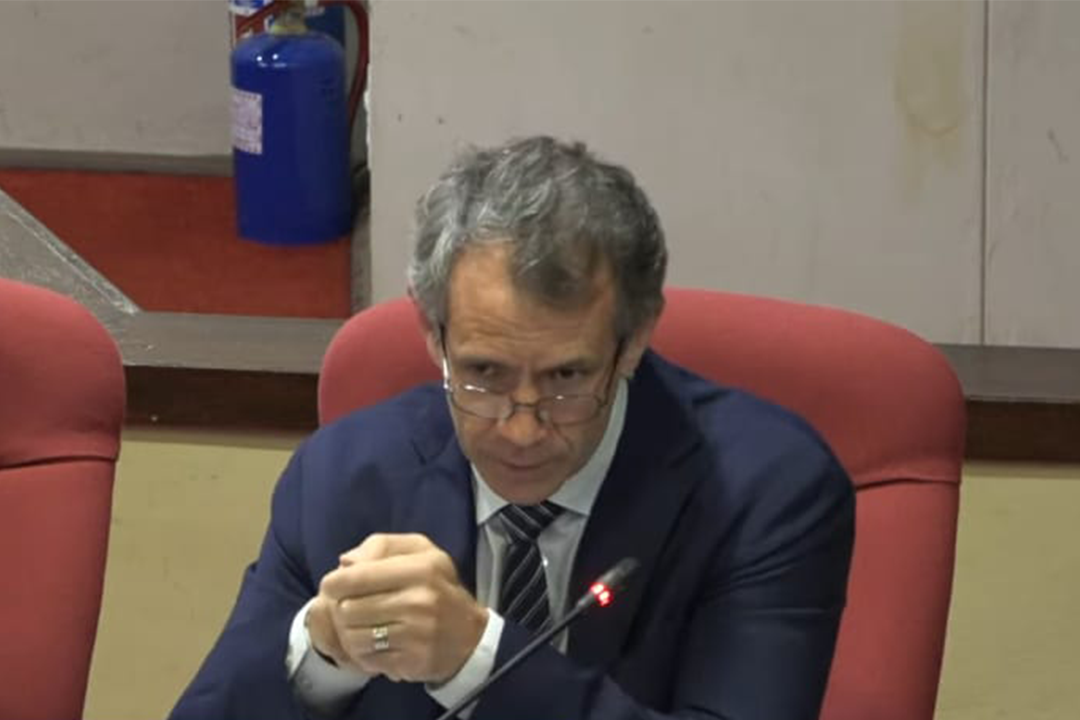
Rijkenberg made the disclosure in the Senate while responding to questions concerning government’s expenditure on the health sector during debate on the Portfolio Committee’s First Quarter Performance Report.
The minister said Eswatini’s health spending per person placed the country among the five highest spenders on the continent.
“As a country, we are in the top, if I’m not mistaken, in the top five on the continent if you look at it per capita, what we spend on health,” Rijkenberg said.
He said government recognised that more resources could still be required by the health sector, but maintained that Eswatini was already among the continent’s highest spenders when expenditure was measured on a per-capita basis.

“As a Minister of Finance, we do believe, there’s always need for more. I’m not going to say that they’re not asking for more, that one can’t provide more, but we are up there with the highest spenders on health on the continent,” he said.
However, Rijkenberg said the country’s health outcomes were not corresponding with the level of resources being invested in the sector.
“Unfortunately, our outcomes are not running the same as our inputs,” he said.
He said government therefore needed to address challenges affecting the performance of the health system.
Rijkenberg identified the proposed privatisation of the Central Medical Stores (CMS) as what he described as the solution to the country’s health problems.
“And so we do definitely need to fix some things. And what I believe very strongly is the solution to our health problems is the privatization of CMS,” he said.
The minister said legislation enabling the process had already been passed after taking several years, while a board had also been put in place.
He further disclosed that an advertisement had been published in the newspaper the previous week for the position of chief executive officer as part of the process to privatise CMS.
“I think last week there was advertisement in the newspaper for the CEO of the privatization for the Central Medical Stores,” Rijkenberg said.
According to the minister, the proposed changes at CMS are intended to strengthen the systems used to track medicines from the point of supply to the patient.
He said funding from the United States was also supporting efforts to improve systems within the health supply chain.
Rijkenberg said the systems should allow government to establish which patient received particular medicines and ensure that the movement of medicines through the health system was recorded.
He said the objective was to have a system where medicines dispensed at hospitals could be traced through the control system.
“These are not rocket science. We’ve tried to put them in for many years, but there’s been resistance, or there’s been problems in putting the systems in,” he said.
Under the proposed CMS model, Rijkenberg said government payments would be linked to the ability of the institution to account for medicines distributed.
He said CMS would not receive payment from government unless it could demonstrate who had received the medicines and where the medicines had gone.
“CMS will not get money from government until they can prove who has taken the pills and where the pill has gone to,” he said.
The minister said the arrangement would also mean that payments could be withheld where medicines could not be accounted for.
“If they’re going to not be able to show who’s got the pills or the pills disappear, they’re not going to get payments,” he said.
Rijkenberg said he believed the legislation establishing the new framework for CMS would address a significant portion of the challenges facing the country’s health sector.
He said the new system was structured around accountability for medicines and the tracking of their distribution.
“I believe the system is structured now such with this new legislation that you’ve passed that will, I believe, be solving our majority of our health problems with that legislation,” he said.
#Eswatini #HealthSpending #Healthcare #HealthSector #PublicHealth #CentralMedicalStores #CMS #NealRijkenberg #MinistryOfFinance #EswatiniHealth #HealthcareReform #HealthSystems #MedicineSupply #HealthAccountability #SenateEswatini #GovernmentSpending #Africa #AfricanHealthcare