BY NONCEDO SHABANGU
MBABANE– Eswatini has strengthened its climate commitments by submitting its Third Nationally Determined Contributions (NDC 3.0) to the United Nations Framework Convention on Climate Change (UNFCCC), outlining ambitious plans to cut emissions and adapt to the impacts of global warming.
The Eswatini NDC 3.0 is the result of an inclusive, country driven process that captured the voices of different stakeholders to shape national climate priorities. The plan sets an ambitious goal of reducing greenhouse gas emissions by 2.24 MtCO2eq in 2035 compared to the Business as Usual (BAU) scenario, which represents a 115% increase from the NDC 2.0 target.
The new document introduces a comprehensive Just Transition framework, ensuring that Eswatini’s move towards a low-carbon and climate resilient economy is fair and inclusive. It covers mitigation sectors such as agriculture, energy, waste, and industry; adaptation areas including biodiversity, health, water resources, and infrastructure; and cross cutting themes such as gender, youth, finance, and technology.
National priorities are closely linked to eradicating poverty, ensuring food and water security, and creating jobs. By strengthening adaptation and mitigation actions, Eswatini seeks to safeguard livelihoods and build resilience in the face of climate shocks.

Globally, NDCs are at the heart of the Paris Agreement. Every signatory country is required to submit them regularly, outlining how they will cut emissions and adapt to climate impacts. Eswatini’s enhanced NDC 3.0 demonstrates the country’s determination to align with international climate targets while advancing its own development goals.
Southern Africa is one of the regions most vulnerable to climate change, experiencing prolonged droughts, unpredictable rainfall, and extreme weather events such as cyclones. Eswatini’s submission therefore comes at a crucial time, signalling that the country is taking concrete steps to protect its people and resources.
The Just Transition approach emphasised in the NDC 3.0 highlights the importance of equity, making sure that vulnerable groups including women, youth, and rural communities are not left behind as the economy shifts towards sustainable practices. This reflects Eswatini’s recognition that climate action must go hand in hand with social development.
With the submission of its NDC 3.0, the Kingdom has reaffirmed its dedication to building a climate resilient and sustainable future for all emaSwati, contributing meaningfully to both national aspirations and global climate action.
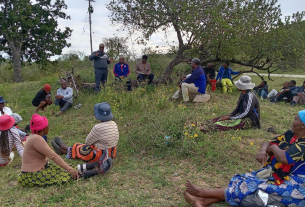
(Courtesy Pic)