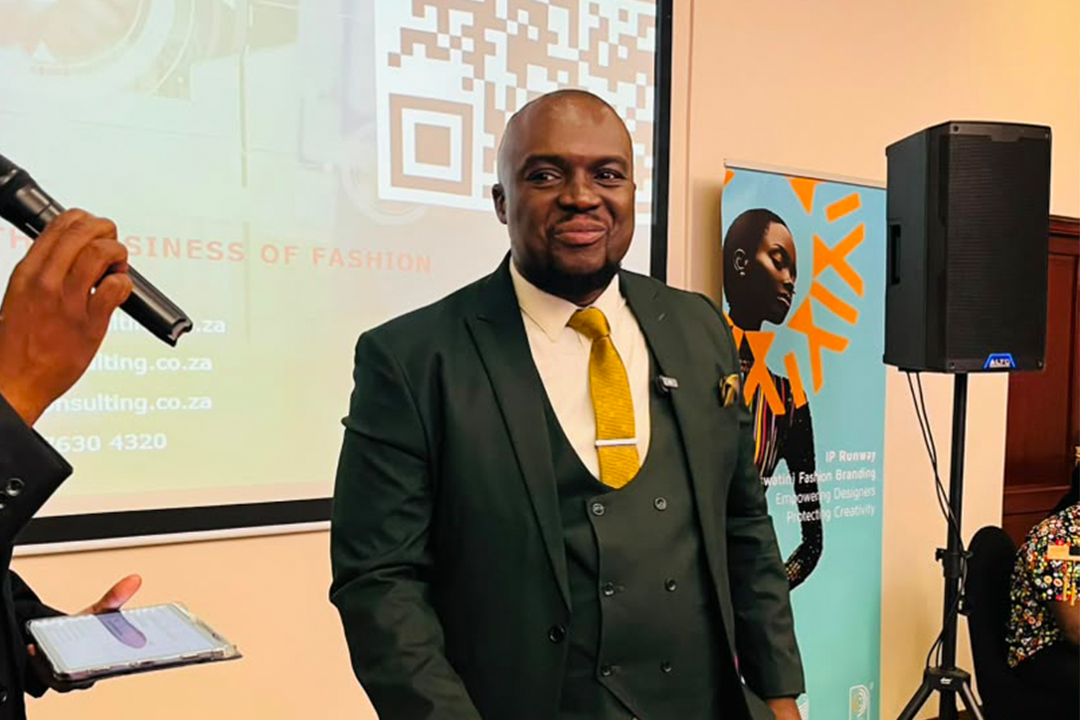

- IP expert urges creatives to protect their brands before going to market
BY NELIWE NGUBANE
EZULWINI — A fashion sketch may look like a simple drawing, a logo like a small symbol and a garment like just another piece of clothing, but behind each can lie valuable intellectual property (IP) capable of building a business.
This was the key message delivered by NMT Consulting’s Nelson Mbutfo Tsabedze during the IP Runway: The Business of Fashion, Furniture & Art, held at Royal Villas today.
Tsabedze challenged designers, artists and other creatives to move beyond viewing fashion purely as a creative product and start treating their ideas, designs and brands as business assets.
He explained that IP exists throughout the journey of a creative business, from developing a concept and choosing a brand name to protecting, commercialising, marketing, growing and exporting the business.
3 KEY POINTS
- creativity is a business asset
designers can own multiple IP assets, including trademarks, copyright, industrial designs, trade secrets and contractual rights. - protect before you build
Tsabedze warned creatives against investing heavily in a brand without first checking whether the name or logo is already protected by another business. - IP should make money
protection should go beyond stopping imitation, with creatives encouraged to explore licensing, collaborations, merchandising, manufacturing deals, franchising and international expansion.
Using the example of a fictional Eswatini brand, TEMBATFO TAMI, Tsabedze demonstrated how one fashion business can accumulate an IP portfolio through its logo, slogan, patterns, sketches, photographs, promotional videos, packaging, website and social media content.
He also urged designers to assess important designs before publicly displaying them, as disclosure can affect the protection available for certain industrial designs.

Contracts were another major focus, with Tsabedze warning creatives that saying “let’s collaborate” does not automatically determine who owns the resulting work.
He encouraged designers to clearly establish ownership, licensing, usage, territory, duration, revenue, confidentiality and termination terms when working with artists, photographers, manufacturers and other partners.
As Eswatini’s creative sector looks towards regional and international markets, Tsabedze stressed that IP strategies must grow alongside businesses, highlighting international systems such as the Madrid System for trademarks and the Hague System for industrial designs.
He concluded by reminding creatives that their creativity is not merely something to display on the runway — it is an asset that can be protected, commercialised and taken beyond Eswatini.
#IPRunway #FashionBusiness #IntellectualProperty #NelsonTsabedze #NMTConsulting #EswatiniFashion #CreativeIndustry #EPN