


BY MBONO MDLULI
EZULWINI – Prime Minister Russell Mmiso Dlamini has confirmed that Government will soon issue an official statement regarding the 13.61 per cent electricity tariff increase approved for the 2026/27 financial year, which is set to take effect on 1 April 2026.
The increase was recently approved by the Eswatini Energy Regulatory Authority (ESERA), prompting public concern over affordability despite the country’s significant progress in expanding electricity access.
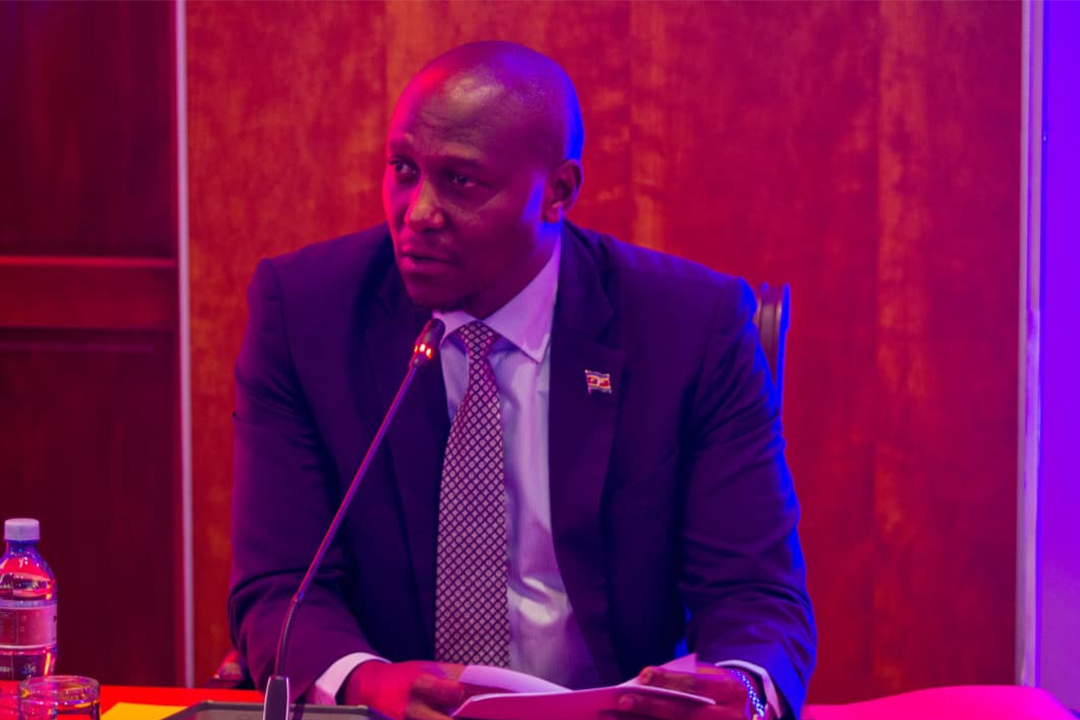
The Prime Minister made the remarks during a press briefing held at the Royal Villas in Ezulwini on Monday, 16 February 2026, upon his return from Cape Town, South Africa, where he officiated at the 4th Annual Meeting of the Global Council for Political Renewal in his capacity as its President, and from Addis Ababa, Ethiopia, where he represented His Majesty King Mswati III and the nation at the 39th Ordinary Session of the African Union (AU) Summit of Heads of State and Government.
Affordability Concerns Raised

During the briefing, EBIS journalist Sinethemba Dlamini asked what Government planned to do to address electricity affordability amid growing public outcry. She noted that while Eswatini had made commendable progress in improving access to electricity — currently standing at about 88 per cent nationally — affordability remained a major concern for many households.
She further enquired whether electricity affordability had featured in discussions during the Prime Minister’s international engagements.
In response, Dlamini said Government would “definitely issue a statement” to address the matter comprehensively.
While he did not elaborate on specific mitigation measures, his assurance signals that Government is aware of the public’s concerns and intends to communicate its position formally.
Focus on Water and Energy at AU Summit
Turning to his recent engagements, the Prime Minister said much of the focus at the AU Summit centred on water security and its potential to drive economic development, agricultural productivity and energy generation.
The 39th Ordinary Session of the AU Summit was held under the theme: “Assuring Sustainable Water Availability and Safe Sanitation Systems to Achieve the Goals of Agenda 2063.”
Dlamini described the theme as highly relevant to Africa, noting that the continent continues to face recurring droughts, climate variability, inadequate water infrastructure and limited access to safe sanitation in many communities.
“Water security is not only a development imperative; it is a matter of dignity, public health and economic transformation,” he said.
He emphasised the need for African countries to strengthen cooperation, invest in resilient water systems and accelerate innovation to ensure inclusive development.
Lessons from Lesotho and Ethiopia
The Prime Minister highlighted Lesotho as an example of how water resources can be leveraged for economic gain. He said Lesotho generates approximately E30 million per month — amounting to roughly E3 billion per year — from exporting water to South Africa.
Lesotho also utilises water to generate electricity through the Muela Hydropower Plant, a 72-megawatt facility powered by water transferred from the Katse Dam. The plant supplies most of the country’s electricity needs, significantly reducing reliance on imports.
Dlamini noted that Eswatini currently produces about 30 per cent of its electricity locally, with much of that generated through hydro-electric methods. However, he acknowledged that the country faces geographical limitations that constrain large-scale hydropower expansion.
He also referenced Ethiopia’s Great Ethiopian Renaissance Dam (GERD), a US$5 billion project that has enabled Ethiopia not only to meet domestic electricity demand but also to export power to neighbouring countries.
“Eswatini does not have the same spatial advantages as some of these countries,” he said, underscoring the structural challenges facing local energy generation.
Bilateral Engagements
On the sidelines of the AU Summit, the Prime Minister held bilateral meetings with several Heads of State, including President Hakainde Hichilema of Zambia, President William Ruto of Kenya and President João Lourenço of Angola.
During these engagements, he conveyed a special message from His Majesty the King in his capacity as Champion of Resource Mobilisation for the Organisation of African, Caribbean and Pacific States (OACPS), ahead of the 11th OACPS Summit scheduled for March 2026 in Malabo, Equatorial Guinea.
He also received a courtesy visit from Dr Robinson Tanyi, President of the African Indigenous Governance Council and King of the Tinto-Mbu in Cameroon, who extended well wishes to His Majesty following Eswatini’s successful hosting of the inaugural Traditional Leaders Conference in September 2025.
Additionally, the Prime Minister held discussions with Professor Jeffrey Sachs, President of the UN Sustainable Development Solutions Network, focusing on sustainable development pathways.
Looking Ahead
As Government prepares its official response to the electricity tariff hike, the issue of balancing expanded access with affordability is likely to remain central in national discourse.
Dlamini reaffirmed that Eswatini remains committed to advancing national interests while contributing meaningfully to Africa’s Agenda 2063 vision of sustainable and inclusive growth.
“We remain steadfast in pursuing practical solutions that uplift our people and secure a sustainable future for generations to come,” he said.