
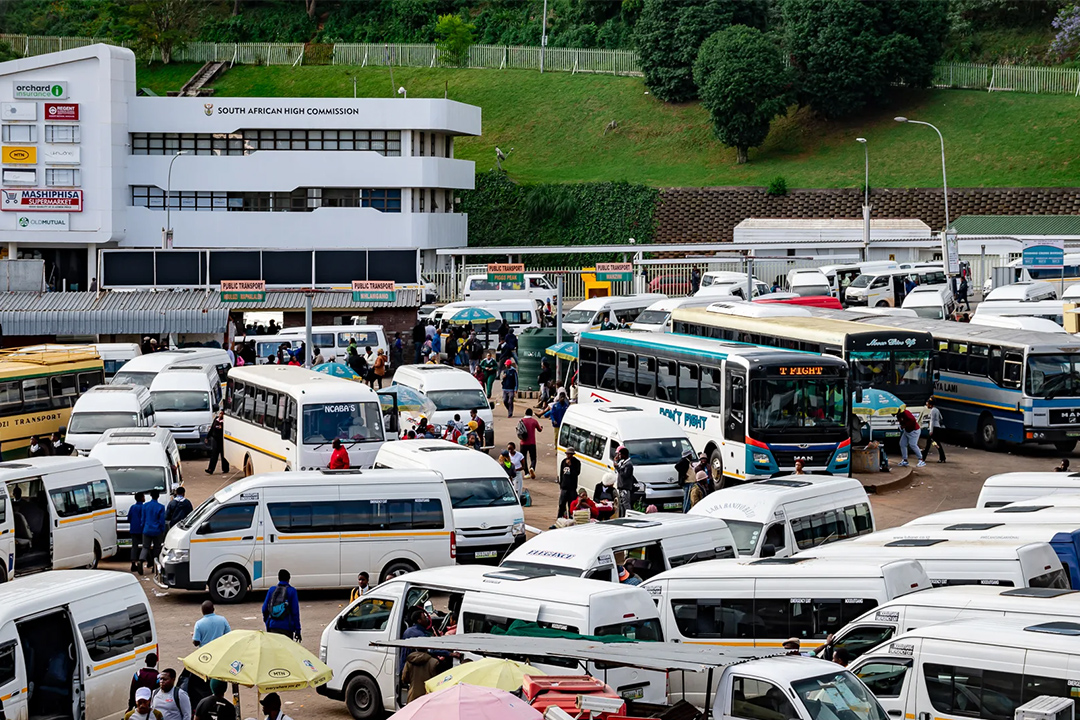




…. New scientific fare model aims to protect commuters while ensuring transport operators remain viable
BY MBONGENI NDLELA
MBABANE– Thousands of commuters and public transport operators across Eswatini could soon benefit from a more transparent and predictable fare-setting system after Government launched plans to develop the country’s first scientific road passenger transport fare model.
The Ministry of Public Works and Transport has issued an Expression of Interest (EOI) inviting suitably qualified consulting firms to design a comprehensive fare model that will guide how public transport fares are calculated and reviewed in future.
The initiative is expected to replace ad hoc fare adjustments with a structured, evidence-based system that takes into account the interests of both commuters and transport operators.
According to the Ministry, the new model will establish a transparent framework for determining fares while balancing the rising cost of operating public transport businesses with the need to keep transport affordable for ordinary emaSwati.
Public transport remains the primary means of travel for thousands of people, including workers, pupils, students and business owners who rely daily on minibuses, buses and taxis to reach their destinations.
Balancing Costs and Affordability
One of the key assignments for the successful consultancy firm will be conducting a detailed analysis of the actual costs involved in operating various categories of passenger transport vehicles.
This will include examining expenses associated with minibuses, midibuses, large buses and taxis.
The assessment will consider both fixed costs such as vehicle financing, insurance and licensing, as well as variable costs including fuel, maintenance, tyres, repairs and labour.
By establishing the true cost of operating passenger transport services, Government aims to ensure that future fare adjustments are based on factual economic data rather than estimates or negotiations.
Equally important will be an affordability study that will evaluate how transport costs affect the disposable income of commuters.
The study is expected to analyse how much households spend on transport and determine fare levels that remain sustainable without placing excessive financial pressure on families.
Transparent Formula for Future Fare Reviews
A major outcome of the consultancy will be the development of a scientific fare calculation formula that can be applied consistently whenever transport fares are reviewed.
Rather than relying on isolated requests for fare increases, the model will incorporate measurable factors such as operating costs, inflation and reasonable profit margins.
Officials believe this approach will improve predictability for commuters while providing transport operators with a fair return that enables them to continue offering reliable services.
The Ministry also intends to develop a formal Fare Review Regulation that will clearly define when and how transport fares should be adjusted.
Such regulations are expected to enhance transparency and reduce uncertainty surrounding future fare reviews.
Wide Stakeholder Consultations Planned
Government has emphasised that the new fare model will be developed through extensive consultations with key stakeholders across the transport sector.
Among those expected to participate are the Road Transport Council, Road Transportation Board, Road Transportation Appeals Board, consumer organisations including the Consumer Association of Eswatini and the Swaziland Consumer Forum, as well as other relevant institutions.
The consultations are expected to ensure that the final model reflects the views of transport operators, regulators, commuters and consumer representatives.
Towards a More Efficient Transport Sector
The development of a scientific fare model forms part of broader efforts to modernise Eswatini’s public transport sector and strengthen governance within the industry.
A transparent fare determination system is expected to reduce disputes over fare increases while improving confidence among commuters and transport operators alike.
For businesses operating public transport services, the model could provide greater certainty regarding future revenues and investment planning.
For commuters, it promises a more objective system where fare adjustments are supported by economic evidence and affordability considerations.
If successfully implemented, the initiative could become one of the most significant reforms in Eswatini’s public transport sector in recent years, helping to create a transport system that is fair, sustainable and responsive to the needs of both operators and the travelling public.
(Courtesy Pic)


