



BY PHUMELELE GAMEDZE (INTERN)
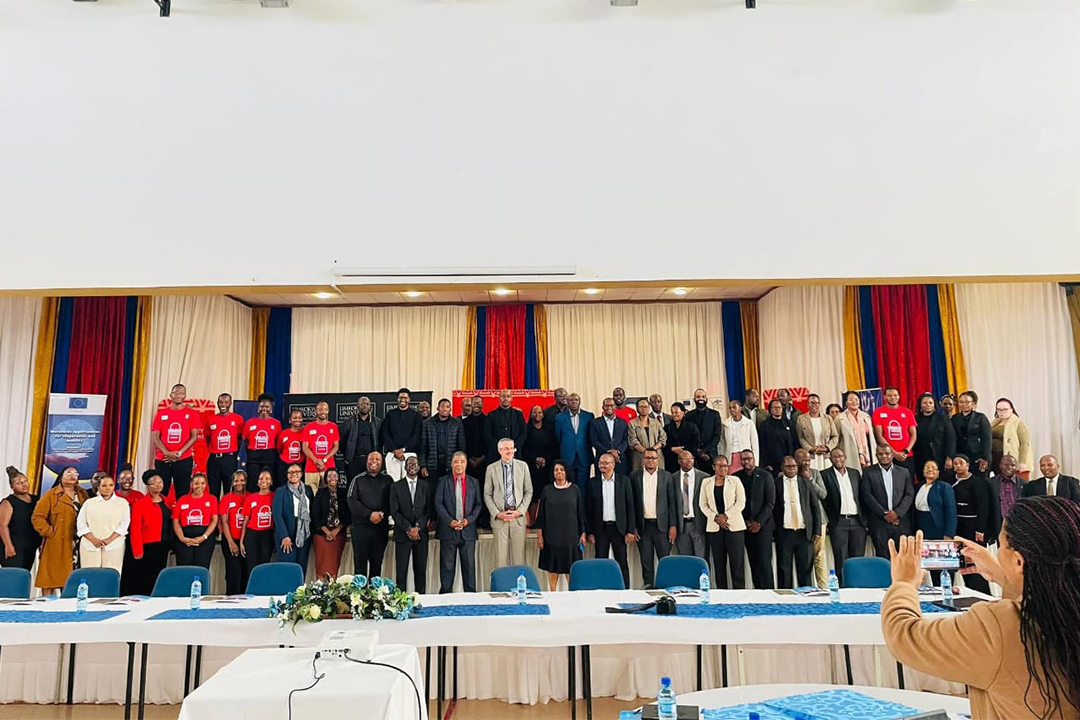
MBABANE – The Ministry of Education and Training has brought together academia and industry in a strategic networking event held at the UNESWA Sports Emporium, aiming to bridge the long-standing gap between classroom learning and labour market demands.
Representatives from key institutions, including the University of Eswatini (University of Eswatini) and Limkokwing University of Creative Technology (Limkokwing University of Creative Technology), joined private sector stakeholders to explore pathways for producing graduates equipped with relevant skills, innovation capacity and entrepreneurial mindsets.
The Ministry, represented by Eswatini Qualifications Authority Executive Secretary Mboni Dlamini, underscored the urgency of aligning qualifications with evolving industry expectations.
Opening the dialogue, European Union Ambassador Karsten Mecklenburg (Karsten Mecklenburg) highlighted the mutual benefits of collaboration. He noted that businesses gain access to fresh ideas, research partnerships and skilled graduates, while universities benefit from real-world insights, technology transfer and improved graduate employability.

He further stressed that sustained cooperation depends on trust, openness to innovation and consistent engagement among all stakeholders. He called on universities to remain adaptable to emerging trends, industry players to invest in mentorship and curriculum development, and policymakers to create enabling environments that support collaboration.
Ambassador Mecklenburg added that such partnerships are essential in shaping graduates who can create employment, drive innovation and contribute to national development priorities.
The initiative is being implemented under the EU Erasmus+ programme (EU Erasmus+), which promotes university industry co creation and supports the development of entrepreneurial universities across the SADC region.
The European Union reaffirmed its commitment to supporting Eswatini’s higher education sector through capacity building and quality enhancement programmes aimed at strengthening competitiveness in a rapidly changing global economy.

Participants described the engagement as a timely intervention, especially as youth unemployment and skills mismatches continue to challenge the labour market. The networking session is expected to lead to practical collaborations, including internships, joint research and curriculum reforms that reflect industry realities.
Students and graduates attending the session expressed optimism that stronger collaboration between universities and industry will improve practical learning opportunities, reduce unemployment pressure, and open clearer pathways into entrepreneurship, innovation-driven careers, and regional competitiveness aligned with Eswatini’s long-term development aspirations and evolving labour market needs going forward.
Information sourced from the Ministry of Education and Training Facebook page.
#EducationEswatini #SkillsDevelopment #EU #HigherEducation