


BY MFANUFIKILE KHATHWANE
MBABANE– The reopening of schools across Eswatini is expected to play a critical role in strengthening the country’s blood supply, according to the Ministry of Health, which says pupils remain the largest and safest pool of blood donors nationwide.
Speaking during an interview with Eswatini Positive News on 28 January 2026, Nsindiso Tsabedze, Communications Officer at the Ministry of Health, explained that annual school-based blood donation drives are central to ensuring hospitals and clinics have sufficient blood to save lives.
“Every year, we coordinate with different schools across Eswatini to organise blood donation drives,” Tsabedze said. “Even in 2026, we will continue this tradition. Schools provide a central location where we can reach students efficiently, and their involvement is essential to saving lives.”
He noted that during school holidays, when pupils are at home with their families, it becomes significantly more difficult to organise blood donation activities. “Students are the largest group of potential donors, but when they are scattered at home, organising donation drives becomes a challenge. Reopening schools allows us to bring them together and prepare them to donate safely,” he added.

The Ministry of Health has urged all EmaSwati to consider donating blood, emphasising that demand remains constant throughout the year. “Blood is never enough,” Tsabedze said. “We encourage everyone, especially pupils, to participate in the upcoming blood donation drives. Every drop counts.”
Recent data from the Eswatini National Blood Transfusion Service (ENBTS) shows that school-going donors contribute approximately 85 percent of total blood collections during outreach programmes, underscoring the vital role students play in meeting national blood requirements.
In 2024 alone, ENBTS recruited 19,328 potential donors and collected 14,096 units of blood, with 12,315 units issued to hospitals and clinics across the country. Despite these achievements, seasonal shortages remain a serious concern, particularly during school holidays when student donors are unavailable.
In one targeted campaign, ENBTS and its partners managed to collect 1,054 units of blood against a target of 2,000 units within just two weeks, highlighting both the potential of coordinated efforts and the gaps that still need to be addressed.
Blood donations can be made at permanent centres in Mbabane, Manzini, and Hlatikhulu, as well as through mobile units that will be deployed during the upcoming school drives. Eligible donors must be between 16 and 65 years old, weigh at least 45 kilograms, be in good health, and not be pregnant or breastfeeding. Parental consent is required for donors under 18, and all donors undergo health screening, including haemoglobin testing, to ensure it is safe to donate.
The importance of regular blood donation cannot be overstated. Patients living with thalassaemia, sickle cell disease, and other chronic conditions depend on frequent transfusions to survive and maintain their quality of life. For them, each donation represents not just blood, but hope, health, and life.
A stable base of voluntary, non-remunerated donors committed to donating regularly remains essential to ensuring a safe and sustainable national blood supply.
Each year, World Blood Donor Day is commemorated on 14 June, celebrating voluntary donors and raising awareness of the ongoing need for safe and sufficient blood. In Eswatini, the Ministry of Health continues to engage students, workplaces, and communities throughout the year to safeguard the nation’s blood supply.
Every donor, every drop is saving lives.
Hashtags: #BloodDonation #EswatiniSchools #SaveLives #VoluntaryDonation #HealthAwareness #EmaSwatiGiveBlood
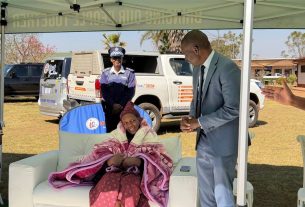
(Courtesy Pic)