



BY SIBUSISEKILE NDLANGAMANDLA
MADLANGEMPISI— Royal Eswatini Sugar Corporation (RES), through its Corporate Social Investment (CSI) Department, is strengthening community-led development by equipping traditional leaders and community structures with practical tools to identify, mobilise and build upon the resources already available within their communities.
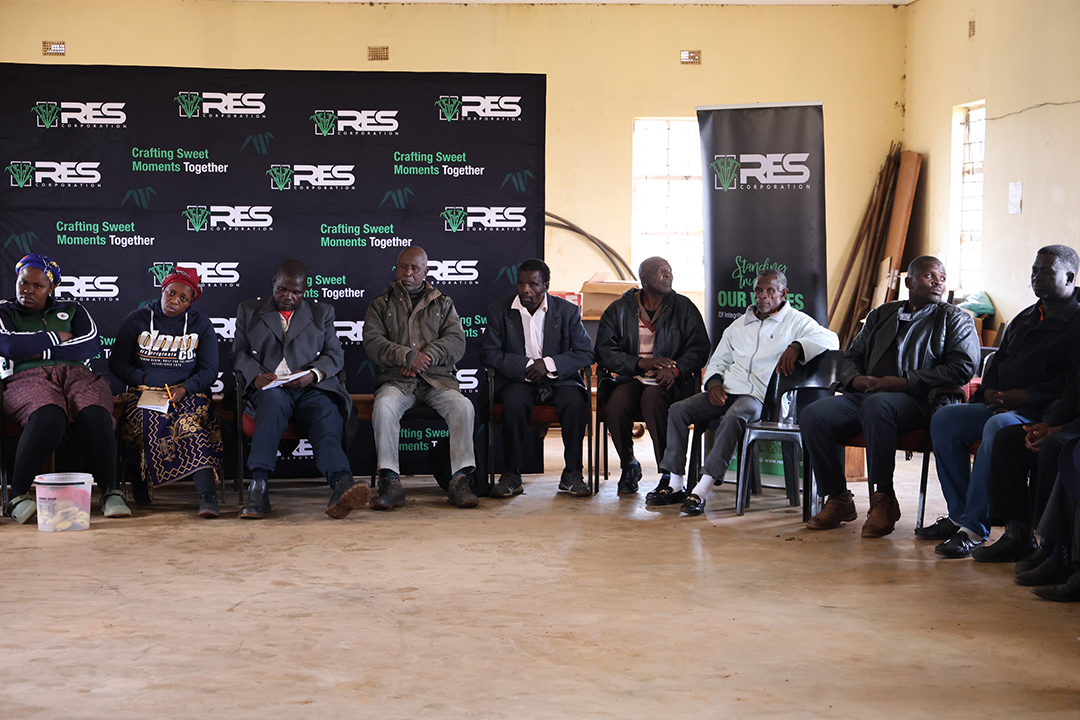
The initiative, centred on Asset-Based Community Development (ABCD), brought together community representatives and ABCD committees at Madlangempisi Inkhundla on 6 August 2026, followed by a second training session at Lomahasha Inkhundla on 13 August 2026.
The programme focuses on RES’s fenceline communities, with the aim of enabling local stakeholders to become active drivers of sustainable development rather than passive recipients of external assistance. Speaking about the importance of the programme, Phindile Dlamini-Lukhele, Corporate Social Investment Manager at Royal Eswatini Sugar Corporation, said the training is critical because it strengthens the capacity of communities that live alongside RES.
“These trainings are very crucial to our stakeholders, who are our fenceline communities. As the CSI Department at RES, it is our responsibility to ensure that our community neighbours are developing. Through this programme, RES is lending a hand by equipping communities with knowledge and practical approaches that can help them identify and use their own strengths.”

ABCD encourages communities to begin with what they have rather than focusing primarily on what they lack. Their natural resources, skills, relationships, institutions, leadership structures and local knowledge can all become assets for development. For Gabsile Masilela, ABCD Vice Secretary from Shewula said this approach is particularly important because it encourages communities to take responsibility for their own development.
She explained that the training helps communities recognise that there are things they can do for themselves instead of waiting for outside intervention. Local assets, including natural resources such as mountains, can become foundations for community development when they are properly identified.
Sibongile Khumalo, an ABCD Secretary from Maphiveni, said the training had helped the community look at its challenges differently, particularly its longstanding need for reliable water. She said the process “opened our eyes” to the possibility of finding solutions within the community and identifying resources that could be mobilised to address local needs.
The result has been the development of a solar-powered water system, demonstrating how community-led identification of assets can translate into practical improvements in people’s daily lives. The experience illustrates an important principle of sustainable development, lasting solutions are more likely to emerge when communities participate meaningfully in identifying their needs, resources and priorities.
Gija Mahlalela, an Inner Council member from Sicelwini Umphakatsi at Lomahasha, said the programme was helping traditional councils broaden their understanding of leadership and development. He noted that traditional leaders should not be concerned only with issues such as crime and social order, but should also play a visible role in advancing development within their communities.
For Mahlalela, leadership means setting an example that residents can observe, understand and emulate. He said the engagement with RES had “opened their minds” to the wider development responsibilities that community leadership can assume.
The initiative contributes particularly to SDG 11: Sustainable Cities and Communities, which promotes inclusive, safe, resilient and sustainable communities. Its emphasis on collaboration between RES and its surrounding communities further reflects SDG 17: Partnerships for the Goals, which recognises the importance of partnerships in achieving sustainable development.
For RES, the ABCD training represents more than a once-off capacity-building exercise. It is part of an approach to corporate social investment that seeks to strengthen relationships with fenceline communities while supporting their ability to identify opportunities, mobilise local assets and pursue development priorities.
#EswatiniPositiveNews #CommunityDevelopment #ABCD #RES #SustainableDevelopment
(Courtesy Pic)


