


BY MBONGENI NDLELA
MBABANE – The war involving Iran, Israel and the United States did not erupt overnight.
It is the result of years of rising tension, mistrust, and military posturing that slowly pushed the region toward open confrontation.
What began as a long-running rivalry has now escalated into direct strikes, retaliation, and growing global economic consequences that stretch far beyond the Middle East, including to Africa and Eswatini.
For decades, Israel and Iran have viewed each other as serious security threats. Israel has consistently expressed concern over Iran’s nuclear and missile programmes, fearing they could eventually pose an existential danger. Iran, on the other hand, has accused Israel and the United States of attempting to weaken it politically and militarily through sanctions, covert operations and regional alliances.

Tensions intensified sharply in April 2024 when Iran launched a large-scale missile and drone attack on Israel following an Israeli strike on an Iranian diplomatic facility in Damascus. Although the situation temporarily cooled, the underlying conflict remained unresolved.
In 2025, fighting flared again in what analysts described as a short but intense confrontation. While the exchange did not become a full regional war at the time, it hardened positions on both sides and increased the likelihood of further escalation.
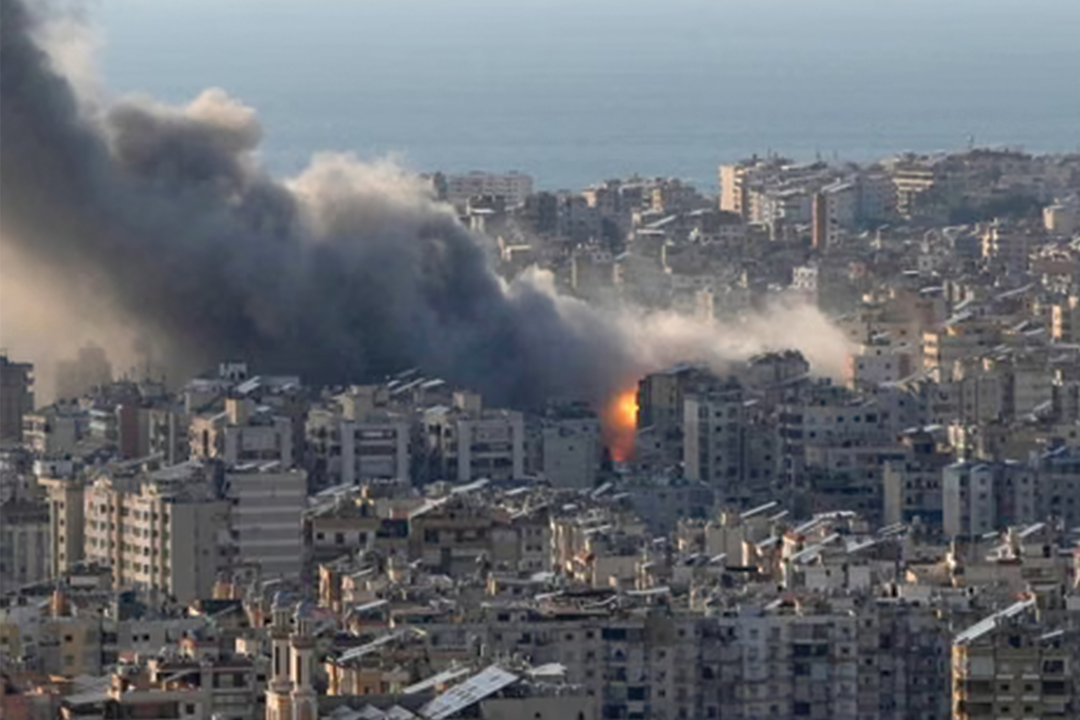
The current phase of the war began in early 2026 when Israel, with backing from the United States, launched coordinated airstrikes targeting Iranian military and strategic facilities. Iran responded with retaliatory missile and drone attacks, expanding the scope of the conflict.
Israeli Prime Minister Benjamin Netanyahu has framed the operation as defensive, aimed at preventing Iran from acquiring nuclear weapons capability. He has indicated that the campaign may take time but insists it will not become an endless war.
U.S. President Donald Trump has stated that the objective is to stop nuclear proliferation and reduce Iran’s capacity to destabilize the region. He suggested the military campaign could last several weeks, though acknowledged it may extend depending on developments on the ground.
Iranian President Masoud Pezeshkian has described the situation as a “full-fledged war,” arguing that Iran is defending itself against aggression from both Israel and the United States.
What makes this conflict particularly concerning is that it is no longer confined to isolated military strikes. Missile and drone exchanges have affected multiple areas across the Middle East. There are growing fears about civilian safety, disruption of global oil supplies, and the risks associated with military activity near sensitive nuclear facilities.
The world’s biggest concern, however, is energy. A significant portion of global oil shipments passes through the Strait of Hormuz, a strategically critical waterway near Iran. Whenever conflict threatens that route, oil prices rise almost immediately. Higher oil prices mean higher fuel costs across the world.
And that is where Africa enters the picture.
The African Union has warned that the conflict carries serious implications for energy markets, food security and economic stability across the continent. Most African countries are net importers of fuel. When global oil prices rise, transport costs increase. When transport costs increase, food and goods become more expensive.
Fuel prices go up, transport fares rise, shop prices increase, and households feel the squeeze.
While oil-producing African countries may experience short-term revenue gains from higher prices, most economies on the continent face inflationary pressure, currency strain and slower growth.
Eswatini is not directly involved in the conflict, but it is connected to the global economy through fuel and trade. The country imports fuel and many essential goods through regional supply chains closely linked to South Africa. When international oil prices rise, pump prices in the region often follow.
For Eswatini, the likely effects include higher taxi and kombi fares, increased delivery costs for businesses, rising prices for food and consumer goods, greater pressure on small enterprises, and inflation influenced by regional trends.
In practical terms, a conflict thousands of kilometres away can affect the price of bread, transport and groceries at home.
However, crises also present opportunities for resilience. For African governments, this moment underscores the importance of energy diversification, investment in renewable power, and stronger regional trade cooperation to cushion against global shocks. For households and businesses, careful budgeting and efficient logistics can help manage short-term pressures.
The war between Iran, Israel and the United States is rooted in long-standing political and security disputes, particularly around nuclear capability and regional influence. Its expansion carries serious global consequences, not only in terms of geopolitics, but in the cost of living for ordinary citizens worldwide.
For Africa, and for Eswatini, the main impact will not be missiles or military manoeuvres. It will be economic pressure felt in fuel prices, food costs and transport fares.
Strong leadership, regional solidarity and long-term investment in energy resilience will be critical in ensuring that while the conflict may shake global markets, it does not derail Africa’s development progress.
In times of uncertainty, preparation and unity remain powerful shields.