


BY MFANUFIKILE KHATHWANE
EZULWINI – Eswatini is positioning its Indigenous Knowledge Systems (IKS) as a strategic economic asset, drawing inspiration from countries such as India and China, which have successfully leveraged indigenous knowledge to drive innovation, industrial growth, and global competitiveness.
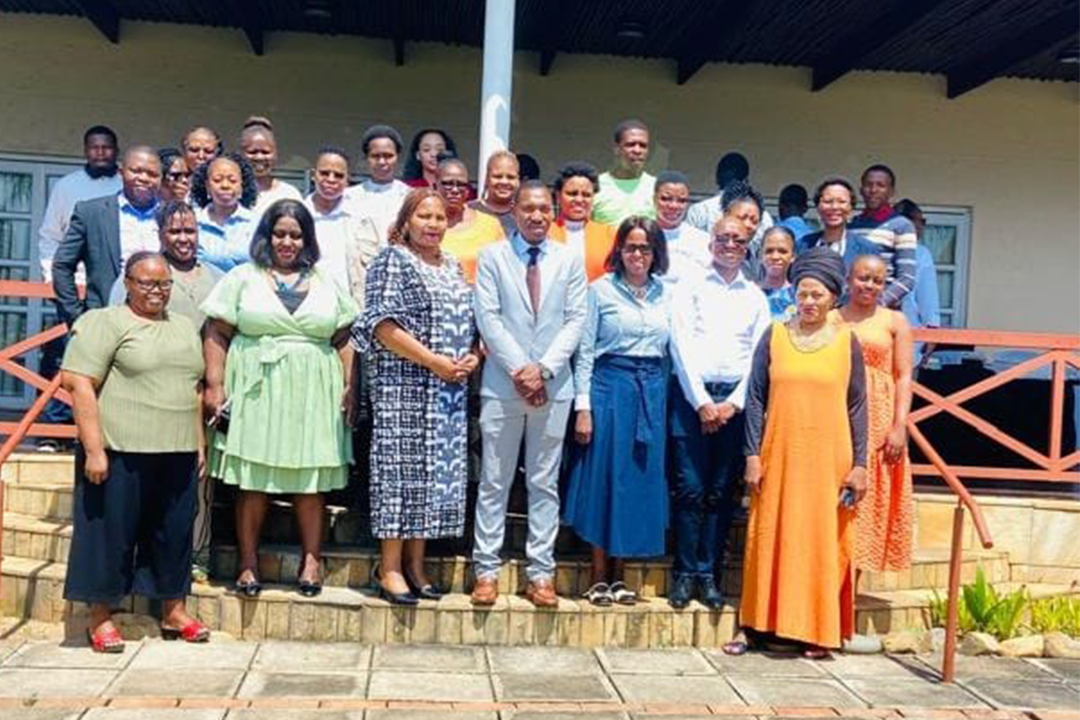
This vision was articulated at Royal Villas during a Ministry of Information, Communications and Technology–led joint review meeting on Draft One of the Indigenous Knowledge Systems Policy, where government officials emphasised that indigenous knowledge is no longer viewed solely as cultural heritage, but as a pillar of economic transformation and intellectual property development.
Speaking on behalf of Acting Principal Secretary Macanjana Motsa, Sakhile Dlamini, Director of Communications, said the policy seeks to secure Eswatini’s future intellectual property while ensuring that EmaSwati directly benefit from knowledge systems rooted in their own communities.
“Indigenous Knowledge Systems are not just for preserving the past; they are about securing the intellectual property of our future,” he said. “Countries like India and China have demonstrated that when indigenous knowledge is protected, responsibly commercialised, and integrated into national innovation systems, it becomes a powerful driver of economic growth.”

Dlamini noted that the drafting of the IKS Policy has been inclusive and evidence-based, guided by extensive national mapping conducted across 42 chiefdoms, ensuring that the policy reflects lived knowledge and practices across all four regions of the country.
He explained that the establishment of the IKS Advisory Council and the Interministerial Committee was driven by recognition that Eswatini’s National System of Innovation (NSI) remains incomplete without formally integrating indigenous knowledge into research, science, technology, and enterprise development.
“For generations, our communities practised sustainability, innovation, and problem-solving long before modern science was formalised,” Dlamini said. “By institutionalising IKS, we are unlocking economic value from agriculture, medicine, biodiversity, culture, and the creative industries.”
Findings from the ESERPAC Mapping Study, which underpins the policy, revealed both opportunity and risk. While communal indigenous knowledge remains strong, family-based knowledge systems are rapidly declining, threatening the loss of unique medicinal formulas, artisanal skills, ecological practices, and oral histories that could otherwise support local industries and innovation.
“When family-held knowledge disappears, economic opportunity disappears with it,” Dlamini said. “We are losing private libraries that could fuel small enterprises, research breakthroughs, and community-based industries.”
To address this, the draft policy introduces a National Recordal System to document and protect indigenous knowledge, alongside a National Indigenous Knowledge Fund to support commercialisation, research partnerships, and benefit-sharing for original knowledge holders and their descendants.
Also addressing the meeting, Dr Rejoice Maseko, Director of the Department of Research, Science, Technology and Innovation (RSTI), described the policy as a deliberate shift towards home-grown innovation.
“Our mandate is to ensure that science, technology, and innovation are not imported concepts, but are rooted in the soil of our nation,” Dr Maseko said. “In Africa, when an elder dies, a library burns down. This policy is our fire extinguisher — and our investment strategy.”
She explained that the policy development process included benchmarking within the SADC region, drawing lessons from South Africa’s National Indigenous Knowledge Systems Office and emerging frameworks in Namibia.
The ESERPAC study documented indigenous knowledge across five key domains — ecological, medicinal, cultural, historical, and linguistic — all presenting opportunities for economic participation if properly safeguarded and developed. However, Dr Maseko warned that many elders are passing on without successors to inherit specialised family knowledge, creating an urgent need to incentivise intergenerational knowledge transfer.
“This is not just a cultural issue; it is an economic one,” she said. “A family’s knowledge can be the seed of a business, a product, or a research innovation. If we lose it, we lose potential livelihoods.”
Following the sectoral review, the revised draft IKS Policy will be submitted to a professional consultant for refinement before being presented to Cabinet for consideration and approval, paving the way for full integration into national development planning.
By strengthening collaboration between government, researchers, and indigenous communities, the policy aims to build an inclusive, sustainable, and economically vibrant Kingdom, firmly rooted in its cultural DNA while competing confidently in the global knowledge economy.