


BY THEMBA ZWANE
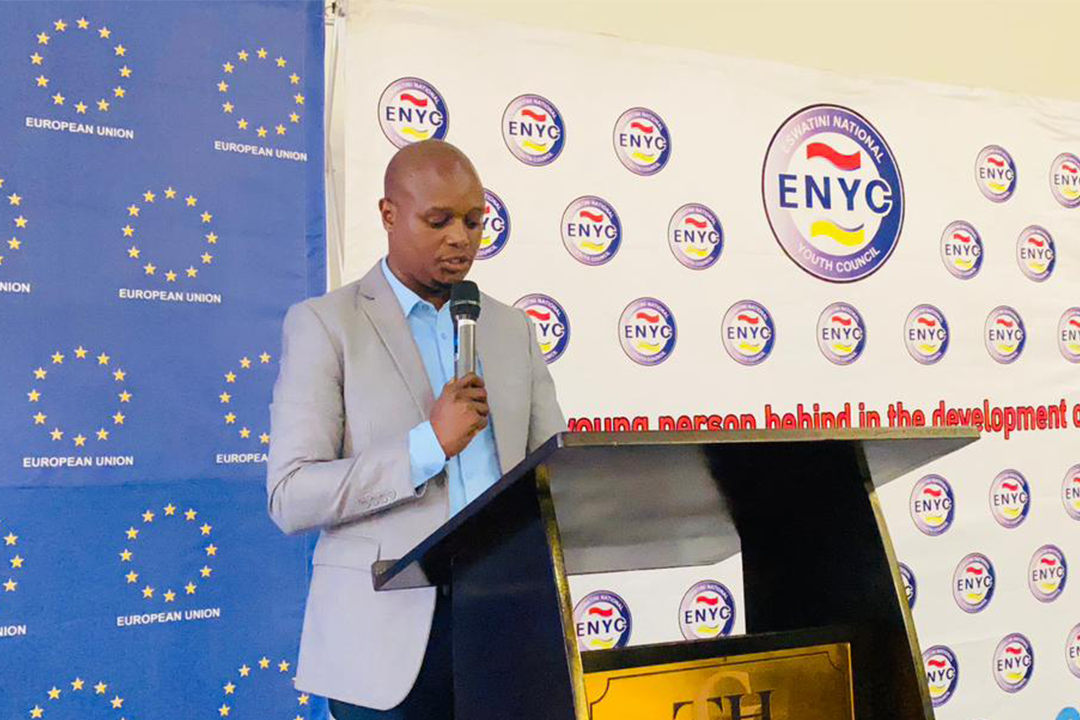
MANZINI – Eswatini’s youthful population, which makes up the majority of the country’s working-age group, is a powerful resource that can drive economic growth if properly harnessed, says Eswatini National Youth Council (ENYC) Chief Executive Officer Lwazi Mamba.
Mamba was speaking at the George Hotel during the Youth Sector Coordination Framework Validation Workshop, where he highlighted that about 64% of the country’s population falls within the working-age bracket of 15 to 64 years.
“This youthful population is a powerful resource for economic growth if it is economically active. However, to harness this demographic dividend, deliberate investment in young people by both the public and private sectors, coupled with properly coordinated youth empowerment programmes, is necessary,” he said.
He revealed that approximately 70% of Eswatini’s population is aged 35 years and below, with those between 15 and 35 years accounting for 35% of the total population. These figures, he said, show that the country has more people of working age than dependents.

Mamba commended stakeholders for prioritising youth development, saying investments directed at young people were targeting the demographic group that needs support the most. He warned, however, that failure to act could turn the opportunity into a burden, leading to increased poverty, unemployment and health inequalities.
According to the 2025 Eswatini State of the Youth Report, young people continue to face serious challenges, including a youth unemployment rate of 48.7% and a Youth Not in Employment, Education or Training (NEET) rate of 36%. The report also highlights early and unintended pregnancies at 90 per 1,000 adolescent girls and young women, rising mental health challenges with 75% of suicide cases occurring among men, digital overuse, substance abuse and increasing violence.
Mamba noted that while stakeholders are implementing various programmes to address these challenges, the absence of a proper coordination mechanism has limited their impact. He said poor coordination results in duplication of efforts and wastage of resources.
He explained that during the review of the 2009 National Youth Policy (NYP), a new policy pillar on research, monitoring, evaluation and learning was introduced in the 2020 NYP. This pillar aims to improve service delivery, planning, resource allocation and accountability. The policy also calls for the development of a national coordination framework and the establishment of coordination structures such as the National Youth Development Consortium.
As mandated by the policy, Mamba said the ENYC has taken a leading role in coordinating youth development programmes in line with the NYP, which led to the development of the National Youth Development Coordination Framework.
He said the framework seeks to ensure alignment of all youth programmes with national priorities, promote a unified and efficient approach, strengthen public-private partnerships, increase youth participation in decision-making, and ensure long-term sustainability of youth programmes.
Mamba expressed appreciation for the European Union (EU) for supporting the initiative, noting that since the launch of the framework development in March 2025, significant progress has been made. Achievements include stakeholder mapping, recruitment of a consultant, establishment of a database with over 109 registered stakeholders, nationwide consultations, development of a draft coordination framework, an M&E implementation plan, and the hosting of the validation workshop.
He said monitoring and evaluation remain central to effective coordination, adding that the ENYC has recruited a Monitoring and Evaluation Officer and Regional Programme Officers in all four regions to strengthen youth coordination and programming.
Mamba concluded by thanking the minister and the ministry for their continued support and capacity-building of the Council, and the EU for prioritising youth development in its programmes.