



- Call for equal opportunities in elections
- MPs seek clear role for regional women MPs
- DPM backs wider electoral reforms
- Justice ministry tasked with drafting amendments
BY SIFISO NHLABATSI
LOBAMBA – The House of Assembly has unanimously adopted a motion calling on Government to amend Eswatini’s electoral laws to align them with the Constitution, following concerns that the current legal framework discriminates against male candidates while failing to clearly define the role and accountability of Regional Women Members of Parliament.
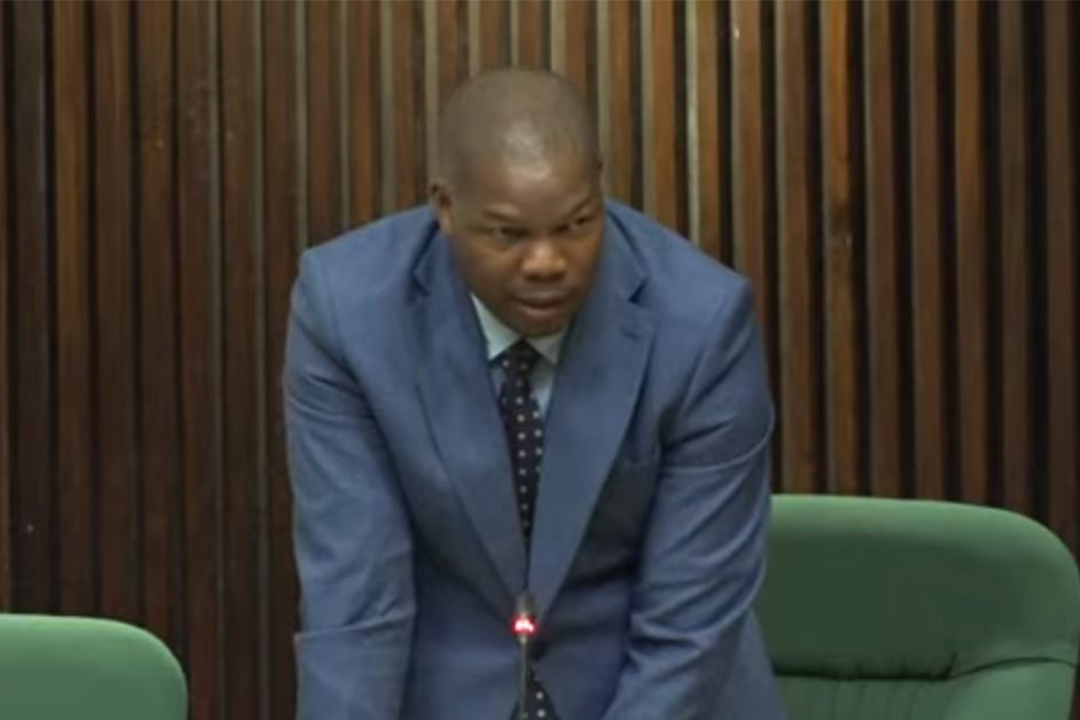
The motion, moved by Kubuta MP Masiphula Mamba during Private Members’ Motions and seconded by Mbabane East MP Welcome Dlamini, paves the way for the Minister of Justice and Constitutional Affairs to table legislation before Parliament.
Mamba’s motion calls on the minister to introduce a Bill amending the Elections Act, 2013 (Act No. 10 of 2013), the Election of Women Members of the House of Assembly Act, 2018 (Act No. 9 of 2018), and related provisions of the Senate (Elections) Act, 2013 (Act No. 7 of 2013).
The proposed amendments seek to ensure full alignment with the principles of equality before the law and non-discrimination enshrined in Section 20 of the Constitution of the Kingdom of Eswatini Act, 2005, particularly regarding the electoral processes and eligibility criteria for Regional Women Members of Parliament.

Motivating the motion, Mamba said the current legal framework creates unequal treatment between male and female candidates who contest constituency elections.
“What happens now is that when a male candidate loses an election, that is the end of the road. However, women who lose constituency elections can still become Members of Parliament through the regional women’s election process. If that opportunity exists, then the law should apply equally, or the legislation should clearly justify the distinction,” he said.
Mamba argued that Parliament has a constitutional duty to ensure all citizens are treated equally before the law. He further said the legislation should explicitly define the mandate, responsibilities and reporting lines of Regional Women MPs.
According to him, the absence of clear provisions has created uncertainty regarding their role, accountability and constitutional status.
Supporting the motion, Mbabane East MP Welcome Dlamini said the issue has affected parliamentary candidates for years and deserves urgent attention.
He remarked that it was unfortunate Lobamba MP Michael Masilela, whom he described as one of those affected by the current arrangement, was not present in the House when the debate began.
“They told him he could not have a second bite of the cherry,” Dlamini said.
He argued that Parliament has only two options if it wishes to eliminate what he views as discrimination.
“The first option is to allow male candidates the same second opportunity, or alternatively remove the second opportunity for women. The law must apply equally,” he said.
Dlamini also questioned the legal position of Regional Women MPs, saying their responsibilities remain inadequately defined.
He said he had been informed that some Regional Women MPs struggle to access certain public resources, including the Regional Development Fund (RDF), because legislation does not clearly outline their status and functions.
“Their role must be clearly defined so they know exactly how to execute their duties and access the resources necessary to serve their communities,” he said.
Regional Women MPs who participated in the debate supported the motion, acknowledging that uncertainty surrounding their mandate has created practical challenges.
However, they cautioned against framing the issue as a contest between male and female legislators.
They said all Members of Parliament serve the same communities and stressed that male MPs should not feel threatened by the constitutional mechanism designed to improve women’s representation in Parliament.
Deputy Prime Minister Thulisile Dladla also supported the motion, saying amendments to the country’s electoral laws are necessary.
She said the review should extend beyond the Elections Act and the Senate (Elections) Act to strengthen the participation and representation of persons living with disabilities within Eswatini’s electoral framework.
Lobamba Lomdzala MP Marwick Khumalo said the debate centred on equal treatment under the law rather than opposition to women’s representation.
“The crux of the matter is that male candidates who lose elections cannot stand for Senate, while women candidates who lost elections are allowed another opportunity. We want legislation that is non-discriminatory,” he said.
Khumalo emphasised that lawmakers are not seeking to remove Regional Women MPs from Parliament but want legislation that clearly defines their constitutional role, responsibilities and accountability.
Mbabane West MP Jane Mkhonta-Simelane welcomed the motion, saying it demonstrated that its movers genuinely care about advancing women’s rights.
She said she had previously worked on campaigns advocating for increased women’s political participation and acknowledged that gaps had been identified in the current legal framework.
Mkhonta-Simelane said the next step should involve broad consultations with all relevant stakeholders to determine the best way of addressing the concerns while safeguarding the constitutional objective of improving women’s representation.
Lobamba MP Michael Masilela, who arrived later during proceedings, thanked Mamba for bringing the motion before the House.
However, he urged Parliament to ensure the matter is concluded within a specific timeframe, noting that several legislative proposals have remained under consideration for extended periods without being finalised.
The House of Assembly ultimately adopted the motion, effectively mandating the Minister of Justice and Constitutional Affairs to prepare the necessary legislative amendments.
Under Eswatini’s constitutional framework, constituency MPs are elected through the tinkhundla electoral system. Where women do not make up at least 30 per cent of the House following a general election, the Constitution provides for the election of up to four additional women—one from each region—through an electoral college comprising elected Members of Parliament. The mechanism is intended to promote gender representation in the House.
With Parliament having endorsed the motion, attention now shifts to the Ministry of Justice and Constitutional Affairs, which is expected to draft legislative amendments aimed at addressing perceived inconsistencies, strengthening legal certainty and ensuring Eswatini’s electoral laws fully comply with the constitutional principles of equality and non-discrimination.