


BY NELIWE NGUBANE
EZULWINI – Better decisions about teachers, classrooms, school feeding and learners with special educational needs could be within reach as Eswatini moves to strengthen how education data is collected, shared and used to plan for the future.
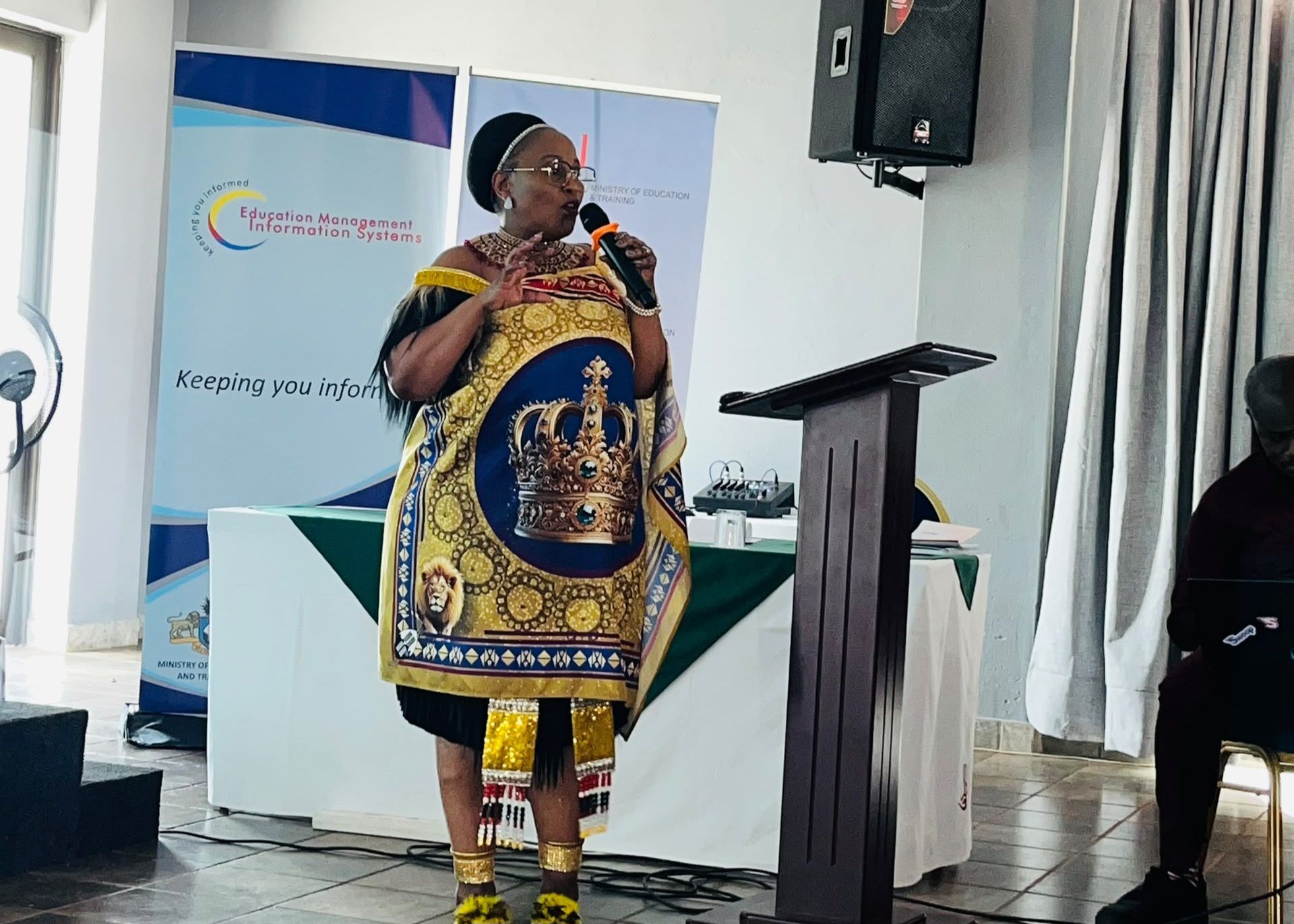
This emerged during a presentation by Dr Phumzile Magagula at the Education Management Information System (EMIS) Data Use Workshop held at Sibane Sami Hotel on October 15–16, 2026, where stakeholders examined a proposed 2026–2027 Eswatini Data Action Plan designed to turn education statistics into practical solutions for the country’s schools.
The plan identifies 26 priority actions under six objectives, with implementation scheduled over 15 months, from October 2026 to December 2027. It seeks to address gaps in the availability, reliability and use of education data, which can affect how resources are allocated and how policies respond to learners’ needs.
At the heart of the initiative is a simple but important message: collecting education data is not enough; the information must also be accurate, accessible and useful to the people making decisions.

According to the plan, discussions during the workshop revealed that data often arrive late, are not updated as circumstances change and are not adequately validated when entered. These concerns were raised by six of the eight participating groups, highlighting the need to improve the systems used to collect and manage information from schools.
Under its first objective, the plan proposes introducing validation rules and completeness checks into the DHIS2-based EMIS termly tool, alongside an annual data calendar, training for school EMIS focal persons and Regional Education Office (REO) officers, and data bundles for schools struggling with internet connectivity.
Quarterly data quality checks would also be conducted by comparing school registers with EMIS records in selected schools. These measures are intended to improve the accuracy of submissions and ensure that education officials can work with dependable information when planning.
FILLING THE GAPS IN EDUCATION DATA
Beyond improving data quality, the action plan seeks to capture information that is currently missing or insufficiently detailed.
The proposed revisions to EMIS instruments would include information on learners with special educational needs, including autism and the use of assistive devices, orphans and vulnerable children (OVC), Life Skills Education teachers, school transport, teacher housing, water, furniture, Grade 0 facilities and school feeding.
The plan also proposes piloting the revised instruments in 20 schools across the four regions before finalising them for use. Guidance would be developed to help teachers identify learners with special educational needs and report the relevant information.
Teacher records would also be linked with those held by the Teaching Service Commission and the Ministry of Public Service through a unique teacher identifier. This would help improve the matching of records across systems.
These changes could provide education planners with a clearer picture of the challenges faced by individual schools and learners, helping them identify where support is most urgently needed.
FROM STATISTICS TO CLASSROOM SOLUTIONS
One of the plan’s central priorities is ensuring that education data directly inform decisions about infrastructure, staffing and learner welfare.
The proposed analyses include estimating the number of teacher posts required for 2027, mapping school-age populations and distances to the nearest schools, and assessing the possibility of extending Free Primary Education to Grade 0.
Other planned studies would examine school feeding and supplies, inclusion in schools and technical and vocational education and training (TVET), scholarship distribution, industry skills demand and the availability of Life Skills Education teachers.
The findings are expected to support decisions ahead of the 2027/28 planning cycle, including the prioritisation of classrooms, water tanks, furniture and other essential school facilities.
The plan also proposes developing a school feeding and supplies requirement model based on enrolment. This would help guide the allocation of food, equipment and stationery while providing evidence for consideration of a Nutrition Support Act.
For learners with disabilities and special educational needs, as well as OVC, the planned inclusion analysis would examine their circumstances across regions and schools to help target support more effectively.
MAKING EDUCATION DATA ACCESSIBLE
The action plan recognises that useful information may already exist within different government departments and institutions but remains difficult to access or share.
To address this, it proposes an inter-ministerial data-sharing protocol involving the Ministry of Education and Training (MoET), the Deputy Prime Minister’s Office, the Ministry of Labour and Social Security, the Ministry of Economic Planning and Development, the Central Statistical Office, the Teaching Service Commission, the Ministry of Public Service and ECESWA, among other stakeholders.
A public-facing or management-oriented education dashboard is also proposed for managers, regional education officers and partners, supported by an annual statistical yearbook and termly bulletins.
An Education Data Use Technical Working Group would meet quarterly to monitor implementation, address data requests and coordinate participating institutions.
The plan further proposes producing policy briefs from the planned analyses and translating stakeholder communication materials into SiSwati, making education information more accessible to schools and communities.
BUILDING SKILLS AND ACCOUNTABILITY
For the plan to succeed, the document acknowledges that systems alone will not be enough. Education officials also need the skills and motivation to interpret data and apply the findings in their work.
A short course in data analysis and interpretation is proposed for planners, regional education staff and unit heads. The plan also includes a recognition scheme for EMIS focal teachers and schools demonstrating strong reporting performance.
Progress would be monitored quarterly using a red, amber and green status system, with formal reviews planned at six and 12 months. An annual Education Data Use Forum would provide an opportunity for stakeholders to assess how evidence has informed decisions and agree on priorities for 2028.
The MoET Planning Unit is identified as the lead coordinator, with the EMIS Unit serving as secretariat.
Although the document remains a draft for validation, its proposed measures outline a pathway towards a more coordinated, evidence-based education system.
Ultimately, the success of the plan will depend on how effectively the proposed actions are implemented and whether the information collected translates into tangible improvements in schools.
For learners, teachers and communities, better education data could mean more informed decisions about where teachers are needed, which schools require infrastructure and how vulnerable learners can receive appropriate support.
The message emerging from the workshop is clear: reliable education data should do more than fill reports. It should help shape decisions that improve learning conditions and strengthen the future of education in Eswatini.
#EswatiniPositiveNews #Education #EMIS #EducationData #DataDrivenDecisions #EducationPlanning #EPN