



BY SIFISO NHLABATSI
LOBAMBA– Government will need between E900 million and E1 billion to replace ageing water pipelines across the country’s towns, with the deteriorating infrastructure now blamed for the frequent pipe bursts disrupting water supply.
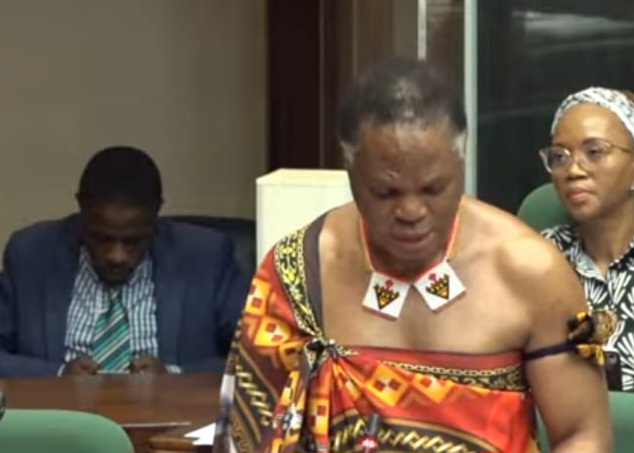
Natural Resources and Energy Minister Prince Lonkhokhela disclosed this while presenting the Ministry’s First Quarter Performance Report for the 2026/27 financial year before the House of Assembly Portfolio Committee for debate. He said the country’s urban water network had reached a stage where major investment was unavoidable.
The minister said the recurring pipe bursts were not the result of poor workmanship during installation but were caused by infrastructure that had outlived its lifespan.
“When it comes to water supply in our towns, we have a major challenge. Water pipes keep bursting from time to time. It is not because the work that was done was of poor quality, but because the pipes are very old. They now need to be upgraded,” he said.
Prince Lonkhokhela said the problem was widespread, affecting virtually every town in the country, making the replacement programme both urgent and costly.
He said Government would require an estimated E900 million to E1 billion to undertake the nationwide rehabilitation of the ageing water distribution network.
The minister’s remarks come as the Ministry continues to report progress on expanding access to water and sanitation through major infrastructure projects across the country.
According to the First Quarter Performance Report covering the period from April 1 to June 30, 2026, the Ministry recorded significant progress under the Eswatini Water Supply and Sanitation Access Project and the Manzini Region Water and Sanitation Project, with several components nearing completion.
The report also highlights achievements in the energy sector, including the financial close of the 20-megawatt Tsamela Solar Photovoltaic project, the commencement of construction of the 40-megawatt Big Bend biomass co-generation plant and the connection of 6,446 households to the national electricity grid under the World Bank-funded Network Reinforcement and Access Project (NRAP).
In addition, construction of the Strategic Oil Reserve Facility at Phuzumoya is progressing ahead of schedule, while the Geological Survey and Mines Department continues to advance mineral mapping, digitisation and regulatory reforms.
Despite these milestones, the minister indicated that ageing water infrastructure remains one of the Ministry’s most pressing challenges, warning that without substantial investment, towns would continue experiencing repeated pipe failures and water supply disruptions.
He reaffirmed the Ministry’s commitment to ensuring sustainable management of the country’s natural resources while improving access to reliable water and energy services in line with the National Development Plan, the African Union Agenda 2063 and the Sustainable Development Goals.
#NaturalResources #WaterInfrastructure #E1Billion #WaterSupply #Eswatini #Parliament #ServiceDelivery #InfrastructureDevelopment