



BY SIFISO NHLABATSI
EZULWINI–Eswatini requires approximately E41 billion to implement its updated Nationally Determined Contribution (NDC 3.0), with the country’s ability to meet its climate commitments dependent on domestic resources and international financial support.
The estimated USD 2.4 billion (about E41 billion) implementation cost was highlighted by Irene Mwaura, Country Engagement Specialist at the NDC Partnership, during the National Building Blocks Self-Assessment Workshop held at Sibane Sami Hotel yesterday.
Mwaura said Eswatini’s updated NDC 3.0, submitted to the United Nations Framework Convention on Climate Change (UNFCCC) Secretariat in September 2025, targets an economy-wide reduction of 2.24 million tonnes of greenhouse gas emissions by 2035 compared with the business-as-usual scenario.
However, achieving this target requires substantial financial investment, effective coordination and strengthened implementation systems across government institutions.
“The updated NDC 3.0 has an economy-wide reduction of 2.24 million tonnes of GHG emissions by 2035 compared with the business-as-usual scenario, with an estimated implementation cost of USD 2.4 billion, which is dependent on both domestic and international support,” she said.
At an indicative exchange rate of E17.10 to the United States dollar, the estimated cost translates to approximately E41.04 billion.
Mwaura emphasised that the country could not meet its commitments and climate financing needs without strong coordination among government sectors, development and implementing partners, as well as the private sector.
She said the government was advancing several complementary processes to strengthen implementation of the updated NDC 3.0, including updating the NDC Implementation Plan, developing a Long-Term Low Emissions Development Strategy (LT-LEDS), preparing the National Adaptation Plan (NAP) and developing an NDC 3.0 Investment Plan and financing strategy.
The processes are intended to strengthen the country’s capacity to translate its climate commitments into practical interventions and mobilise the resources required to implement them.
“The challenge before us is therefore no longer simply one of defining ambition. Eswatini has done this! It is increasingly about putting in place or strengthening the necessary institutional, financial and implementation modalities underpinned by strong coordination that can turn that ambition into impactful results that enhance Eswatini’s climate resilience and sustainable development,” Mwaura said.
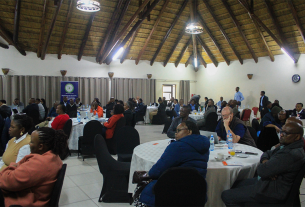
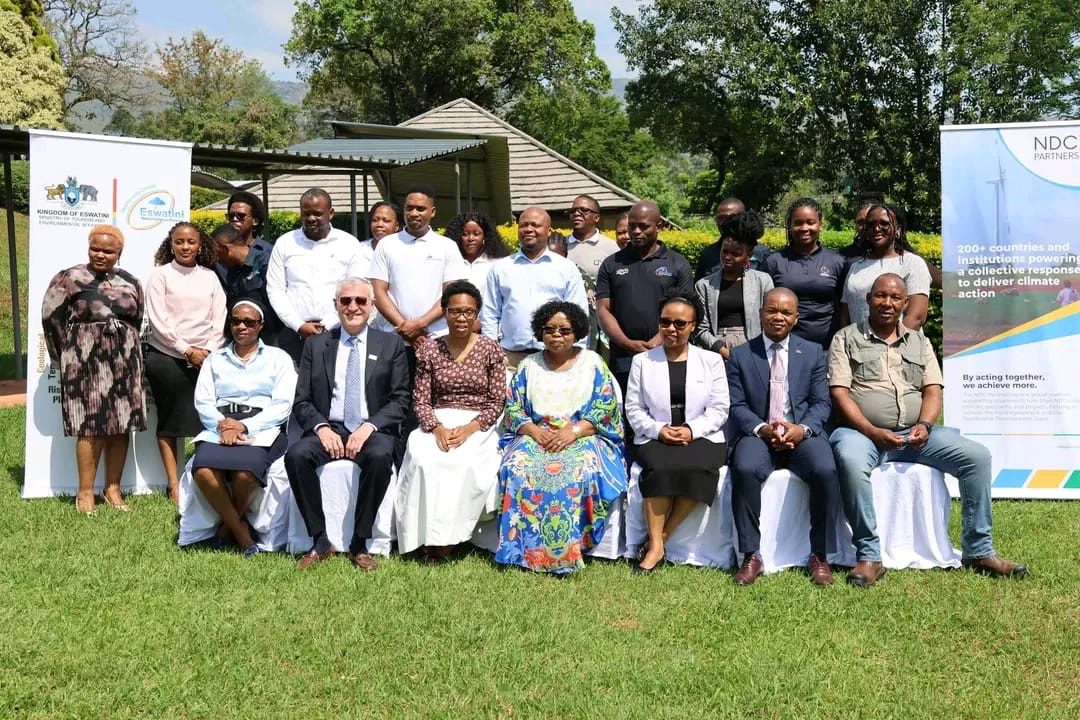
The workshop was attended by representatives from government ministries and the NDC Partnership, a global coalition that supports countries in advancing their climate commitments.
Mwaura explained that the partnership’s approach was designed to help governments identify their priorities and coordinate technical and financial support from its members.
She said the Building Blocks for Effective Climate Action framework would help Eswatini assess the institutional arrangements, capacities and financing mechanisms needed to implement its climate commitments.
The assessment focuses on high-level political ownership, ambitious climate action, and coordination, capacity and transparency.
According to Mwaura, the exercise would help the government identify priority actions for the next 12 to 18 months and communicate its technical assistance and capacity-building needs to local and international development partners.
She said the findings would also help the NDC Partnership identify the country’s priority requests jointly with government.
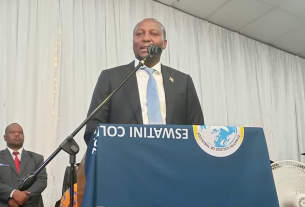
Meanwhile, Minister for Tourism and Environmental Affairs Jane Mkhonta-Simelane called for a coordinated government-wide approach to climate action, emphasising that implementation required different ministries to align their responsibilities.
“Climate action cannot be driven by a single ministry. It requires the Ministry of Finance to align public budgets; the Ministry of Economic Planning and Development to weave these targets into our National Development Plan; and our line ministries—Agriculture, Health, Energy and others—to execute them on the ground,” she said.
The minister also highlighted the importance of directing technical assistance towards identified gaps, including operationalising the Health National Adaptation Plan and developing the country’s climate finance and investment strategy.
She said the assessment should result in practical requests for support rather than simply documenting existing challenges.
Mkhonta-Simelane urged participants to be candid about shortcomings in policies, institutional arrangements and coordination mechanisms.
“If a policy exists only on paper but not in practice, state it. If an inter-ministerial coordination mechanism needs strengthening, highlight it. We can only build a resilient future on a foundation of truth,” she said.
The outcomes are expected to help government prioritise interventions and strengthen its ability to mobilise resources for climate action.
#ClimateFinance #NDC3 #ClimateAction #Eswatini #ClimateChange #SustainableDevelopment #NDCPartnership
(Courtesy Pic)