



BY SIFISO NHLABATSI
EZULWINI – There is a need to strengthen infrastructure financing models, deepen local participation, and integrate climate resilience into national development planning.
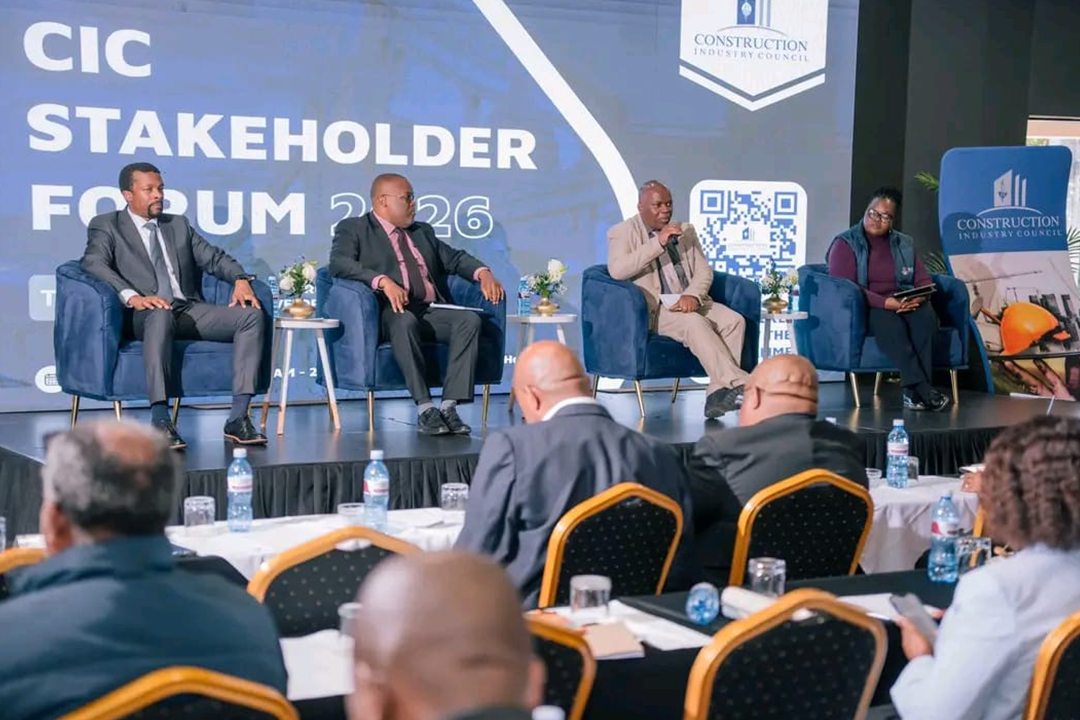
This was disclosed at the Construction Industry Council (CIC) Stakeholder Forum held at Happy Valley Hotel on Monday. The discussions during the forum reflected growing consensus among lawmakers, contractors, and industry players on the need to strengthen infrastructure financing.
A key proposal came from Senator Scelo Dlamini, who urged government to consider introducing an upfront payment system for contractors, suggesting that 30% of project costs be advanced at the commencement of works.
He argued that such a model, widely used in several developed economies, would significantly ease cash flow constraints faced by contractors in Eswatini, many of whom rely heavily on borrowing to mobilise for projects.

According to the Senator, delayed payments often place contractors under financial strain, slowing down project delivery and increasing the risk of unfinished or stalled infrastructure developments. He maintained that an advance payment structure would not only improve efficiency but also strengthen contractor sustainability within the sector.
In another contribution, contractor John Horton proposed that future CIC forums broaden participation to include financiers such as banks and other funding institutions, including Eswatini Revenue Services and similar stakholders.
Horton said bringing financial institutions directly into industry dialogue would help address one of the most persistent challenges which is working together in harmony. He argued that collaborative engagement between contractors and financiers could improve project delivery outcomes across the country.
The issue of inclusive planning and sustainability was also raised by Senator Lizzie Nkosi, who questioned the extent to which the CIC is engaging traditional leadership structures in rural communities to support grassroots infrastructure development.
She stressed that meaningful community involvement is essential for ensuring that infrastructure projects reflect local needs and strengthen development at household and community level.
Senator Nkosi also raised concern over whether climate change considerations and environmental sustainability have been adequately incorporated into infrastructure planning frameworks. She warned that without proper climate resilience measures, infrastructure investments could remain vulnerable to increasing environmental risks such as floods, droughts, and extreme weather patterns.
Her remarks underscored the need for long-term planning that not only addresses current infrastructure gaps but also anticipates future environmental challenges affecting emaSwati.
Adding to the debate, Senator Stukie Motsa focused on skills development and local participation in infrastructure projects. She questioned whether systems were in place to ensure that individuals with relevant technical expertise are prioritised in employment and contracting opportunities within CIC-related projects.
The Senator further emphasised the importance of strengthening local participation, asking whether mechanisms exist to ensure that local professionals and contractors are considered first before external service providers are engaged.
Her remarks reflected ongoing national discussions about localisation, skills development, and the need to build a competitive domestic construction industry capable of driving Eswatini’s infrastructure agenda.
Collectively, the contributions from lawmakers and industry stakeholders highlighted a shared focus on reforming the construction sector through improved financing models, inclusive planning, and skills prioritisation.
The Construction Industry Council on the other hand hailed the government of Eswatini for an increased budget allocation for infrastructure development at the ministry of public works.
CIC Board Chairman Sandile Makhubu stated that when one looks at the trends for the last ten years budget allocation for capital projects in the different ministries was going down. He stated that after meetings with different government departments the results were evident because this year the budget allocated for capital projects at the department of public works increased.
#CICStakeholderForum2026 #InfrastructureDevelopment #Eswatini #ConstructionIndustry #InfrastructureFinancing