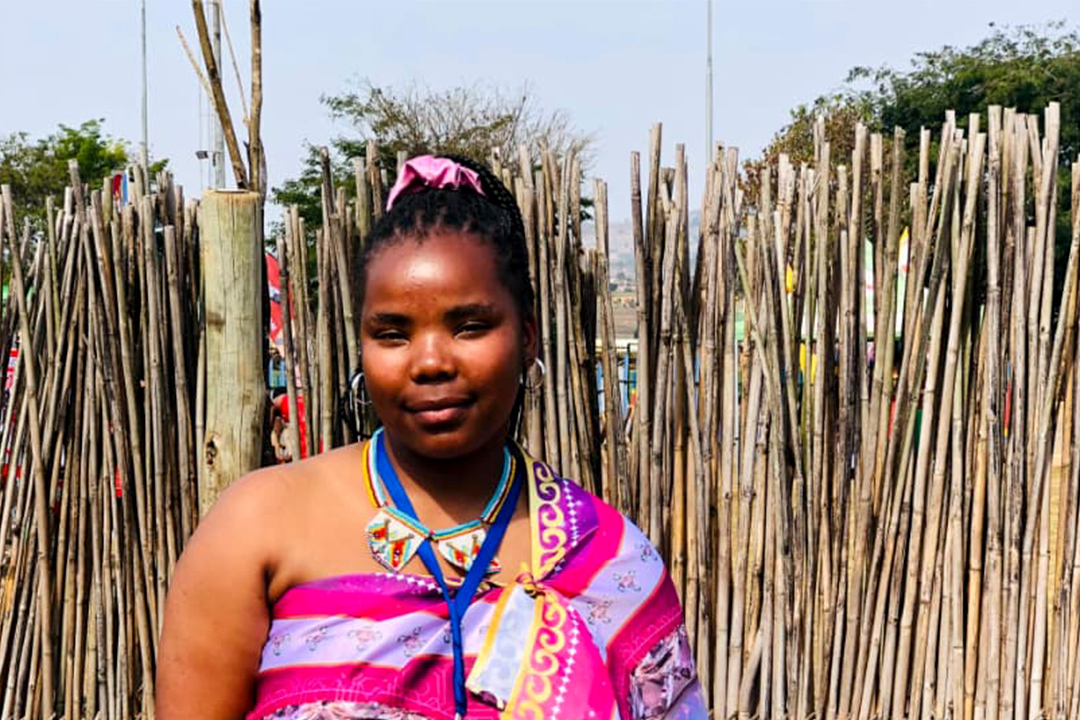




BY SIBUSISEKILE NDLANGAMANDLA
MANZINI– Culture is more than traditions passed from one generation to another, it is a reflection of who people are, where they come from and what connects them to one another. It carries the memories of generations, gives people a sense of belonging and allows communities to preserve parts of their identity even as society continues to change.
Covering Umhlanga 2026 gave me an opportunity to experience this more closely. What I had previously known mainly through photographs, stories and news reports became something I could observe from the ground. I was able to see the preparation, follow the different stages of the journey, meet people from different parts of Eswatini and encounter visitors from outside the country.
As a journalist, I went to Umhlanga with the responsibility of reporting. I expected to observe the activities, interview people, take photographs and produce stories. What I did not expect was how much the experience would make me think about culture itself.
I began to realise that culture is not only found in the main ceremony. It is found in the people preparing, travelling, participating, working and sharing their experiences. It is also found in the relationship between generations and in the willingness of young people to carry forward what was passed down to them.

DAY ONE – REGISTRATION AND PREPARATION
I did not attend the first day physically, but I witnessed the Imbali preparing to leave for Umhlanga. Although I was not present at the registration activities, seeing the young people getting ready gave me an opportunity to observe the beginning of the journey from a different perspective.
It made me think about how culture begins before people see the final celebration. There is preparation, anticipation and responsibility involved. The young people were preparing themselves to participate in a tradition that has been preserved through generations.
This reminded me that culture does not simply survive because it is old. It survives because people continue to give it their time and participation. Seeing the Imbali prepare also made me think about the role of families and communities. Behind every young person participating is a wider support system that helps make the experience possible.
For me, this was an important beginning because it showed that there is a story before the main story.
DAY TWO – KUSHUCA AND COMMISSIONING
Day Two brought me closer to the experience as I covered the Imbali leaving Ludzidzini and making their way to Ngabezweni for kushuca and commissioning.
Being physically present changed the way I experienced Umhlanga. I could hear the singing, see the movement and observe how thousands of young people came together with a shared purpose. There was something powerful about seeing people from different communities moving together as part of one cultural journey.
The day also gave me one of the most memorable moments of my experience when I received a Royal Gift. As a journalist, I am usually the person observing other people’s experiences. I ask questions, take notes, take photographs and eventually turn what I see into stories. Receiving the Royal Gift placed me on the other side of that process.
It was a personal moment that reminded me that there are experiences that cannot be fully understood from a distance. Sometimes being present allows you to appreciate the meaning of something in a completely different way.
DAY THREE – REED CUTTING AT MPISI FARM
The journey continued to Mpisi Farm for reed cutting. This was one of the stages that made me think deeply about the significance of the reed.
Before the coverage, I understood the reed as an important part of Umhlanga. But watching the maidens cut the reeds, sing and dance made me think about what it represents beyond the physical activity. The reed connects the present to the past. It represents a tradition that continues because generation after generation participates in it.
The atmosphere at Mpisi Farm also showed me how culture can create unity. The singing and dancing brought people together, while the participation of the maidens created a strong sense of shared purpose.
At the same time, HRH Princess Sakhizwe encouraged the Imbali to consider entrepreneurship and starting businesses. I found this message significant because it showed that culture and modern aspirations can exist together.
Young people can respect their heritage while pursuing education, entrepreneurship, technology and other opportunities. For me, this was an important lesson. Being connected to culture does not mean being disconnected from the modern world. Instead, culture can give young people a foundation from which they can build their future.
DAY FOUR – RETURN TO LUDZIDZINI
Returning to Ludzidzini marked another important stage of the journey. Having witnessed kushuca, the Royal commissioning, received the Royal Gift and followed the reed-cutting journey, I realised that Umhlanga is much more than its headline moments.
The experience taught me that the celebration is a process, with each stage carrying its own meaning. As a journalist, I often focus on the moments that make the news, but being on the ground showed me that the real story is also found in the journey, participation and sense of belonging.
DAY FIVE – A DAY FOR REFLECTION
Day Five gave me time to reflect on the experiences of the previous days. By then, I had witnessed the preparation, followed the journey, seen the commissioning and watched the reed cutting.
I also found myself thinking about the different people I had met. One of the things that stood out to me was that people can participate in the same cultural tradition while having completely different personal experiences.
For some people, Umhlanga may be a family tradition. For others, it may be something they look forward to every year. For others, it may be their first opportunity to experience such a large cultural gathering.
When people return to the same tradition year after year, they are not simply repeating an activity. They are creating memories. That made me understand that culture is both collective and personal.
DAY SIX – PRESENTATION AND KUCITSA
Day Six brought another important stage as the reeds were brought to the Royal Residence and the activities moved towards the Main Day. By this point, I had begun to understand the journey differently.
The traditional attire, singing and dancing were no longer just elements I needed to capture for a story. I had followed the process that brought the Imbali to this stage. When people eventually see the major celebration, they may focus on the final performance. But there are several stages behind that moment. There is movement, preparation, participation and anticipation.
DAY SEVEN – THE MAIN DAY
The Main Day brought together everything I had witnessed during the journey. The singing, dancing and traditional attire created a powerful expression of culture. Standing there, I found myself thinking about the young people who had started their journey days earlier.
One of other meaningful parts of my experience was meeting people from different parts of Eswatini. Although we share the same national identity, our experiences can be very different. People come from different communities, backgrounds and environments, and each person brings their own story. Umhlanga created a space where these different experiences could come together.
I also encountered people from outside Eswatini. Watching visitors experience Umhlanga made me realise that culture can be a way for people from other countries to understand Eswatini. Things that may feel familiar to emaSwati can be completely new to someone experiencing them for the first time. Their curiosity made me appreciate some of the traditions that we can sometimes take for granted.
WHAT THE EXPERIENCE TAUGHT ME
Looking back at Umhlanga 2026, I understand culture differently. I see it as identity, I see it as belonging, I see it as a connection between generations, I also see it as something that needs participation to survive.
Culture cannot remain alive simply because it existed in the past. Young people have to understand it, participate in it and find ways of carrying it into the future. At the same time, they should be able to pursue modern ambitions without feeling that doing so means abandoning their heritage.
It showed that a young person can carry their culture while building a business, pursuing education, embracing technology or following a completely different career path. Culture can be a foundation, not a limitation.
Culture connects us to where we come from. It connects us to one another and it gives us something valuable to carry forward.
(Courtesy Pic)