BY PHESHEYA IAN KUNENE
MAPUTO – Three nations, one river vision, and a billion-emalangeni deal to back it.
The governments of Eswatini, Mozambique, and South Africa have signed a USD 71 million (approximately E1.31 billion) agreement to implement a six-year programme aimed at strengthening integrated transboundary management of the Incomati and Maputo River Basins.
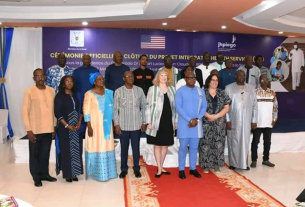
Signed yesterday in Maputo, the capital of Mozambique, the agreement marks the official launch of the initiative, which is funded by the Global Environment Facility (GEF) with a contribution of USD 7.1 million (approximately E131.35 million). The remaining USD 64 million (approximately E1.18 billion) will be provided by the three governments and other development partners.
Administered by the United Nations Development Programme (UNDP) and implemented by the Global Water Partnership (GWP), the initiative will be carried out in close collaboration with national water authorities and key regional institutions.

The goal is to improve climate resilience, environmental sustainability, and equitable resource use across borders.
“Today marks an extraordinary milestone in the collective commitment by Mozambique, South Africa and Eswatini towards strengthening integrated river basin management and sustainable livelihoods across borders,” said Mr Henrik Franklin, UNDP Eswatini Resident Representative.
“With generous support from the GEF and coordinated efforts through UNDP and GWP, we are enabling long-term impact and improved water governance across the region.”
The programme’s priority areas include the restoration of over 12,800 hectares of ecologically critical ecosystems and the promotion of sustainable land-use practices across 35,900 hectares.
It also focuses on gender-responsive livelihood strategies, climate change adaptation, and enhanced scientific collaboration and regional governance frameworks.
“This is more than just a project, it’s a shared responsibility to protect our water heritage for generations to come,” said Ms Lindiwe Mbingo, Principal Secretary in Eswatini’s Ministry of Natural Resources and Energy, who signed the agreement on behalf of the Kingdom of Eswatini.
“We are proud to be part of a regional initiative that places people, the environment, and sustainability at the centre of development.”
The programme reflects years of preparation and dialogue between technical experts, policymakers, and community stakeholders across the three countries. It comes at a time when climate variability, population growth, and increasing water demands are putting pressure on shared river systems.
Speaking during the ceremony, Mr Edgar Chongo, General Director of the Southern Region Water Administration in Mozambique, said the initiative will offer a blueprint for managing other shared resources in Africa.
“This is a regional milestone. It shows what’s possible when governments commit to a common vision. We are investing in nature, people, and peace,” he said.
From South Africa, the Department of Water and Sanitation was represented by the Chief Director of International Water and Cooperation, who emphasised that shared water security is key to regional stability.
“Water connects us all. We are stronger when we manage it together, responsibly and inclusively,” he said.
The UNDP, as the GEF-accredited agency, will ensure that the project meets global environmental and social standards, manages funding transparently, and provides technical guidance to all implementing partners.
“UNDP’s role is to facilitate disbursement of funds, ensure compliance with GEF policies and safeguards, and support technical excellence throughout the implementation process,” said Franklin.
This strategic cooperation reflects a shift in how the region is responding to climate and environmental challenges, not in isolation, but through integrated, people-centred and science-based solutions that strengthen resilience from the ground up.
(Courtesy Pic)