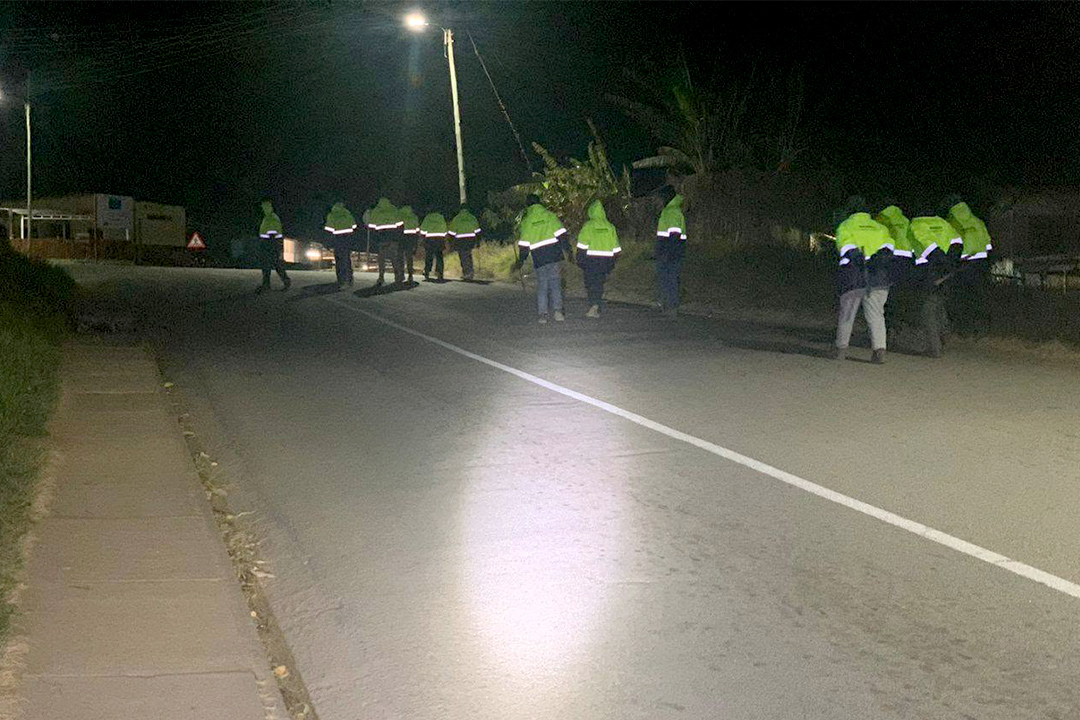



…. grants community police legal authority to assist in apprehending criminals
…. Govt to train, vet and equip community police
…. They will have uniforms, identification documents and other approved equipment. In certain circumstances, they may also carry short batons while performing their duties.
BY MBONGENI NDLELA
MBABANE– Community police have long played a crucial role in protecting communities across Eswatini, often working voluntarily with limited resources, little formal recognition and no dedicated legal framework.

That could soon change.
Prime Minister Russell Mmiso Dlamini on Monday presented the Crime Prevention Bill, 2025 (Amended Version) in Parliament, proposing sweeping reforms that would formally recognize Emaphoyisa Emmango as a key pillar of the country’s crime prevention strategy while providing them with training, equipment, legal protections and possible financial support.
The proposed legislation comes at a time when communities continue to face challenges ranging from stock theft and burglaries to drug-related crime and vandalism, prompting renewed calls for stronger collaboration between citizens and law enforcement agencies.
For many years, community police structures have operated in chiefdoms and local communities throughout the Kingdom. Their members have assisted in maintaining order, monitoring suspicious activities and supporting crime prevention initiatives. However, their operations have largely depended on local arrangements and community goodwill.
The new Bill seeks to change that by bringing community police into a structured national framework.
Under the proposed law, community police would become a legally recognized institution operating within a coordinated crime prevention system that includes a National Crime Prevention Council, Regional Crime Prevention Committees and a dedicated Crime Prevention Fund.
The Bill proposes that volunteers undergo security and criminal vetting before being appointed. Prospective members would also be required to complete training designed and approved by the National Commissioner of Police before assuming their duties.
This move is expected to strengthen professionalism and ensure that community police members possess the necessary skills and knowledge to assist law enforcement effectively.
In another significant development, the Bill allows community police to be issued with official uniforms, identification documents and approved equipment. Where necessary, members may also carry short batons while carrying out their responsibilities.
The legislation further outlines the role of community police in assisting the Royal Eswatini Police Service with crime prevention efforts and the apprehension of offenders within their respective communities.
One of the most welcomed provisions may be the protection offered to volunteers who place themselves at risk while serving their communities.
The Bill provides for compensation to members who suffer injuries or disabilities while performing official duties or attending approved training programmes. It also provides for compensation to dependents of community police members who lose their lives while carrying out their responsibilities.
Additionally, while community police would remain volunteers and not government employees, the Bill creates a legal framework that would allow for the payment of a quarterly honorarium, subject to approval by the Minister for Finance.
Beyond community policing, the Bill proposes the establishment of a Crime Prevention Fund that would receive resources appropriated by Parliament, donations, grants and other lawful sources.
The proposed legislation also establishes a National Crime Prevention Council that would coordinate crime prevention activities nationally, while Regional Crime Prevention Committees would oversee implementation at regional level.
The Bill reflects government’s belief that fighting crime cannot be left to the police alone. Instead, it embraces the long-standing national principle of Naw’ Uphoyisa — the idea that every citizen has a role to play in protecting communities and promoting public safety.
If enacted, the legislation could mark one of the most significant developments in community-based crime prevention since the establishment of community policing structures in the Kingdom.
(Courtesy Pic)