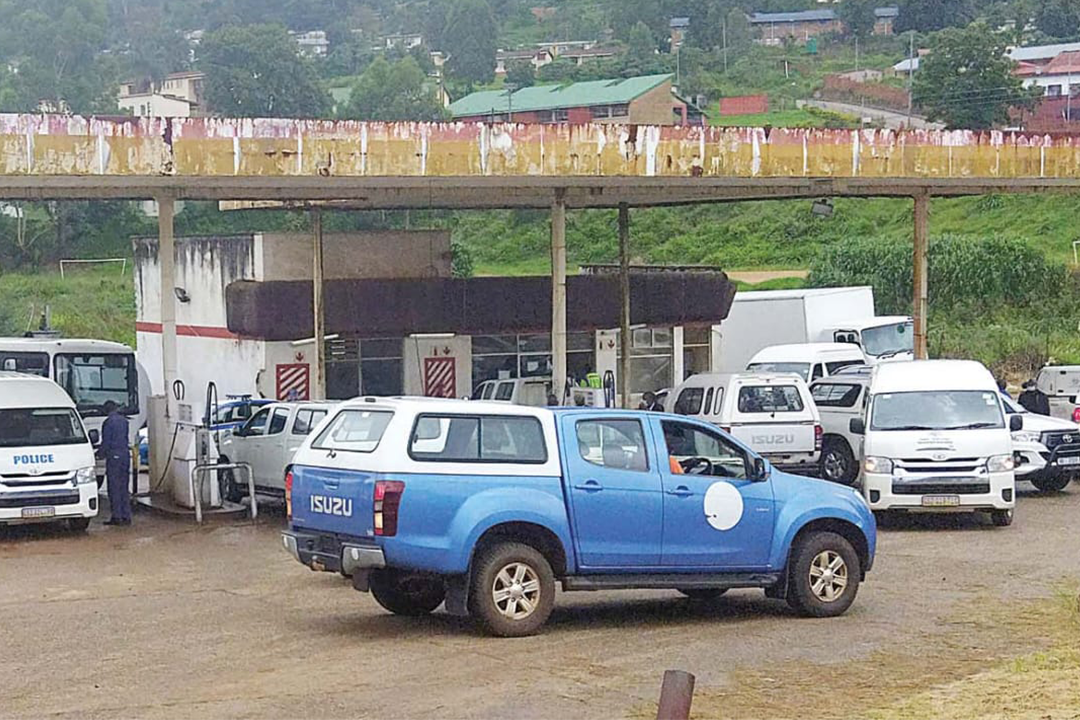



- This includes maintaining government fleet
BY THEMBA ZWANE
MBABANE – Government, through employment of efficient measures, was able to reduce the Central Transport Administration (CTA) expenditures by 94 percent in the 2026 first quarter.
This is according to the Ministry of Economic Planning and Development 2026 First Quarter Economic Bulletin.
On government expenditure, the document states that in the fourth quarter of fiscal year 2025/26, total expenses declined by 7 percent year-on-year, in contrast to a substantial 15 percent increase in the previous quarter.
“Notably, expenditures on the Central Transport Administration (CTA), which includes maintaining the government fleet, plummeted by 94 percent during this period. This sharp reduction can be attributed to efficiency measures implemented by the government,” reads the document.

Government negotiates with creditors
Furthermore, it states that spending on debt servicing, specifically interest payments, revealed a more relaxed approach, decreasing by 48 percent in the review period. This trend highlights the government’s efforts to reduce the debt-servicing burden through initiatives such as negotiations with creditors.
Conversely, personnel costs increased by 16 percent, reflecting the implementation of a salary review that took effect in October 2025. On a positive note, capital expenditures surged by an impressive 143 percent, driven by the government’s ongoing commitment to prioritise public investment, particularly in infrastructure development.
Significant public infrastructure projects during this quarter included the construction of the Mpakeni Dam, the International Convention Center, and the Large-Scale Irrigation Scheme II (LUSIP II), among others.
The country’s trade balance
The country’s trade balance, which reflects the difference between exports and imports, recorded a deficit of E20.3 million in the first quarter of 2026. This comes on the heels of a surplus of E1.4 billion in the previous quarter. In the quarter under review, total merchandise exports reached E10.045 billion, while imports stood at E10.065 billion.
Exports declined by 20.4 percent compared to the fourth quarter of 2025. This downturn highlights a heavy dependence on a limited range of exports, which contributed to the negative trend observed this quarter.
Among the top five major exports, four experienced declines: ‘miscellaneous edibles’ dropped by 16.6 percent; sugar fell by 25.3 percent; textiles saw a decrease of 20.6 percent; and ‘forestry and related products’ slipped by 0.2 percent. In contrast, the ‘food processing’ sector showed a slight increase of 0.2 percent. Overall, this decline reflects a year-on-year drop of 9.7 percent.
During the review period, trade data revealed a decline in nearly all major imports, except for ‘Fuel and Energy,’ which grew modestly by 1.2 percent. Imports of ‘Capital goods,’ ‘Construction,’ ‘Food,’ and ‘Other intermediary consumption’ fell by 0.7 percent, 14.0 percent, 19.5 percent, and 8.5 percent, respectively. As a result, the overall import bill decreased by 10.3 percent. When comparing year-on year figures, there is a slight contraction of 0.3 percent.
Key Trading Partners
The SACU region remained a historic major export destination, accounting for 75.3% of exports in the first quarter of 2026, up from 70% in the fourth quarter of 2025. In contrast, the rest of Sub-Saharan Africa (SSA) experienced a slight decline, dropping to 21.5% in 2026Q1 from 22.6% a year earlier. Other global export markets, including the EU and North America, witnessed decreases during this period,
Compared with the same period last year, total revenue collected in FY2025/26 decreased by 2.2 percent, mainly due to underachievement in key revenue sources, including Southern African Customs Union (SACU) receipts, fuel tax, and corporate tax. Specifically, SACU receipts have declined by 20.4 percent, reflecting a diminished SACU share for the country in FY 2025/26. Additionally, fuel and corporate tax revenues have declined by 9.3 percent and 1.9 percent, respectively.
The ongoing US-Iran conflict has led to reduced fuel volumes and consumption, which, in turn, has adversely affected fuel tax collections. Furthermore, corporate tax revenue has been affected by weak provisional and withholding tax income during this period. Conversely, on a positive note, VAT has increased by an impressive 30.7 percent, driven by higher gross VAT payments that correlate with increased consumption during the quarter.
#Government #CTA #Debt #VATPayments #FirstQuarter #EconomicPlanning