BY MBONO MDLULI
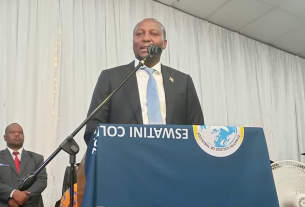
LOBAMBA – Prime Minister Russell Mmiso Dlamini has stated that not all legislators and members of the media are part of the much-discussed cabal.
He made these comments in response to Senators Lindiwe Ngwenya and Siphelele Mkhonta during the annual performance debate report of the Private and Cabinet Offices, where they sought clarification on the existence of the cabal.
Dlamini confirmed the existence of a cabal but emphasised the need for perspective. He explained that when referring to a cabal, he was not talking about a group of people with similar interests but rather individuals with a common purpose. He noted that cabals are common in many countries, as they often operate against the government using underhanded tactics.
The Prime Minister clarified that by acknowledging the existence of a cabal, he was not accusing all parliamentarians or media members of being part of it or being controlled by it. He reiterated that this information was intended to alert relevant parties rather than to engage in a name-and-shame strategy. Dlamini assured the senators that cabals would not hinder their ability to deliver services to the nation and implement the government’s mandate.

He reaffirmed his statements on March 17, 2025 during his appearance before the senators in the House of Assembly for the 2024/25 annual performance debate of the Private and Cabinet Offices, attended by members of the Offices’ portfolio committee. This was after he made these claims for the first time when he had an interview with the Sunday Observer.
In his address to the senators, the Prime Minister informed the legislators that intelligence investigations had yielded tangible evidence supporting his claims. He revealed that some parliamentarians were influenced by this cabal, indicating that while some were fully aware of it, others remained oblivious to their influence.
These assertions followed a question from Senator Siphelele Mkhonta, who asked Dlamini to name the individuals allegedly involved in the cabal. Mkhonta expressed that, as a parliamentarian, he felt affected by the Prime Minister’s statement, especially given that the cabal was purportedly controlling legislators. He urged Dlamini to clarify the implications of the cabal’s existence in the country.
Mkhonta remarked that the Legislature is a respected institution composed of very important and influential individuals, including princes, princesses, chiefs, and elected senators and Members of Parliament (MPs) from various constituencies. He also noted that some legislators were appointed by His Majesty the King, which made it difficult for him to accept the suggestion that such a distinguished institution could be under the control of a cabal.
Senator Lindiwe Ngwenya echoed Mkhonta’s sentiments, seeking further clarity on the cabal’s existence and pleading with the Premier to elaborate on his remarks.
Dlamini assured the senators that the Private and Cabinet Offices had access to information that other individuals and institutions could not obtain. He insisted that his claims regarding the cabal were evidence-based, explaining that the Office received such information from highly trusted intelligence sources throughout various institutions in the country. He expressed regret that while some members of the cabal were aware of being closely monitored, others were not. He encouraged lawmakers to acknowledge the existence of the cabal in the country.
A “cabal” can be defined as a secret group or clique, often with political or manipulative intentions, that operates through intrigue and secrecy. The term typically implies negative connotations, suggesting political intrigue, conspiracy, and a lack of transparency. In 17th-century England, the word “cabal” described a secret or extralegal council of the king, particularly the foreign committee of the Privy Council, whose initials (Clifford, Arlington, Buckingham, Ashley Cooper, and Lauderdale) spelled “CABAL.”