


BY SIFISO NHLABATSI
LOBAMBA– Minister of Health Mduduzi Matsebula has dismissed claims that administering medication also used in animals to human patients automatically amounts to killing them.
The minister said there is nothing inherently wrong with the use of some medicines across both veterinary and human healthcare.
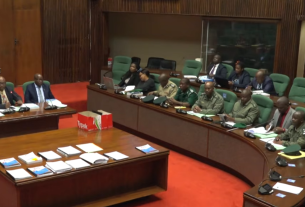
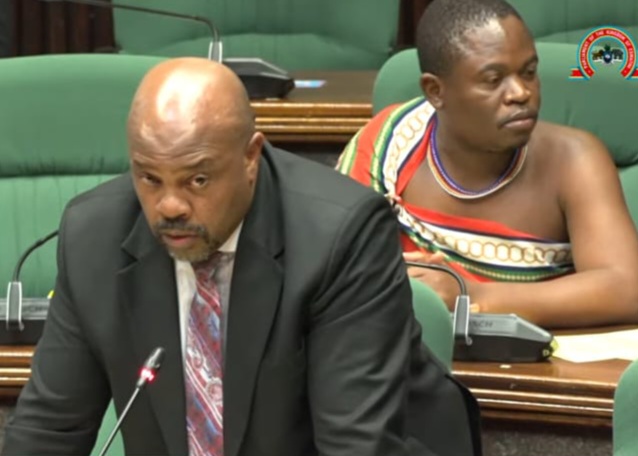
Matsebula was responding in the House of Assembly after concerns surrounding allegations that The Luke Commission (TLC) had administered veterinary medication to human patients.
The minister said there was quite a huge number of medicines that were used interchangeably in animals and humans, including antibiotics, painkillers and medication for high blood pressure.

He said the use of such medicines did not, by itself, mean that a patient had been harmed.
“It all depends on how the dosage is administered,” the minister said.
The minister’s comments come amid allegations concerning the use of animal-grade or veterinary medicines on human patients at TLC. The allegations were reportedly raised by former employees, who also brought broader complaints concerning the organisation’s clinical operations, labour practices and governance to Prime Minister Russell Mmiso Dlamini.
Matsebula said a report would be produced to address the allegations and establish the facts surrounding the medication in question.
The use of some active pharmaceutical ingredients in both human and veterinary medicine is documented internationally. For example, ivermectin is used in both human and veterinary medicine, although products, formulations, indications and dosages differ. The United States Food and Drug Administration lists ivermectin among substances with both human and veterinary applications, while veterinary formulations include products intended for animals.
The FDA has also noted that veterinarians commonly use some antimicrobial medicines that are also used in human medicine, demonstrating that medicines or active ingredients can sometimes overlap between the two fields. However, dosing and treatment requirements can differ between animal species and humans.
Matsebula further rejected assertions made in the House questioning the objectivity or honesty of those who would investigate the allegations.
He said Members of Parliament were all honourable people and should not cast doubt on one another before the investigation had been completed.
The minister also addressed claims regarding government funding to TLC.
He said the organisation had received government funding and disputed claims that it had never received a government subvention.
According to Matsebula, TLC was expected to receive E50 million, of which E25 million had been paid, leaving E25 million outstanding. He further referred to other amounts previously received by the organisation, including an additional E20 million.
The minister said government would issue a report setting out the funding provided to TLC.
He also cautioned against treating allegations involving several government ministries as matters that could be investigated by the Ministry of Health alone.
Matsebula said some complaints brought before Parliament involved the Ministries of Health, Labour and Home Affairs and therefore required a broader investigation.
“If there are people who come to report about the issue in Parliament, especially if there are allegations that will include the Ministry of Health, Labour and Home Affairs, it will not be the Ministry of Health alone which will deal with that allegation,” he said.
He said while the Ministry of Health could examine the health-related aspects, government would need to deploy a committee capable of investigating the allegations comprehensively.
Meanwhile, TLC has previously acknowledged public allegations concerning its operations, staffing and financial position, while maintaining that it has provided large-scale healthcare services in Eswatini for more than two decades.
#Eswatini #MinistryOfHealth #LukeCommission #TLC #Health #Parliament #Medicine #Healthcare #AnimalMedicine #HumanMedicine