



BY SIPHOSETHU MABUZA
MANZINI –There is something about Umhlanga that is difficult to understand until you find yourself surrounded by thousands of Imbali, the sound of singing filling the air, colourful regalia moving through the crowds and bundles of reeds becoming the centre of a centuries-old cultural tradition.
For seven days, I watched, walked and experienced Umhlanga for the fist time from a perspective I had never experienced before. I arrived as someone on assignment, ready to observe and document the annual ceremony, but somewhere between the long journeys, reed-cutting fields, tired feet and powerful singing, the experience became more personal.
From watching thousands of Imbali arrive at Ludzidzini to register, to witnessing the excitement of kushuca, and eventually seeing the maidens dance before Their Majesties, every day offered something different.
DAY 1: ARRIVAL AT LUDZIDZINI
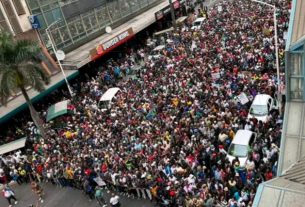
In as much as I observed the first day online but the numbers immediately made it clear that Umhlanga was about to become a hive of activity. Thousands of Imbali arrived at Ludzidzini Royal Residence to register, turning the usually familiar surroundings into a sea of young women dressed in their traditional attire. There was movement everywhere groups arriving together, conversations taking place and the anticipation of the days ahead slowly building. It was a perfect reminder that Umhlanga is much bigger than the final day that most people see on television and social media. Before the dancing, there is preparation. Before the reeds reach the Royal Residence, there is a journey. And this year, I was determined to see that journey for myself.
DAY 2: KUSHUCA FROM LUDZIDZINI TO NGABEZWENI
Day two took us out of Ludzidzini and into one of the experiences that would become one of my favourite memories kushuca. Imbali was commissioned by Her Majesty Indlovukazi to travel from Ludzidzini to Ngabezweni, where they would later be commissioned to different areas to cut reeds. The journey itself had a character of its own, there was singing, laughter, conversations and the constant movement of thousands of people travelling together. It was tiring, but there was an energy that seemed to make the long journey easier. Then came an unexpected highlight, at Ngabezweni, we received sneakers from His Majesty the King a royal gift might look like a small gesture but it brought smiles and happiness to each one of us after all it was a gift from His Majesty directly to imbali. After spending so much time walking and standing, the sneakers were more than welcome it was one of those moments that I did not expect to become such a memorable part of my Umhlanga experience. Bayethe Wena Waphakathi.
From Ngabezweni, Imbali was commissioned to their different destinations for reed cutting, marking the beginning of another important part of the ceremony.
DAY 3: INTO THE FIELDS REED CUTTING AT MPISI FARM
Day three brought another side of Umhlanga into focus. We travelled to Mafutseni for reed cutting at Mpisi Farm. Away from the crowds and spectacle of the main ceremonies, the focus was now firmly on the reeds themselves. We walked from where imbali rests to the fields called esidzidzini where the reeds are cut with Her Royal Highness Princess Sakhizwe, Bantfwabenkhosi, Liphovela laZuma, Indvuna yeMbali Vivane Hlatjwako leading imbali in walking dancing while mingling with the maidens it was such a beautiful sight to see.
There was something grounding about being in the fields and watching Imbali take part in a process and seeing how young girls are still determined and committed to keeping this wonderful tradition alive. There was singing and dancing while the cutting of reeds continued. But the day did not end there, Kushuca happened again, this time from esidzidzini back to their places of rest. The travelling, walking and movement continued, and so did the exhaustion. Yet there was always another conversation, another song or another moment that made the tiredness feel secondary. By this point, I was beginning to understand that the experience of Umhlanga cannot be separated from the physical journey involved. The walking is part of it, The tired feet and hurting back are part of it, The laughter along the way is part of it too.
DAY 4: WATCHING FROM A DISTANCE
Day four was different for me. I could not attend physically, so I followed the proceedings online. While there is nothing quite like being in the middle of the crowds and hearing the singing around you, the online coverage still offered a way to remain connected to what was happening. By then, I had already experienced the journey to the fields and seen the work that goes into bringing the reeds to the Royal Residence. So even from a distance, I found myself watching with a different appreciation. I knew what had happened before those moments reached the screen. Imbali walked from Mpisi farm to Mafutseni in song Mafutseni is where buses took them back to Ludzidzini Royal Residence.
DAY 5: A DAY TO REST
After days of travelling, walking and following the activities, Day five came as a welcome pause. It was a day of rest, allowing the body to catch up after the demanding days that had come before it. Looking back, the break was needed. Umhlanga is beautiful, but experiencing it up close also means understanding the physical commitment involved.
DAY 6: KUCITSA UMHLANGA THE REEDS RETURN
I could not attend physically on Day six either, but that did not stop me from following the proceedings online. This was the day I had been waiting to see Kucitsa Umhlanga infront of their Majesties ohhh what a beautiful tradition. And this was an approach to the main day maidens did not just present the reeds but also sang and danced infront of Their Majesties. Watching online, I found myself thinking back to Day two and Day three. I had seen Imbali leave, I had travelled with them, had seen the fields, watched the reeds being cut. And now I was watching those same reeds being presented before Their Majesties and suddenly, the journey made sense. The bundles of reeds were no longer just something I had seen being carried. They represented the work, movement and effort that had taken place over the previous days. Even through a screen, Kucitsa Umhlanga felt significant.
DAY 7: KUGIDZA WHEN THE REEDS TURNED INTO SONG AND DANCE
Then came the final day Kugidza, There was no way I was going to miss it.After following parts of the ceremony online, this was the moment I wanted to experience in person the maidens dancing and singing before Their Majesties.And they did not disappoint, The atmosphere was completely different.
The singing was powerful, the dancing energetic and the crowds were alive with excitement. Thousands of Imbali came together in one space, transforming the final day into a celebration of culture, tradition and music. What stood out this year was the number of songs congratulating His Majesty the King on his 40 years of reign and celebrating his 58th birthday. The songs gave the celebration an additional layer of meaning. It was not simply about performing. Through their voices and dancing, Imbali were also marking a significant milestone in the life and reign of the King. Not to forget the fireworks the first in history umhlanga 2026 had fireworks popping at the end of the ceremony filling the arena with joy and this was a sign that this years Umhlanga was definitely to be documented.
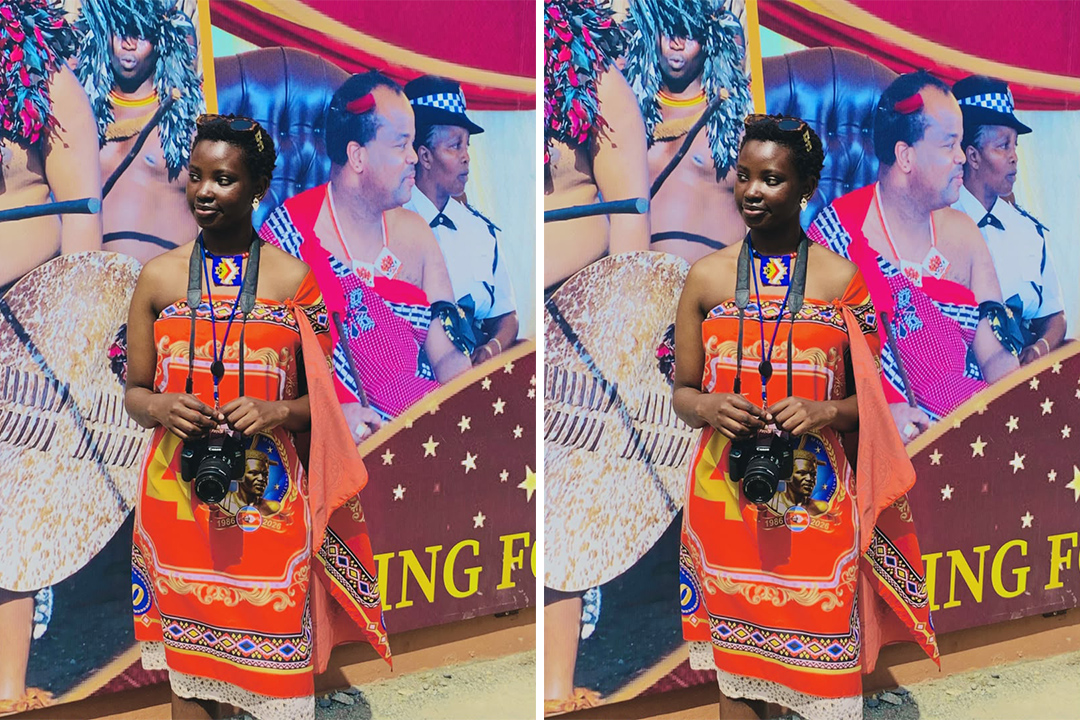
Standing there and watching the maidens dance, I realised just how difficult it is to explain the atmosphere of Kugidza through photographs or words alone.You have to hear the singing, see the movement and feel the energy of thousands of people gathered together. The colourfull traditional regalias worn by maidens, the head pieces called emagwalala which you see some of the maidens wearing and that’s where tou get to see that different birth codes, I can safely is not just a tradition but also serves a school of the tradition because there is a lot you learn just by observing.
MORE THAN AN ASSIGNMENT
When I look back at my seven-day Umhlanga experience, the moments that stand out are not limited to Kugidza, it’s all the series of events taking place there. I went to Umhlanga expecting to document an event but found myself experiencing the journey behind it. The ceremony showed me that Umhlanga is not just about the final dance. It is about every step taken before that moment from registration and commissioning, to travelling, cutting reeds, returning home and finally presenting them before Their Majesties. And then, when the final day arrives, all those journeys culminate in song and dance. For me, that is what made my first umhlanga experience memorable. I went there to tell the story, somehow, I ended up becoming part of the story too.
(Courtesy Pic)