



…Foreign Affairs Ministry cites poor documentation and historical records, promises to correct the situation
BY MBONO MDLULI
LOBAMBA– The Public Accounts Committee (PAC) has raised serious concerns over more than E31 million linked to outstanding tour advances involving employees stationed at Eswatini’s foreign missions.
The issue emerged on Friday, 29 May 2026, during a PAC session with the Ministry of Foreign Affairs and International Cooperation in the House of Assembly.
Committee members questioned the Ministry over substantial amounts reflected in audit findings relating to tour advances, mispostings and outstanding balances owed to Government.
According to discussions during the session, Government also recorded E3 713 600.82 in tour advance transactions linked to non-postings, raising concerns about accounting accuracy and financial controls within the Ministry.
Audit findings reveal accounting discrepancies
The matter centres on tour advances issued to officials for official travel and assignments, some of which reportedly remain unaccounted for due to documentation challenges and historical record-keeping deficiencies.
Officials explained that some of the discrepancies stem from mispostings and inaccurate capturing of financial information over several years.
It was also revealed that civil servants owe Government approximately E28 million, with officials indicating that efforts are underway to reconcile and clear the outstanding balances.
Ministry representatives told the committee that they were actively working with the Treasury to retire the outstanding advances and resolve accounting discrepancies.
“We are not sitting idle on this matter. We continue working with Treasury to settle the outstanding balances,” officials said.
Ministry attributes problem to historical records
Responding to questions from PAC members, the Ministry explained that some of the unresolved balances date back many years and are difficult to trace due to missing or incomplete documentation.
Officials stated that in some cases, records stretch as far back as 2008, making reconciliation particularly challenging.
The Ministry further indicated that some employees associated with the transactions have since retired or passed away, complicating efforts to recover information and verify records.
Regarding the E28 million owed to Government, officials explained that some debit notes had not been properly submitted to Treasury, affecting the reconciliation process.
They noted that once debit entries are properly retired and corresponding credits processed, some of the outstanding balances may be cleared.
PAC demands accountability
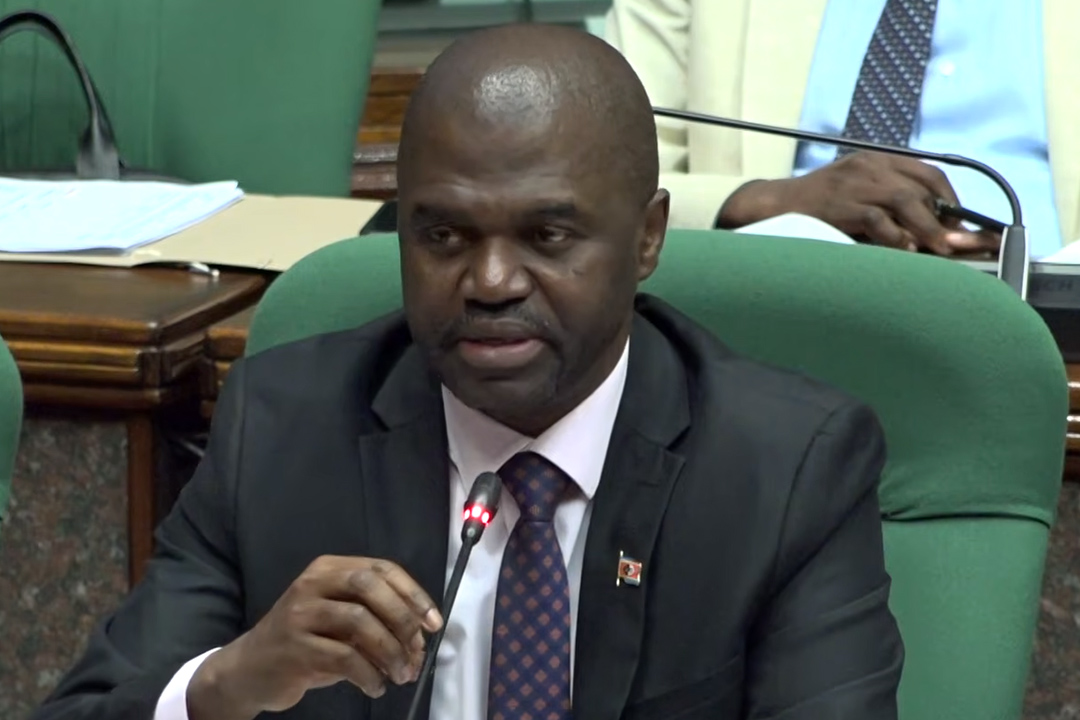
PAC Chairperson Madala Mhlanga questioned whether the Ministry had sufficient evidence to demonstrate that it had fulfilled its responsibilities in addressing the matter.
Mhlanga expressed concern over the magnitude of the outstanding amounts and sought clarity on who should ultimately be held accountable.
“The amount involved is too significant for it simply to be lost through tour advances,” Mhlanga said.
He urged the Ministry to provide evidence showing the steps taken to recover funds and strengthen accountability mechanisms.
Parliament urged to support enforcement efforts
Mhlanga further encouraged Principal Secretary Sizwe Ntshangase to engage Parliament where necessary if legal or administrative interventions were required to address non-compliance.
He stressed that all public servants should be subject to the law and held accountable for public funds entrusted to them.
In response, Ntshangase reiterated that the primary challenge remained the absence of proper documentation for some historical transactions.
The Principal Secretary assured the committee that the Ministry remained committed to resolving the matter and improving financial record management going forward.
The PAC is expected to continue monitoring progress as the Ministry works with Treasury to reconcile accounts, clear outstanding balances and strengthen financial controls within Eswatini’s foreign missions.
(Courtesy Pic)