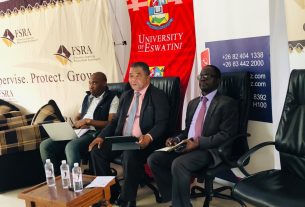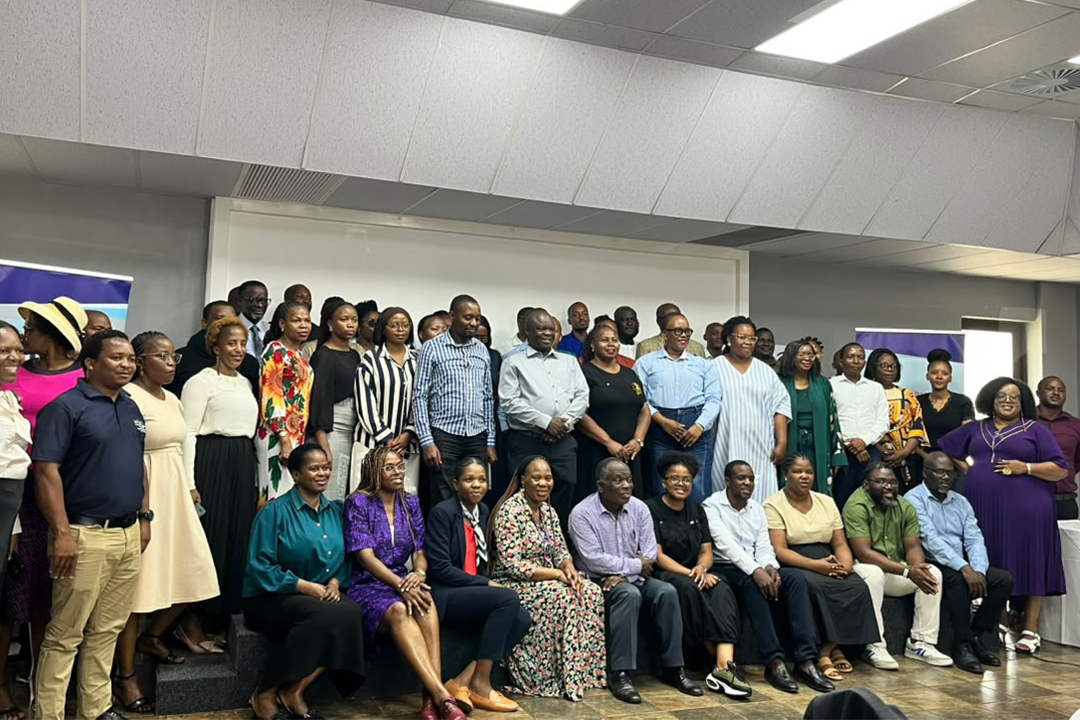



- EMIS workshop challenges ministries to identify data gaps and turn evidence into decisions that improve education planning and resource allocation.
BY NELIWE NGUBANE
EZULWINI — Knowing how many teachers a country has is important, but knowing which schools will face the greatest shortage of mathematics and science teachers next year could make the difference between collecting statistics and solving an education challenge.
This was among the practical lessons shared by consultant Demola Adesina during the ongoing Eswatini Education Management Information System (EMIS) Data Use Workshop at Sibane Sami Hotel on Thursday, where government officials were challenged to turn education data into answers that directly inform policy and planning.
Adesina’s presentation focused on how ministries and departments can identify decisions requiring stronger evidence, recognise barriers to data use and formulate specific questions that can be answered through technical analysis.
The two-day workshop, running from 15 to 16 October 2026, brings together managers, senior government officials, technical officers and education partners to strengthen the use of education data in planning, budgeting and monitoring.

The central message of the presentation was that collecting information is not enough; the information must be accessible, reliable, timely and relevant to the decisions government officials need to make.
FROM STATISTICS TO SOLUTIONS
Adesina outlined the workshop’s objectives, which include helping participants understand how education data can inform decisions within individual departments and across ministries, practise interpreting indicators and assessing data limitations, and agree on priority improvements.
The process builds on Eswatini’s EMIS, the EMIS Norms and Standards self-assessment and the 2024 GPE-KIX Synthesis Report on EMIS data systems and data use.
Participants were encouraged to examine how evidence currently informs their work, particularly in areas where decisions on staffing, budgeting, planning and resource allocation have far-reaching consequences for schools and learners.
The presentation highlighted six common barriers that can prevent government institutions from making effective use of data: availability, timeliness, quality and trust, access and sharing, skills and capacity, and the format of information supplied to decision-makers.
Data may not be collected at the required level of detail, may arrive after a decision has already been made, or may contain inconsistencies that undermine confidence in its accuracy.
In other cases, information may exist within another department or ministry but remain difficult to access. Officials may also lack the time or technical skills to interpret statistics, while reports may not be presented in a format that meets the needs of their intended users.
Adesina’s presentation emphasised that these challenges are not only technical but also institutional, requiring cooperation and clearer responsibilities among the people who produce, manage and use information.
ASKING THE RIGHT QUESTIONS
A key part of the session focused on helping participants formulate priority questions that can guide the workshop’s technical work.
Adesina outlined four qualities of a strong question: it must be linked to a real decision, be specific about the population, location and timeframe, be answerable using available or obtainable data, and have a clear owner who will act on the findings.
For example, asking how teacher supply looks across Eswatini may be too broad to guide a specific intervention.
A more focused question would be: “Which regions and schools will face the largest shortfall of mathematics and science teachers in 2027, and by how many?”
The example demonstrates how a broad concern can be transformed into a practical question that helps officials identify where intervention may be required and how resources could be directed.
Such an approach can help ensure that data analysis responds to the needs of decision-makers rather than producing statistics without a clear purpose.
MINISTRIES CHALLENGED TO IDENTIFY DATA GAPS
During group work, participants were tasked with identifying up to three priority decisions they expect to make within the next 12 to 24 months.
They were required to determine what information each decision would need, establish whether that information was available, identify the barriers preventing effective data use and formulate one or two priority questions for further technical analysis.
Each group was also expected to appoint a chairperson and rapporteur, work through the discussion template and present its most important question and biggest barrier to using data.
The discussions were designed to feed into a consensus session later on Thursday, helping participants agree on which questions required attention and what information would be needed to answer them.
On Friday, technical officers are expected to work with the identified questions through practical data analysis and interpretation. Managers and senior officials will rejoin the process to validate the findings and agree on the next steps.
FROM DISCUSSION TO ACTION
The workshop is expected to conclude with validated findings and a Data Use Action Brief, accompanied by an agreed data action plan outlining priority improvements, institutional responsibilities and follow-up actions.
The intended outcome is to establish a clearer link between education information and the decisions that shape the sector, while strengthening collaboration across ministries and departments.
By identifying specific evidence gaps and assigning responsibility for addressing them, the process seeks to move data use beyond technical offices and into the broader machinery of government planning.
Ultimately, the challenge presented by Adesina is for officials to ask more precise questions, demand relevant evidence and ensure that the answers lead to decisions that respond to Eswatini’s education needs.
#EswatiniPositiveNews #Education #EMIS #DataDrivenDecisions #EducationPlanning #EvidenceBasedPolicy #GPEKIX #Eswatini